
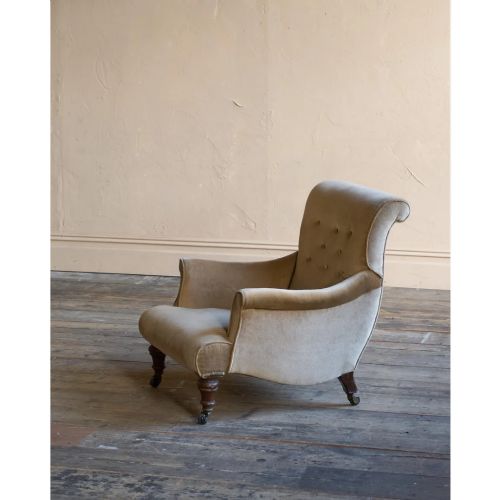
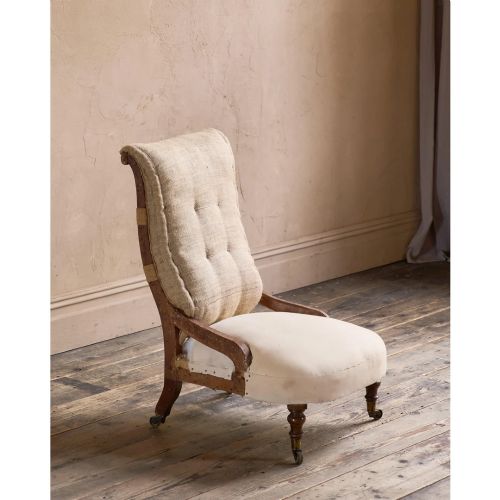
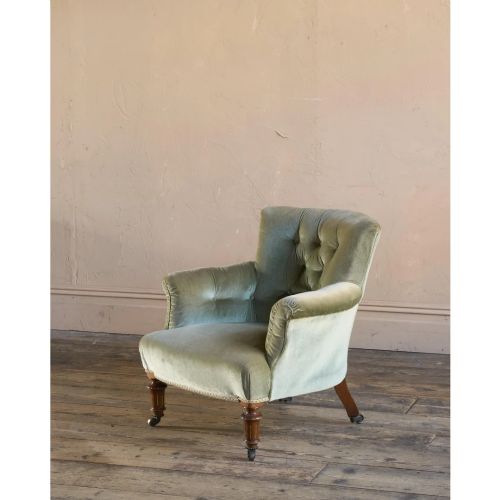
Victorian Low Back Armchair
A victorian low back armchair brings compact comfort and rich timber character to a room.
Victorian Low Back Armchair
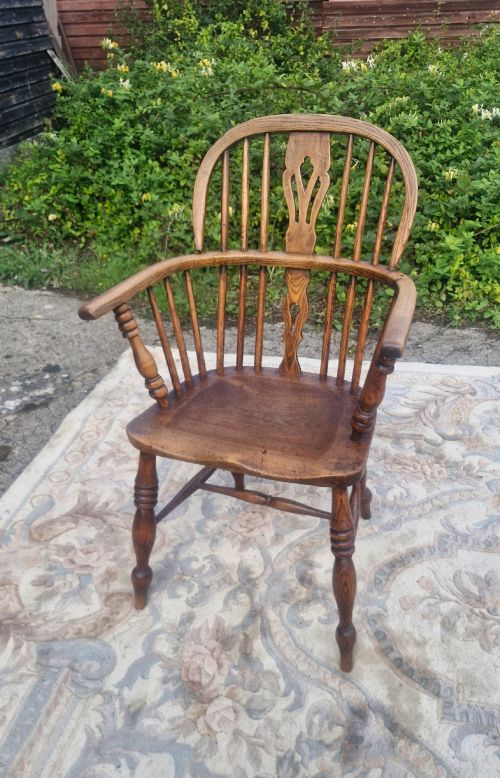
When you search for a victorian low back armchair, you encounter a varied group of seating ranging from turned wood Windsor designs to upholstered nursing chairs and low library seats. These pieces originate primarily across the nineteenth century, spanning the Victorian and Edwardian eras alongside provincial English country workshops.
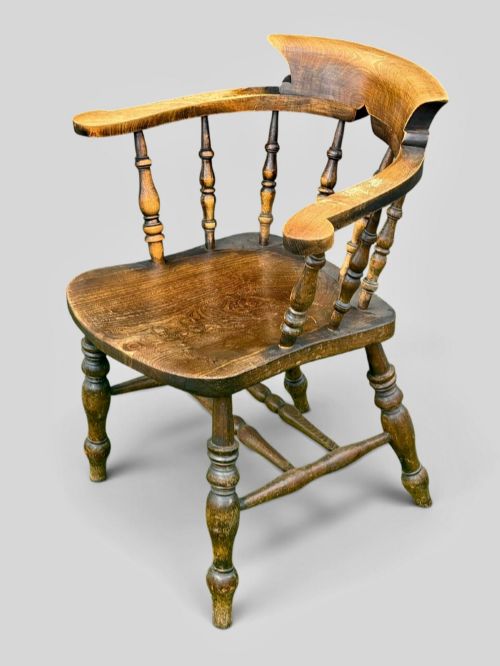
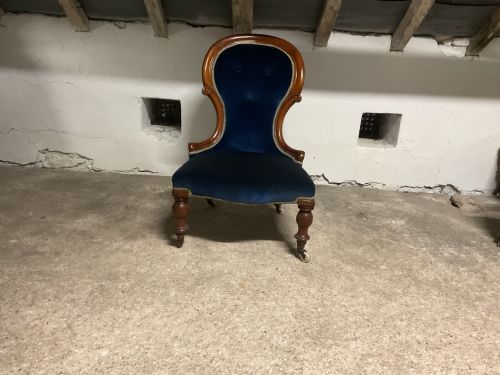
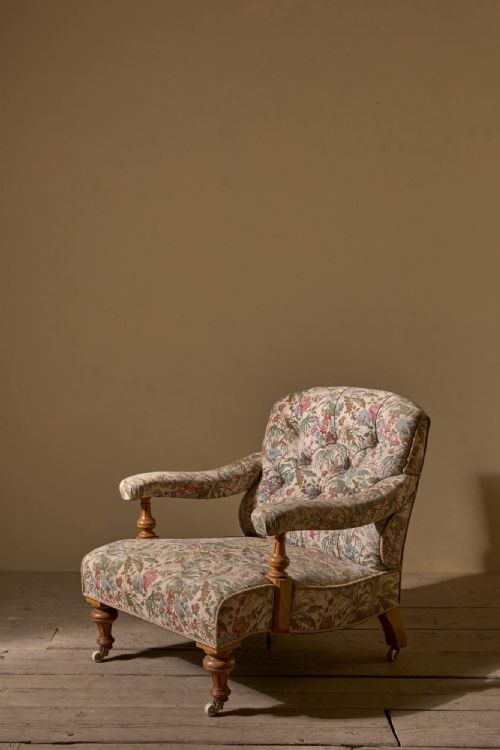
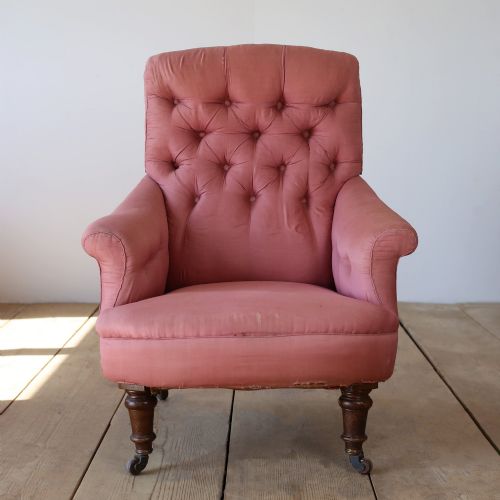
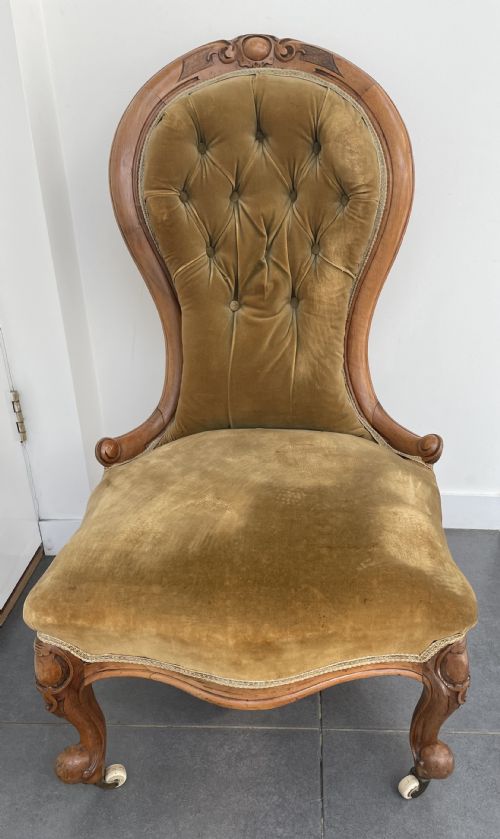
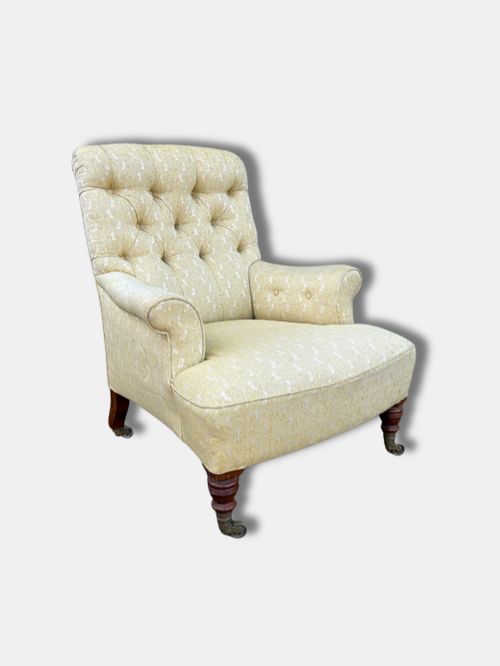
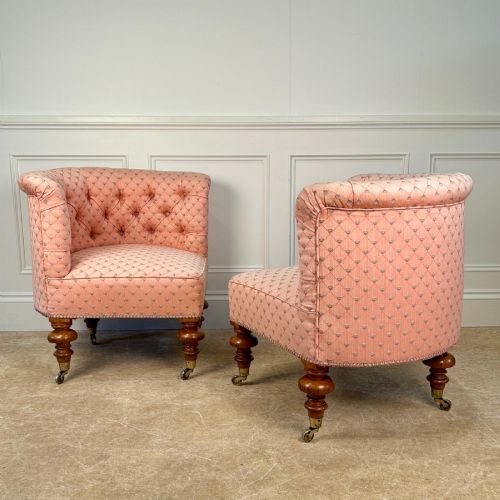
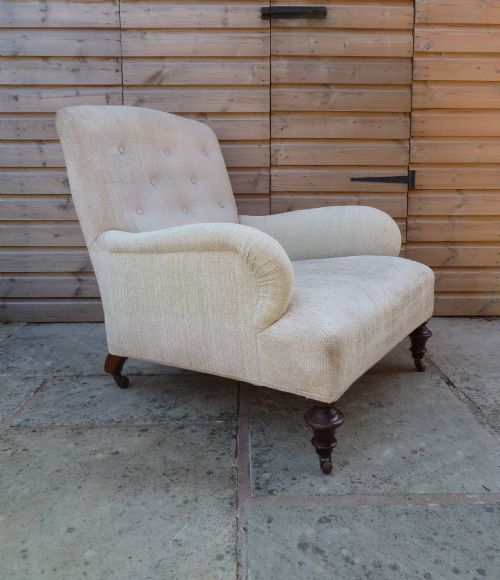
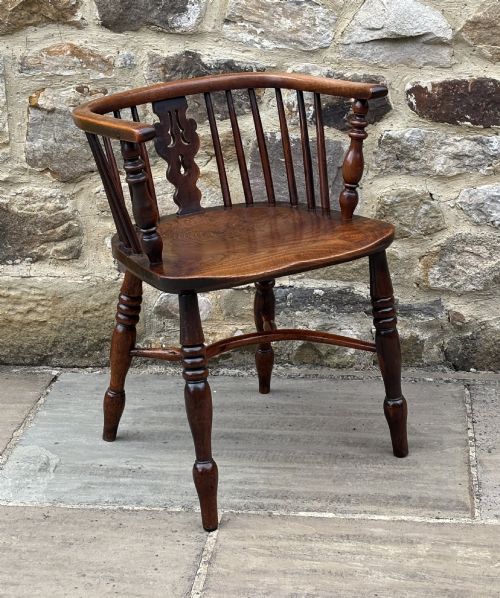
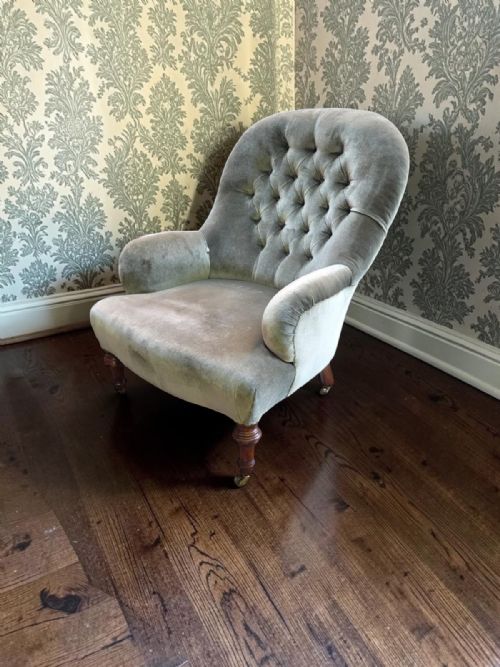
The version you are most likely to meet on this page is either a turned timber smoker's bow or a low-slung upholstered button-back chair meant for bedroom, parlour or drawing room use. Formats include Windsor armchairs, nursing chairs, occasional chairs and library chairs created in walnut, mahogany, beech and elm.
Regional variations appear frequently in the selection, taking in English country house styles, Scottish country pieces, and Nottinghamshire Windsors alongside French Napoleon III designs. Their low proportions and sturdy frames reflect the domestic comfort priorities of the period.
Materials and construction methods
Makers utilised solid hardwoods such as mahogany, walnut, oak, elm, ash, yew and beech to form the structural frames and turned spindles of these seats. Timber selection often dictated the regional style, with elm and yew favoured for country Windsor chairs and walnut or mahogany chosen for sophisticated parlour pieces.
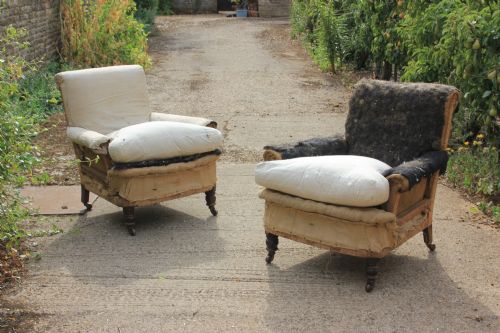
Upholstered examples rely on traditional stuffing and buttoning techniques, finished in materials like velvet, calico and specialist printed fabrics. Brass castors and iron supports occasionally supplement the timber framework on library and nursing armchairs.
A good smoker's bow keeps you comfortably anchored while you ponder life over a pipe.
Distinctions in quality and finish
The standard of a victorian low back armchair rests in the crispness of its timber turning, the integrity of its joinery, and the refinement of its carved details. Superior examples display thoughtful proportions, balanced curves and premium secondary woods rather than utilitarian utility construction.
In upholstered variations, the distinction lies in the depth and responsiveness of the sprung seat, the symmetry of the buttoning, and the harmony of the chosen fabric. Maker attribution and documented provenance also elevate select pieces well above standard workshop production.
Howard and Sons·C. Hindley and Sons·Gillows
The Victorian Low Back Armchair Glossary
- Windsor chair
- A wooden chair constructed with a solid elm or ash seat into which the legs and back spindles are wedged directly. These sturdy seats evolved through distinct regional traditions across the English countryside.
- Nursing chair
- A low-seated upholstered chair designed originally for comfort while nursing infants by the hearth. Their low profile made them particularly popular in Victorian bedrooms and drawing rooms.
- Button back
- An upholstery technique where depressions are formed in the padding by stitching deep buttons through to the frame in a geometric pattern. This method secures the internal stuffing while creating a cushioned, textured surface.
- Smoker's bow
- A sturdy, low-backed wooden armchair with a continuous curved arm rail supported by turned spindles. These robust seats frequently served in provincial inns and country homes.
- Aesthetic movement
- A late nineteenth century design style prioritising beauty and artistic expression over historical revivalism. Pieces from this movement often feature slender proportions and refined decorative details.
Victorian Low Back Armchair: Frequently Asked Questions
What is a low back armchair?
A low back armchair is a compact nineteenth century seat designed with a reduced back height for domestic comfort and ease of movement around a room.
These pieces encompass both wooden Windsor designs and fully upholstered parlour or nursing chairs from the Victorian period.
Where were these armchairs used?
They served primarily in Victorian bedrooms, drawing rooms, libraries and country parlours where space was economised.
Their compact scale and comfortable proportions also made them suitable for fireside placement and private sitting areas.
How do I identify a Victorian chair?
Victorian identification relies on timber choices like walnut and mahogany, characteristic button-back upholstery, and distinct regional turning styles.
Proportions tend to be lower and deeper than earlier Georgian seating, reflecting nineteenth century domestic fashions.
What woods are common?
Cabinet makers and country joiners utilised native and imported hardwoods including mahogany, walnut, elm, ash, yew, beech and oak.
Softer woods were typically paired with durable timbers like elm for the seats of traditional Windsor armchairs.