

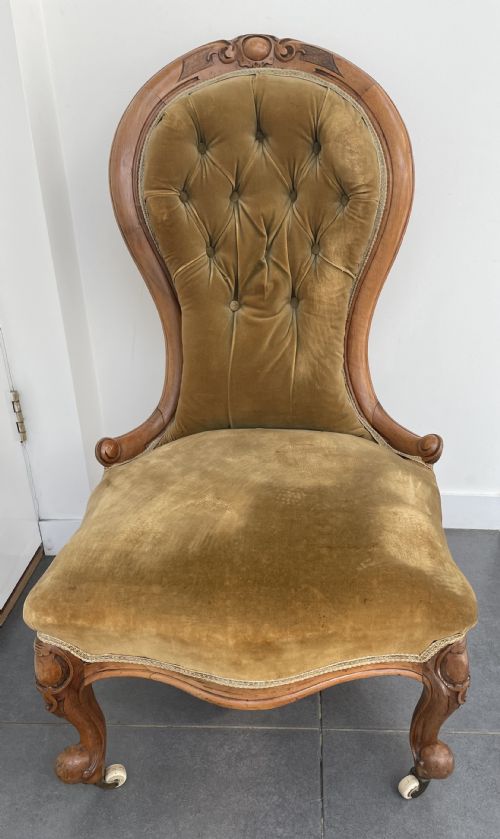
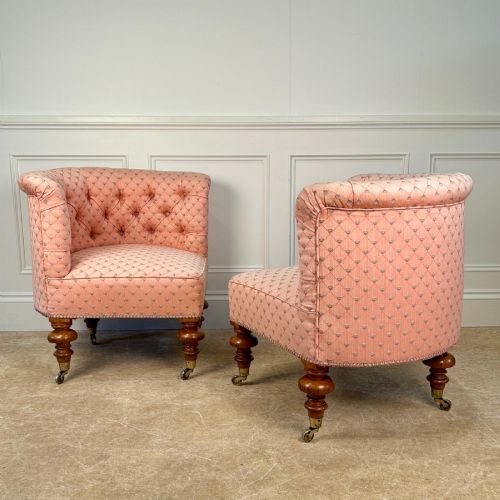
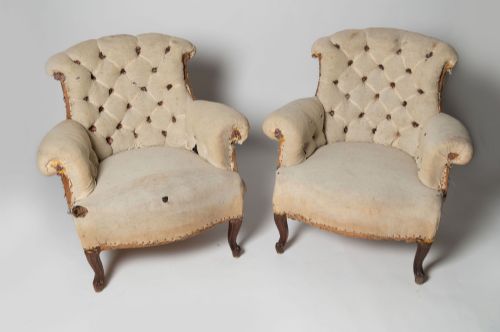
19th Century Button Back Chair
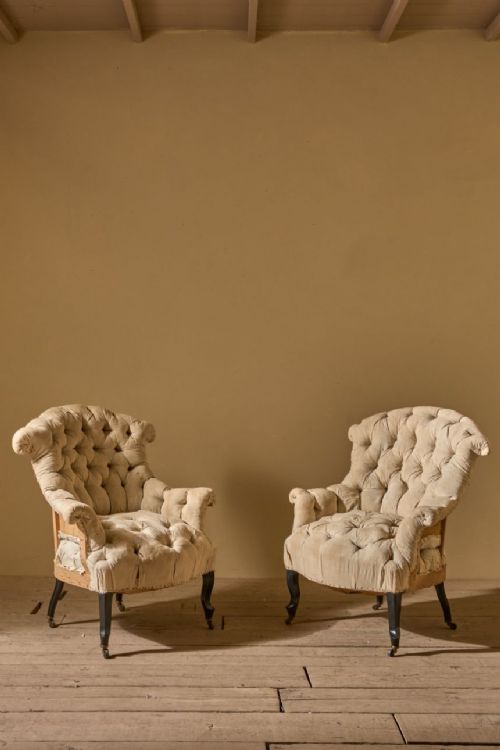
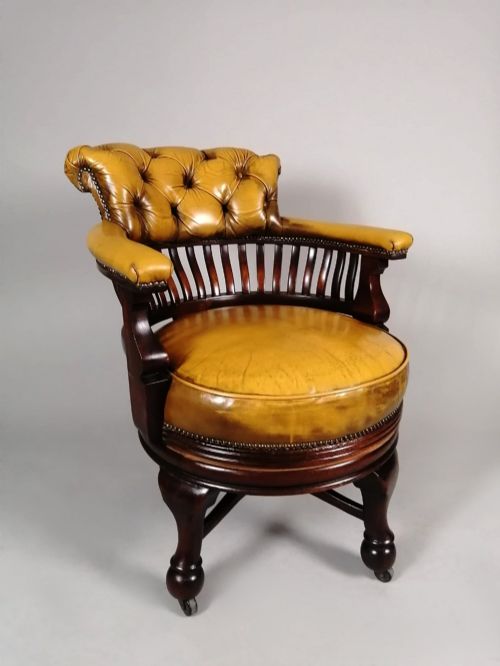
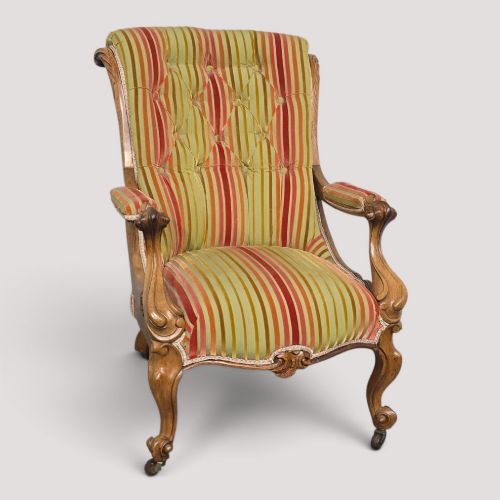
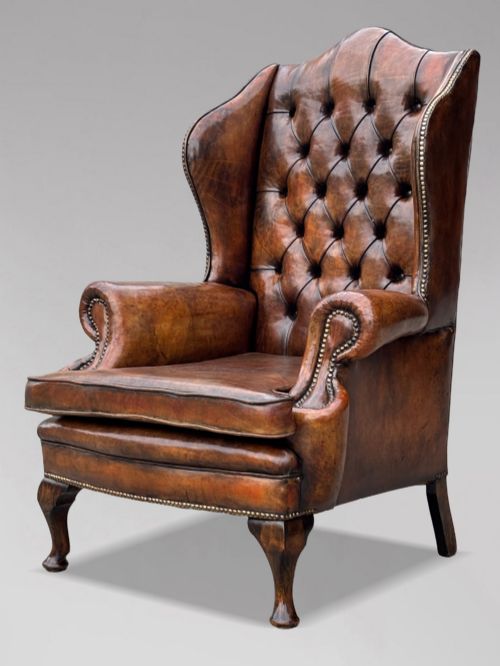
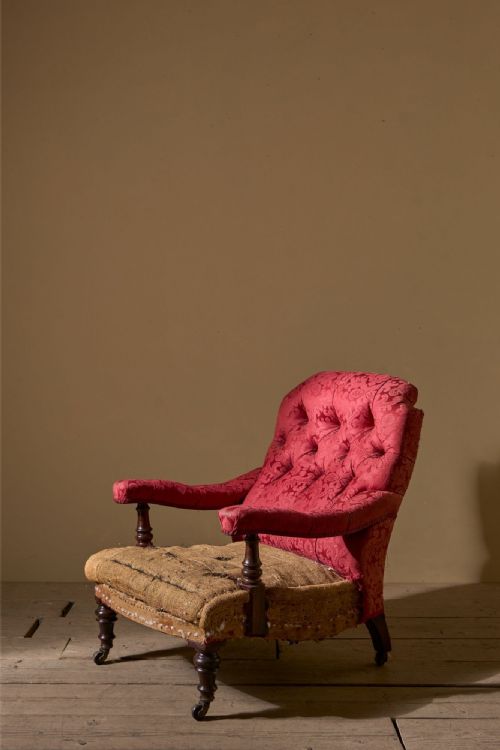
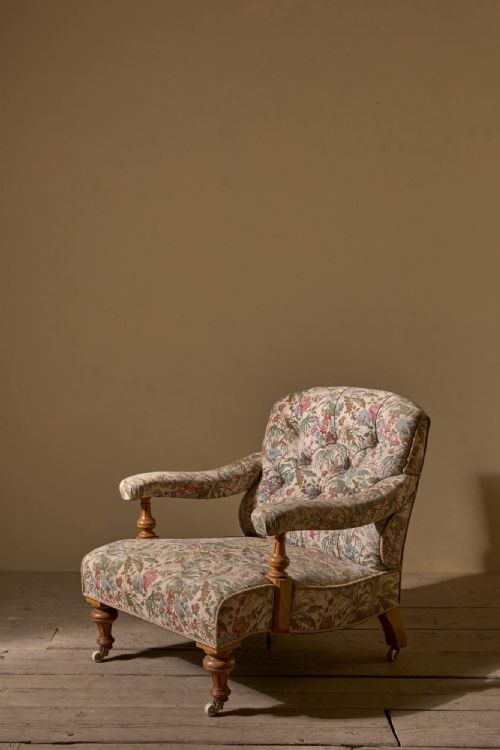
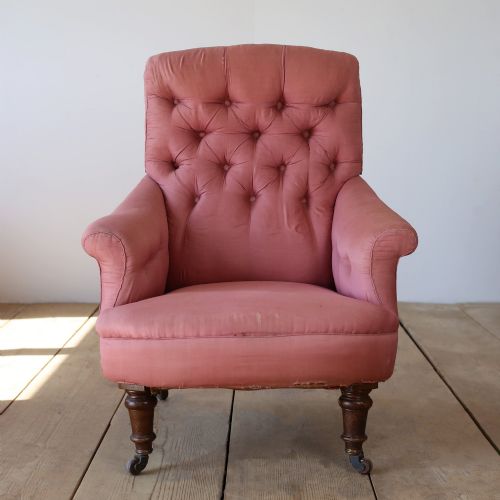
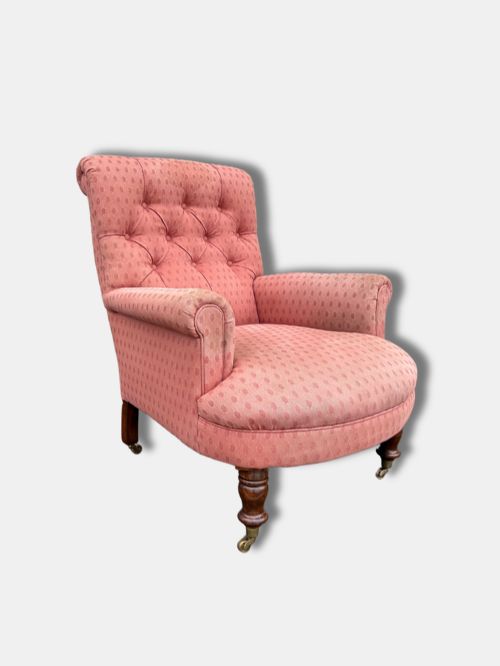
A 19th century button back chair brings deep buttoning and rich upholstery together, offering enduring comfort and strong period character for the home.
19th Century Button Back Chair
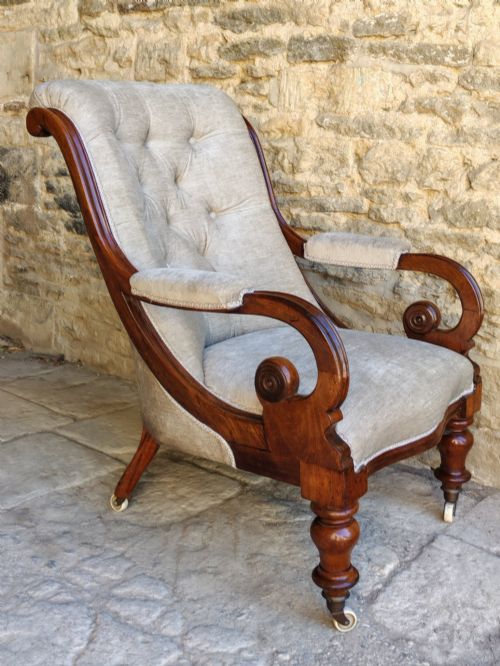
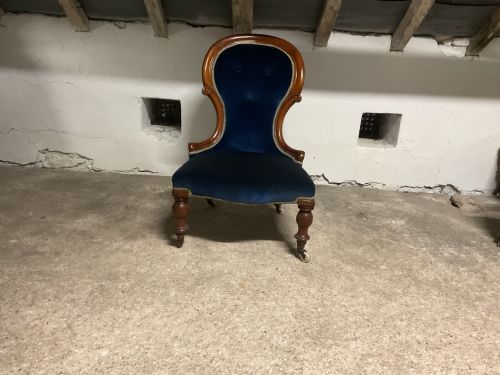
A 19th century button back chair encompasses various seating forms designed for comfort and reception rooms, ranging from library armchairs to nursing chairs and slipper chairs. The selections span the Victorian, Regency, and William IV periods, alongside French Napoleon III designs and English country house variants.
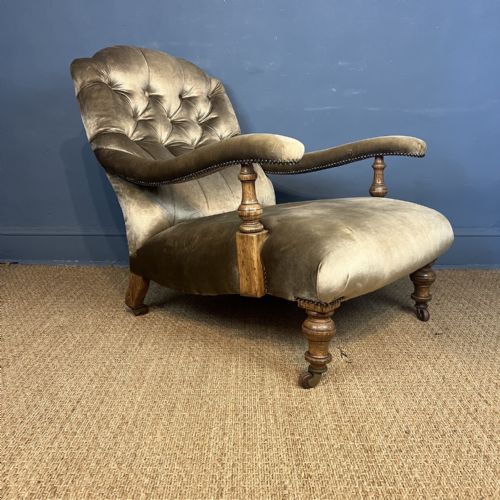
The most frequent examples on this page are armchairs and low occasional chairs featuring upholstered backs punctuated with deep tufting. Buyers also encounter chaises longues, settees, and library chairs built for domestic utility and social spaces.
These pieces reflect diverse workshop traditions, including documented makers and country house furniture. The overarching style draws on mid and late Victorian aesthetics, walnut and mahogany frames, and traditional textile coverings.
How they were made
Frames are constructed from solid hardwoods such as mahogany, walnut, oak, and rosewood, providing structural integrity for deeply sprung interiors. Joinery techniques rely on traditional mortise and tenon joints to support heavy daily use.
Upholstery involves traditional foundations utilising hessian, calico, and internal springs or stuffing, secured with brass tacks where appropriate. The defining buttoning technique draws the fabric tightly into the padding to create regular geometric recesses.
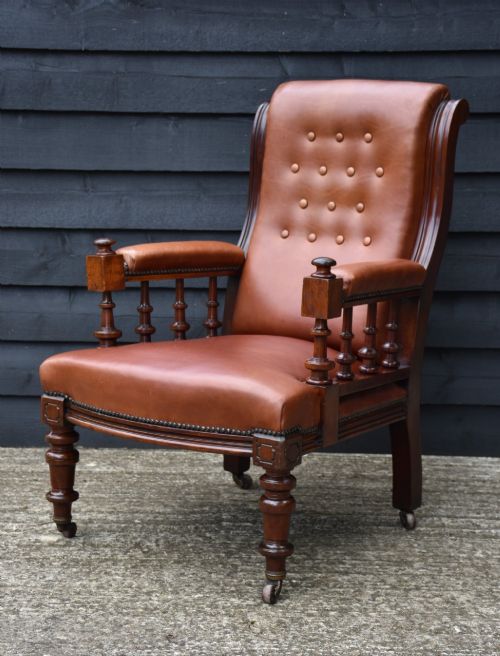
Several reading chairs include built-in swing-away stands designed specifically to hold heavy nineteenth-century volumes while the reader rested.
What varies in quality
The refinement of the timber frame carving and the choice of primary wood distinguish standard production from exceptional pieces. Walnut and figured mahogany frames with sophisticated turnings or French polish exhibit superior craftsmanship.
The execution of the buttoning and the symmetry of the pleats determine the success of the upholstery work. Higher quality examples maintain firm tension across the back and use dense stuffing that holds its shape over decades.
Gillows·Howard and Sons·Holland and Sons·Hindley and Sons
The 19th Century Button Back Chair Glossary
- Button back
- A style of upholstery where upholstery buttons are pulled deep into the padding to form a grid of diamond-shaped pleats. This technique secures the internal stuffing while adding texture to the backrest.
- Country house style
- A relaxed aesthetic associated with large English estates, favouring comfortable, heavily padded seating gathered over generations. These pieces often show softer lines and deep upholstery designed for long periods of sitting.
- Chaise longue
- An elongated upholstered seat intended for reclining, combining a chair back with an extended footrest. They appear frequently in mid-Victorian drawing rooms.
- Nursing chair
- A low-seated upholstered chair designed originally for comfort near nursery fires or during infant feeding. Their compact frames and low centres of gravity make them particularly suitable for smaller spaces.
- Reeded leg
- A column leg carved with parallel convex mouldings that resemble bundled reeds. This decorative turning appears frequently on Regency and Victorian chair legs.
19th Century Button Back Chair: Frequently Asked Questions
What is a button back chair?
A button back chair is an upholstered seat featuring deep tufting where buttons are pulled tightly into the padding. This method secures the internal stuffing and creates a distinct pattern of pleats across the backrest.
Such chairs were produced in numerous forms during the nineteenth century, including low nursing chairs, reading chairs, and large library armchairs designed for parlours and studies.
How do I identify a Victorian button back chair?
Victorian examples typically feature turned or carved wooden legs in walnut, mahogany, or oak, supporting sprung upholstered bodies with buttoned backs. The proportions tend to be generous, reflecting the domestic comfort priorities of the mid to late nineteenth century.
Examining the timber frame, internal webbing, and joinery style helps confirm the nineteenth-century origin, distinguishing them from later twentieth-century reproductions.
Were these chairs used in bedrooms?
Smaller variants such as slipper chairs and nursing chairs were frequently placed in bedrooms and dressing rooms. Their lower seat heights accommodated the heavy skirts and fashions worn by women during the period.
Larger armchairs and library chairs remained in public rooms like studies, libraries, and drawing rooms where guests and family gathered.
How do I care for leather upholstery?
Nineteenth-century leather upholstery benefits from gentle cleaning with a soft cloth and the periodic application of traditional leather dressings. Keeping the material nourished prevents it from drying out and cracking.
Avoid placing these chairs in direct sunlight or close to heat sources, which can warp the timber frames and dry out historic leather surfaces.