
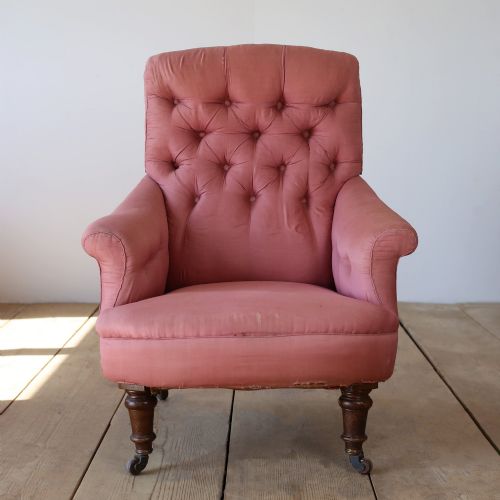
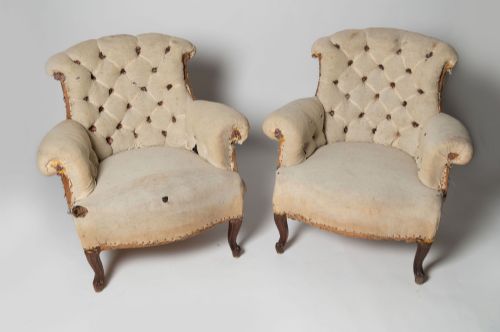
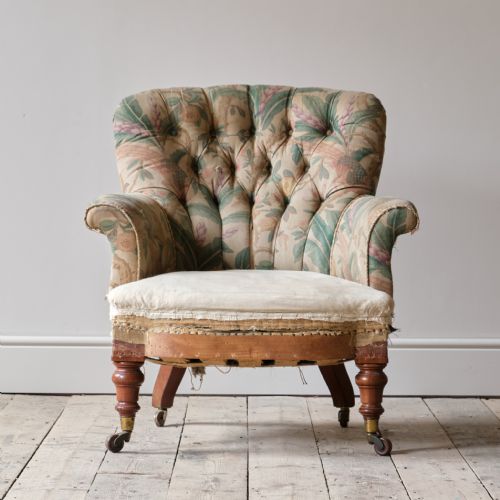
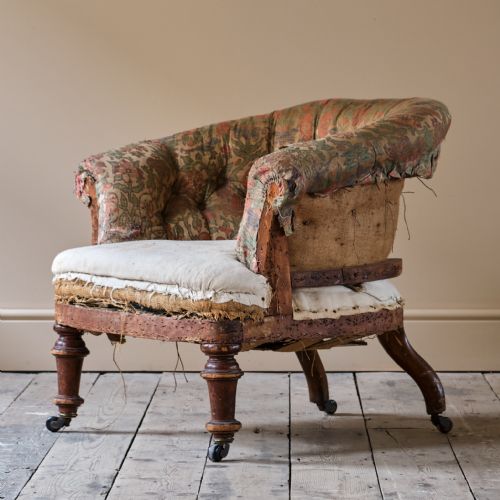




Traditional Buttoned Upholstery Chair
A traditional buttoned upholstery chair brings deep Victorian comfort and classic craftsmanship into a room.
Traditional Buttoned Upholstery Chair
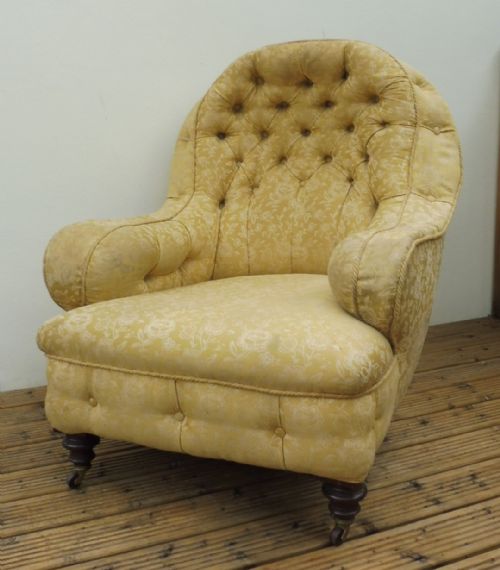
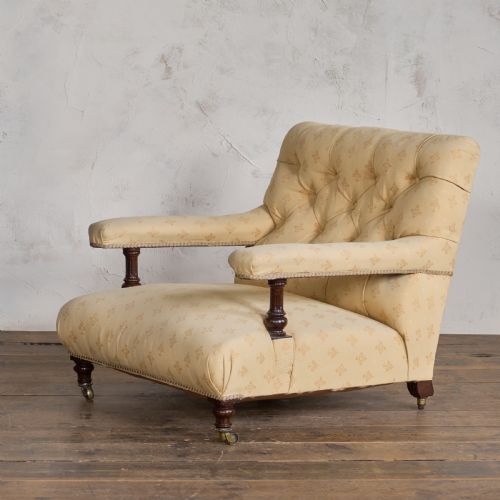
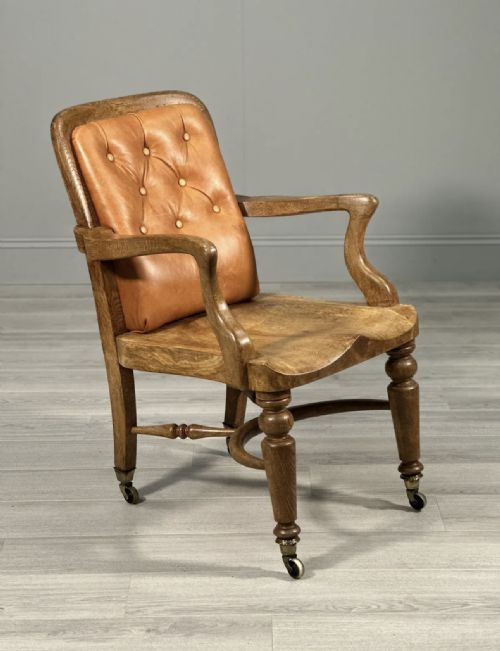
A traditional buttoned upholstery chair is typically an armchair designed for comfort, frequently appearing from the nineteenth century and the Victorian era. These seating pieces take various forms, including tub backs, country house styles, and bridge water designs, alongside desk chairs.
The selection here includes examples influenced by French Napoleon III aesthetics, Victorian revival pieces from nineteen thirty, and specific maker attributions. Buyers will encounter both open armchairs and enclosed tub shapes suited to sitting rooms and studies.
How they were made
Frames are constructed from sturdy timbers such as mahogany, walnut, oak, beech, and general hardwood, providing a solid structural foundation. Joinery and exposed woodwork are often paired with traditional stuffing and support materials.
Upholstery techniques involve Hessian foundation layers, cotton stuffing, and durable fabric coverings secured with brass detailing. Deep buttoning requires precise tension through the interior padding to create the characteristic indented pattern on the backrest.
Listings span the nineteenth century, the Victorian era, and nineteen thirty, incorporating beech, mahogany, walnut, and oak frames.
What varies in quality
Quality rests upon the integrity of the underlying timber frame and the authenticity of the period upholstery methods used. Original frames retain their structural balance, whereas revival pieces reflect the manufacturing standards of their later date.
The choice of covering material, from standard fabric to ticking and leather, alters the character of the piece. Superior examples maintain the original tension in the buttoning and the correct proportions characteristic of their specific workshop origin.
Howard and Sons·Cornelius V Smith
The Traditional Buttoned Upholstery Chair Glossary
- Tub back
- An armchair style featuring a curved, enclosing backrest that flows directly into the arms. This shape was designed to keep out draughts in nineteenth-century interiors.
- Hessian
- A coarse woven fabric utilised as a traditional foundation layer beneath the outer upholstery. It provides internal support for the stuffing materials.
- Button back
- An upholstery method where tufting buttons are pulled deep into the padding at regular intervals. This secures the internal filling and creates a geometric quilted pattern.
- Bridgewater armchair
- A specific nineteenth-century seating form known for low arms and deep, relaxed proportions. It represents a recognised vernacular of comfortable domestic furniture.
- Tick
- A strong, tightly woven cotton or linen fabric traditionally used to contain mattress and upholstery stuffing. It frequently appears as an original covering material on nineteenth-century seating.
Traditional Buttoned Upholstery Chair: Frequently Asked Questions
What is a traditional buttoned upholstery chair?
A traditional buttoned upholstery chair is a nineteenth-century or Victorian seating piece featuring deep tufted buttoning on the backrest. These chairs were built for domestic comfort using timber frames and traditional stuffing materials.
They appear in various formats such as tub back chairs, country house designs, and desk chairs. Each version utilises specific wood species like mahogany or walnut beneath the fabric covering.
How do I identify a Victorian armchair?
Victorian armchairs are identified by their nineteenth-century timber frames, traditional joinery, and specific upholstery styles like deep buttoning. They often employ hardwoods such as beech, oak, or walnut.
Details like turned wooden legs, exposed mahogany, and Hessian foundation layers point directly to this nineteenth-century period. Makers sometimes included maker stamps or specific stylistic traits unique to the era.
Where were these chairs used?
These armchairs were primarily utilised in nineteenth-century sitting rooms, libraries, and country house drawing rooms. Their sturdy hardwood frames and padded upholstery provided formal yet comfortable seating for daily domestic life.
Desk variants were placed in studies and libraries for writing and administrative work. Their durable construction allowed them to withstand heavy daily use across generations.
How do I live with antique upholstery?
Living with antique upholstery involves placing the chair away from direct sunlight to protect fabrics and exposed timber frames. Regular gentle cleaning preserves the cotton, Hessian, and exterior textile coverings.
Maintaining stable room humidity prevents the hardwood and internal stuffing from degrading. These pieces function well as statement armchairs in modern or traditional living spaces.