





Victorian Loving Cup
A victorian loving cup is a traditional two-handled drinking vessel designed for communal toasts, bringing substantial ceramic and silver presence to any display.
Victorian Loving Cup
A victorian loving cup encompasses robust ceramic vessels, silver presentation pieces, and novelty drinkware intended for shared use. These drinking vessels typically feature two or three handles to allow safe passing between guests at gatherings and celebrations.
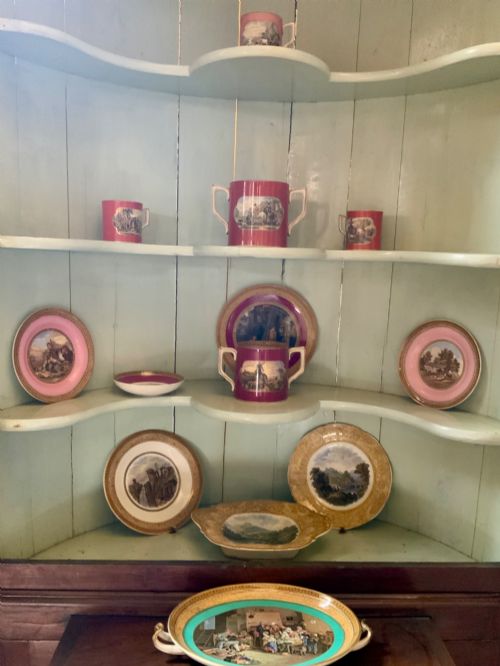
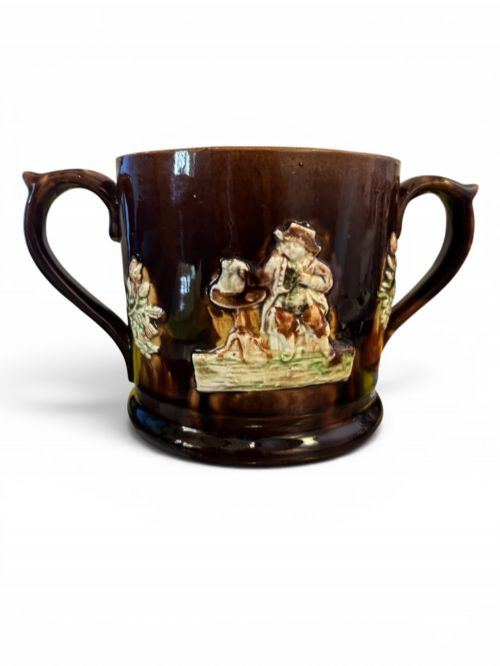
The pieces on this page span Earthenware, Porcelain, Stoneware, and Silver, alongside silver-plated and oak-mounted examples. Ceramic versions often display transfer-printed hunting scenes or playful interior surprises like ceramic frogs and newts.
Most items originate from the nineteenth century, including specific dates from the eighteen-forties onwards, stretching into early twentieth-century Edwardian production. Forms range from large harvest cups and tygs to pedestal mugs and silver trophies.
Materials and construction
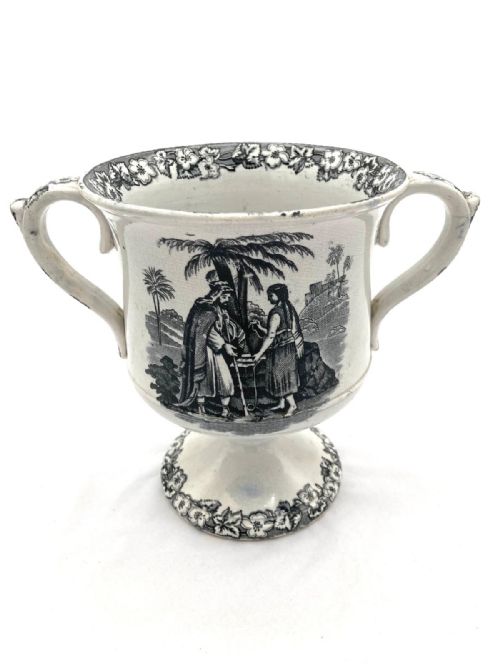
Makers shaped ceramic examples using earthenware, porcelain, and stoneware, frequently finishing surfaces with detailed glazes, enamel colours, and gold leaf highlights. Transfer printing transferred intricate black and white hunting motifs onto the clay body before firing.
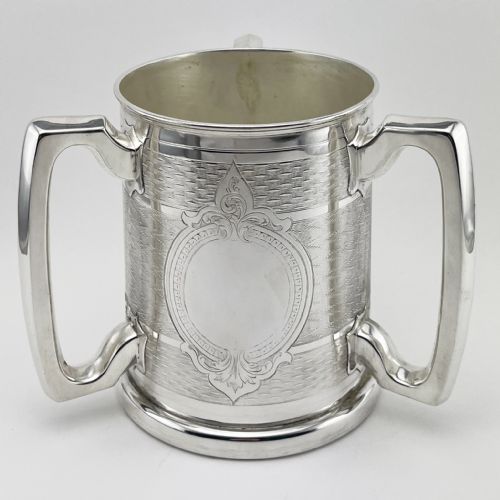
Silver and silver-plated items relied on metalsmithing and engraving techniques to create crisp handles, rims, and presentation inscriptions. Oak wood components appeared in combination with silver plate, while specialised stoneware utilised hand-carved or pâte-sur-pâte ornamentation.
Listings feature nineteen-ninth-century pieces alongside Edwardian items from 1910 and 1920, spanning ceramic, stoneware, and silver materials.
Distinguishing quality in these vessels
Quality rests in the crispness of the transfer printing, the delicacy of hand-painted enamel work, and the definition found in silver engraving. Superior ceramic pieces display smooth glazing and well-modelled handles securely joined to the body.
Artisanal contribution elevates certain items, such as Doulton Lambeth stoneware featuring detailed stonework or Royal Worcester porcelain with blush ivory finishes. Metal mounts and sterling silver components show superior weight, secure joining, and balanced proportions across the multiple handles.
Florence E. Barlow·Mackay & Chisholm·Royal Worcester·John Grinsell & Son·Charles Stuart Harris
The Victorian Loving Cup Glossary
- Loving cup
- A large drinking vessel equipped with two or more handles, traditionally passed around a group for communal toasts. These forms appear in ceramic, glass, and precious metals.
- Tyg
- A cylindrical drinking vessel featuring three or more handles, allowing multiple people to hold the mug securely. This form is particularly common in English pottery and stoneware.
- Prattware
- A type of English earthenware popular in the nineteenth century, known for underglaze polychrome printing in colours like ochre, blue, and brown. It frequently decorates figures, plaques, and utility vessels.
- Blush ivory
- A porcelain finish developed by Royal Worcester featuring a creamy, matte ivory ground decorated with tinted floral patterns and gold gilding. This style gained immense popularity during the late nineteenth and early twentieth centuries.
- Quaich
- A traditional Scottish two-handled drinking vessel used for whisky or other spirits. While typically shallow and circular, variations include novelty forms styled like barrels.
- Transfer printing
- A decoration technique where an engraved metal plate transfers a design onto paper, which is then stamped onto the ceramic surface before glazing. This method allowed intricate pictorial scenes to be replicated consistently.
Victorian Loving Cup: Frequently Asked Questions
What is a loving cup used for?
A loving cup served as a communal vessel for sharing wine, ale, or punch during weddings, banquets, and civic ceremonies. The multiple handles allowed the cup to be passed safely from hand to hand around a table.
Over time, many examples transitioned into decorative presentation pieces, sports trophies, or commemoration items given to notable individuals.
How do you tell a tyg from a standard mug?
A tyg is distinguished by having three or more distinct handles arranged around the body, whereas standard mugs or tankards feature only one handle. This multi-handle design originated to let drinkers share the vessel securely without slipping.
Ceramic tygs often appear in nineteenth-century English pottery and stoneware, sometimes incorporating interior surprises like small frogs or newts.
What are surprise frogs in old mugs?
Surprise frogs are small ceramic figures modelled inside the bottom of historical drinking vessels, positioned to emerge as the drinker finished their beverage. Potters added these whimsical elements to amuse guests during communal drinking games.
These pieces typically date from the nineteenth century and often feature alongside transfer-printed hunting scenes on earthenware bodies.
How do I date a silver mounted loving cup?
Dating silver-mounted pieces relies on examining official hallmarks stamped onto the metal components, which indicate the assay office and year of manufacture. Stylistic clues in the ceramic body or oak mount provide supporting chronological context.
Silver-plated items lack traditional hallmarking date letters, requiring assessment through manufacturing marks, maker signatures, and overall design style.