


Victorian Lion Figures
Victorian lion figures capture the majesty and domestic sentiment of the nineteenth century through enduring metal, ceramic, and carved forms.
Victorian Lion Figures
Victorian lion figures encompass sculptural works produced across the nineteenth century, ranging from monumental architectural ornaments to domestic hearthside accessories. When exploring victorian lion figures, buyers encounter cast iron doorstops, earthenware Staffordshire pottery pairs, and bronze studies designed to project strength and authority.
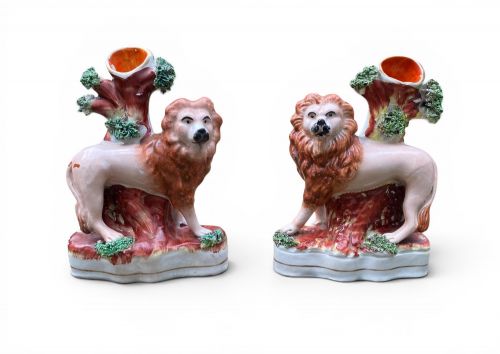
The most common examples on this page are ceramic Staffordshire figures, often modeled as recumbent or rampant beasts with lead glazes and painted details. These earthenware versions reflect the domestic tastes of the period, frequently appearing as matched pairs meant to flank a fireplace or mantelpiece.
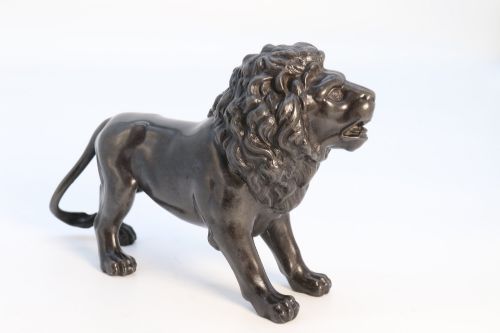
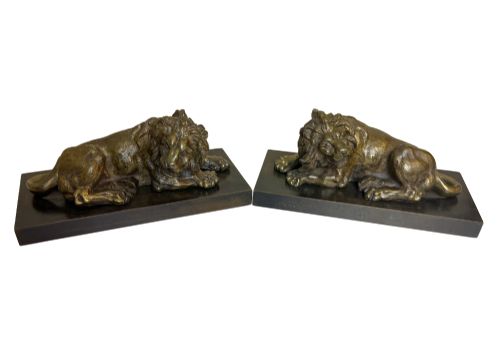
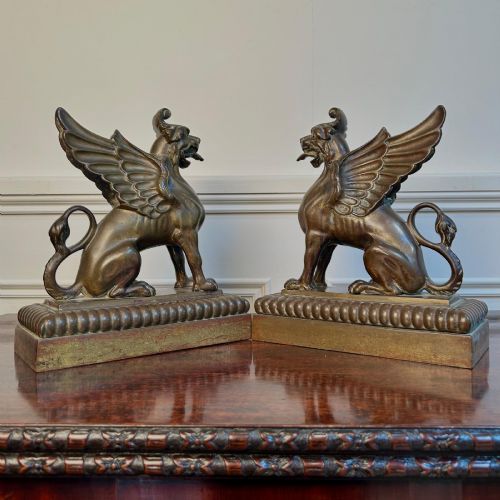
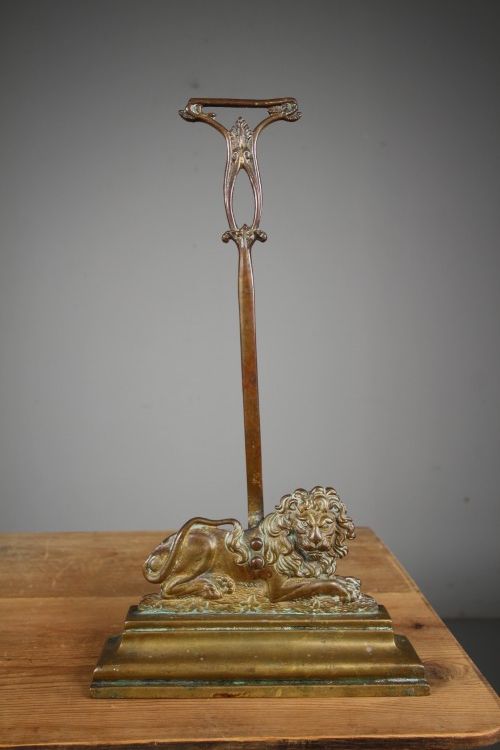
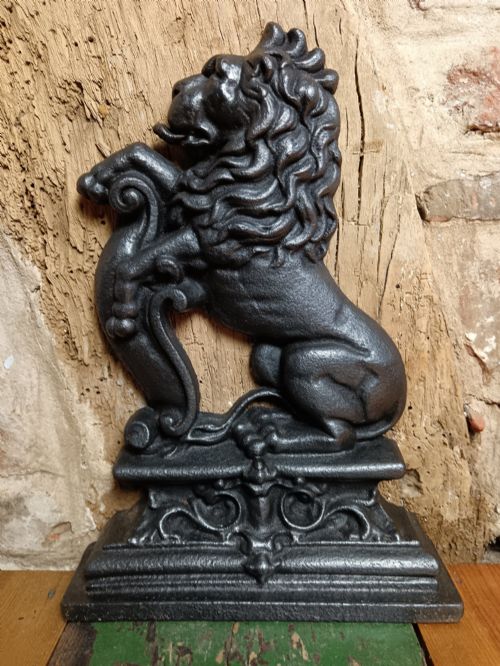
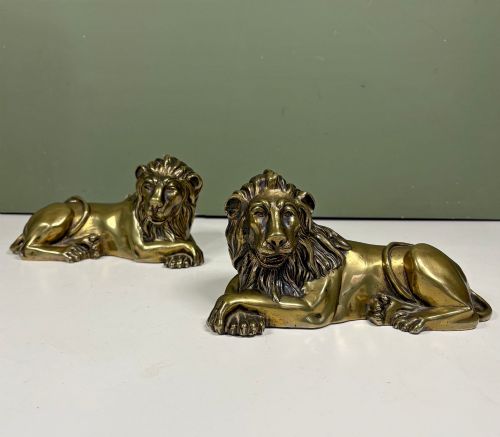
Beyond earthenware, the selection includes heavy cast iron door porters, bronze resting lions, and carved wooden or marble sculptures drawing on Neoclassical and Gothic Revival styles. These diverse forms demonstrate how makers adapted the king of beasts for utilitarian household duties as well as pure decorative display.
Materials and Construction Techniques
Ceramic pieces relied on earthenware bodies shaped in moulds, finished with lead glazes, treacle glazes, or copper lustre. Staffordshire potteries and regional works applied hand-painted touches over the glaze to define eyes, manes, and bases before firing.
Listings feature items spanning the 19th Century, Victorian period, and early 20th century, utilising earthenware, cast iron, bronze, and wood.
Distinctions in Quality
The standard of modeling distinguishes finer sculptural pieces from basic production wares. Superior examples display crisp anatomical detail in the casting or carving, capturing the tension of the pose rather than a generic silhouette.
Glaze application and surface preservation also determine the calibre of ceramic and metal items. Even firing, rich treacle glazes, and well-preserved painted or bronzed surfaces elevate the visual presence of the piece.
Rockingham Pottery·Lancaster and Sons of Hanley·Luigi Frullini·Antoine-Felix Bouré
The Victorian Lion Figures Glossary
- Recumbent
- Lying down while resting on the front paws. This classic posture is frequently seen in pairs designed for hearths and bookends.
- Rampant
- Standing on the hind legs with forelegs elevated in a defensive or aggressive stance. This heraldic pose translates well to heavy cast iron doorstops.
- Spill vase
- A hollow ceramic vessel incorporated into a figure group designed to hold wooden spills for lighting fires. These practical additions often accompany Staffordshire animal groups.
- Treacle glaze
- A thick, dark brown lead glaze producing a shiny, translucent finish. It appears frequently on nineteenth-century earthenware figures.
- Medici lion
- A representation of the classical marble lion sculpture in Florence. Victorian makers frequently copied this specific antique form in bronze, iron, and pottery.
Victorian Lion Figures: Frequently Asked Questions
Where were these figures placed in a Victorian home?
Doorstops and door porters stood on the floor to hold heavy interior doors open against drafts. Smaller ceramic figures and spill vases occupied prominent positions on mantelpieces and sideboards.
Matched pairs often sat symmetrically, bringing order and decorative symmetry to the main rooms of the house. Toy figures and miniature pin cushions functioned as desk accessories or nursery items.
How do I care for cast iron and bronze lions?
Metal figures require dry dusting with a soft cloth to protect their surfaces from moisture. Avoid liquid cleaners that might strip historic patinas or black painted finishes.
Cast iron doorstops benefit from occasional light waxing to prevent surface oxidation. Keeping them away from damp environments ensures the metal remains stable.
Are ceramic lion figures fragile?
Staffordshire earthenware and porcelain have sturdy bodies but remain vulnerable to sharp impacts and heavy drops. The raised ears and tails are common points of historic damage.
Handle them with supported bases rather than by protruding decorative elements. Displaying them away from high-traffic edges protects them from accidental knocks.
What is the difference between Staffordshire pottery and cast iron lions?
Staffordshire pottery lions were moulded from clay, fired in kilns, and decorated with glazes and paint for indoor display. They served decorative and domestic purposes on mantelpieces.
Cast iron lions were poured in foundries to create heavy, utilitarian objects like doorstops. Their industrial composition allowed them to withstand the rigorous daily demands of holding heavy doors.