


Victorian Leather Armchair Brass
A victorian leather armchair brass brings sturdy nineteenth-century comfort and timeless character to any study or library.
How they were made
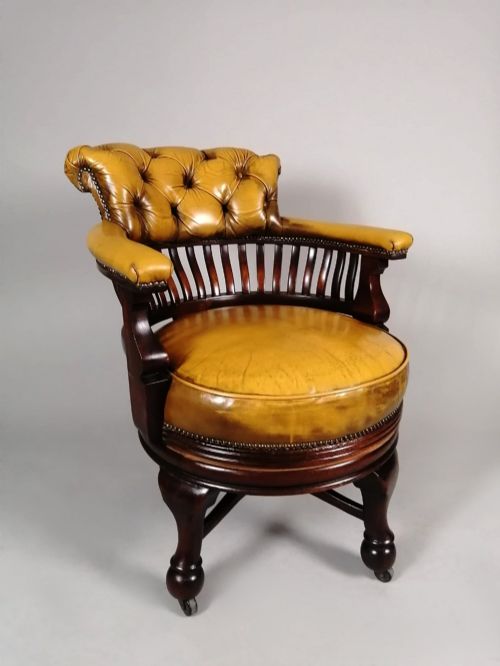
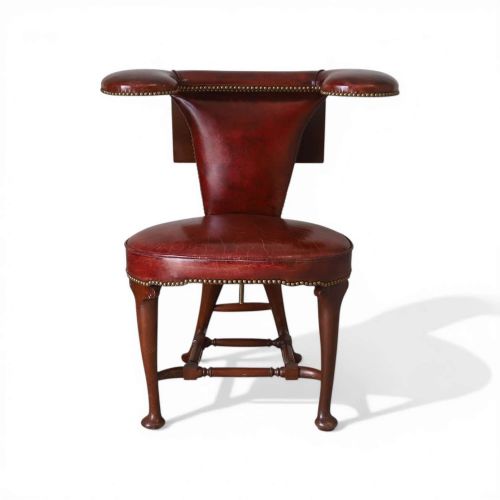
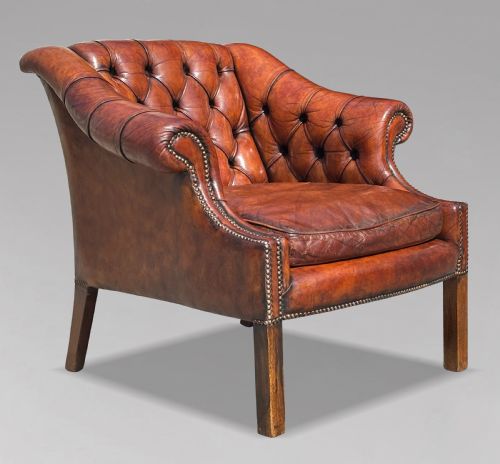
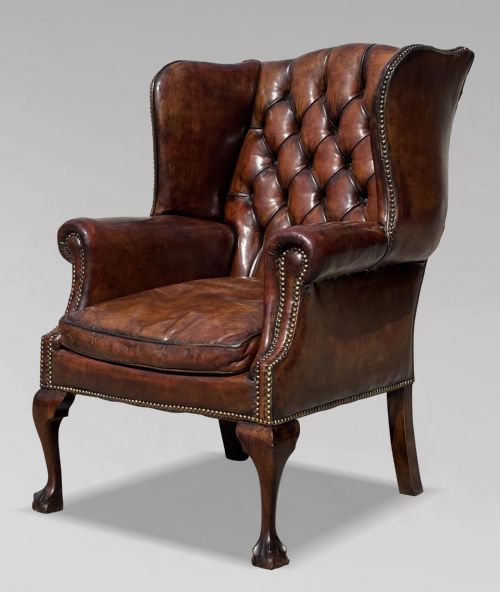
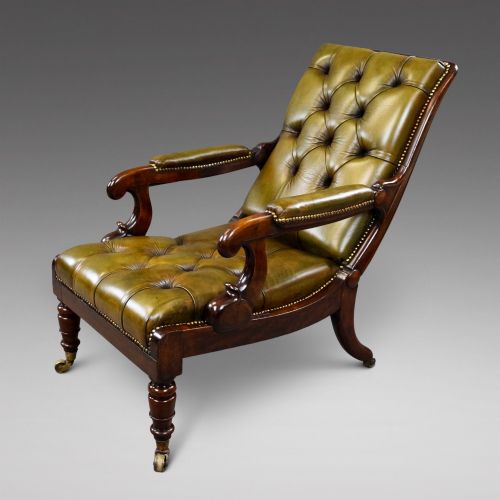
Makers constructed these frames using dense hardwoods such as mahogany, oak, and walnut, frequently incorporating hand-dyed or hand-coloured leather upholstery secured with individual brass studs. Structural support often relied on turned wooden legs terminating in brass cappings and castors.
Advanced variants integrated mechanical elements such as adjustable reclining mechanisms, cast iron frames, and revolving pivots for office utility. Craftsmen combined deep button tufting and padded scroll arms to deliver durability alongside refined aesthetics.
What varies in quality
The distinction between ordinary seating and exceptional pieces rests upon the integrity of the timber frame and the depth of the upholstery work. Hand-dyed leather patination and well-executed buttoning demonstrate superior craftsmanship compared to plain flat surfaces.
Hardware details such as original brass castors and substantial framework elevate the architectural merit of a chair. Superior proportions and functional mechanisms like smooth revolving actions or adjustable reclining frames distinguish finer examples.
The listings feature nineteenth-century and early twentieth-century pieces built from mahogany, oak, walnut, and leather, incorporating brass and cast iron elements.
William Birch·Howard & Son's·Gillows·W & T Avery
The Victorian Leather Armchair Brass Glossary
- Chesterfield
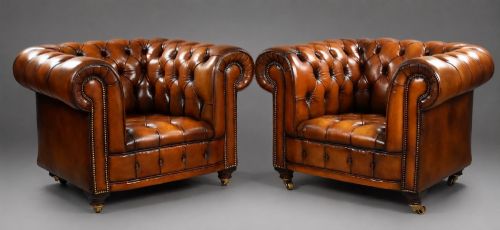
- A heavily upholstered chair style typically featuring deep button tufting and rolled arms of equal height. This form offers robust seating with traditional English presence.
- Captain's Chair
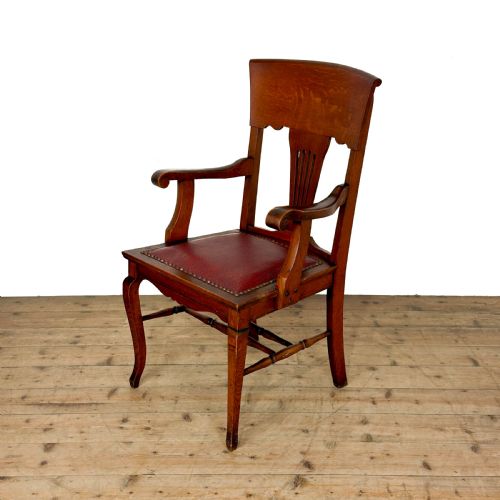
- A sturdy desk or office chair featuring a rounded low back supported by vertical spindles over a wooden seat or leather pad. These rotating or stationary seats suit working environments.
- Wingback
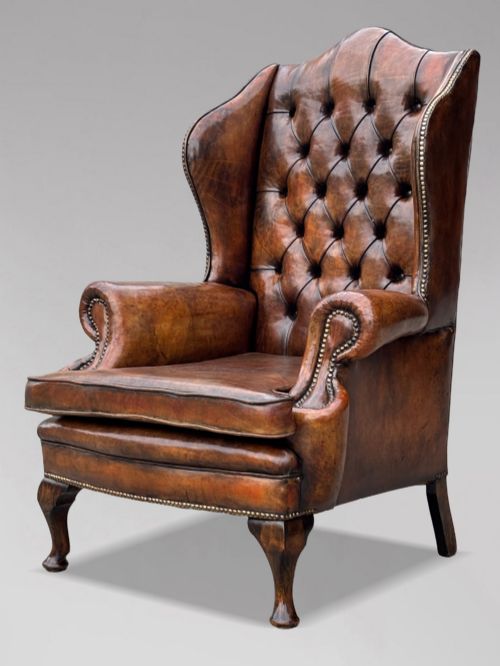
- An armchair featuring protective side panels designed to shield the occupant from drafts. These high-backed seats frequently display buttoned leather upholstery and brass studding.
- Morocco Leather
- Goat skin tanned using sumac, prized for its distinct grain pattern and durability. This material frequently covers nineteenth-century library seating.
- Castor
- A small wheel mounted on a swivel attached to chair legs for mobility. Brass versions commonly finish nineteenth-century library and desk armchairs.
Victorian Leather Armchair Brass: Frequently Asked Questions
How do I identify a Victorian desk chair?
Victorian desk chairs typically combine mahogany or oak frames with revolving mechanisms, castors, and leather seats. Many feature horseshoe backs or captain chair configurations suited for nineteenth-century studies.
They rely on sturdy timber construction and brass hardware to withstand daily office use while maintaining a formal aesthetic.
Are these leather armchairs comfortable for daily use?
These nineteenth-century chairs were built for sustained reading and administrative work, offering supportive sprung or padded seats. Generous proportions and ergonomic scroll arms accommodate long periods of sitting.
Regular conditioning of the leather preserves the supple texture required for everyday comfort.
How can I tell if the leather is original?
Original leather displays natural patination, subtle variations in hand-dyed colour, and fine wear patterns accumulated over decades of use. It sits tightly against the frame with evenly spaced brass studding.
Replaced upholstery often exhibits uniform modern dyeing without the distinct historical character of nineteenth-century hides.