
Victorian Leaf Table
A victorian leaf table brings flexible timber engineering into the nineteenth-century interior, offering drop leaves or extension mechanisms to adapt surface space.
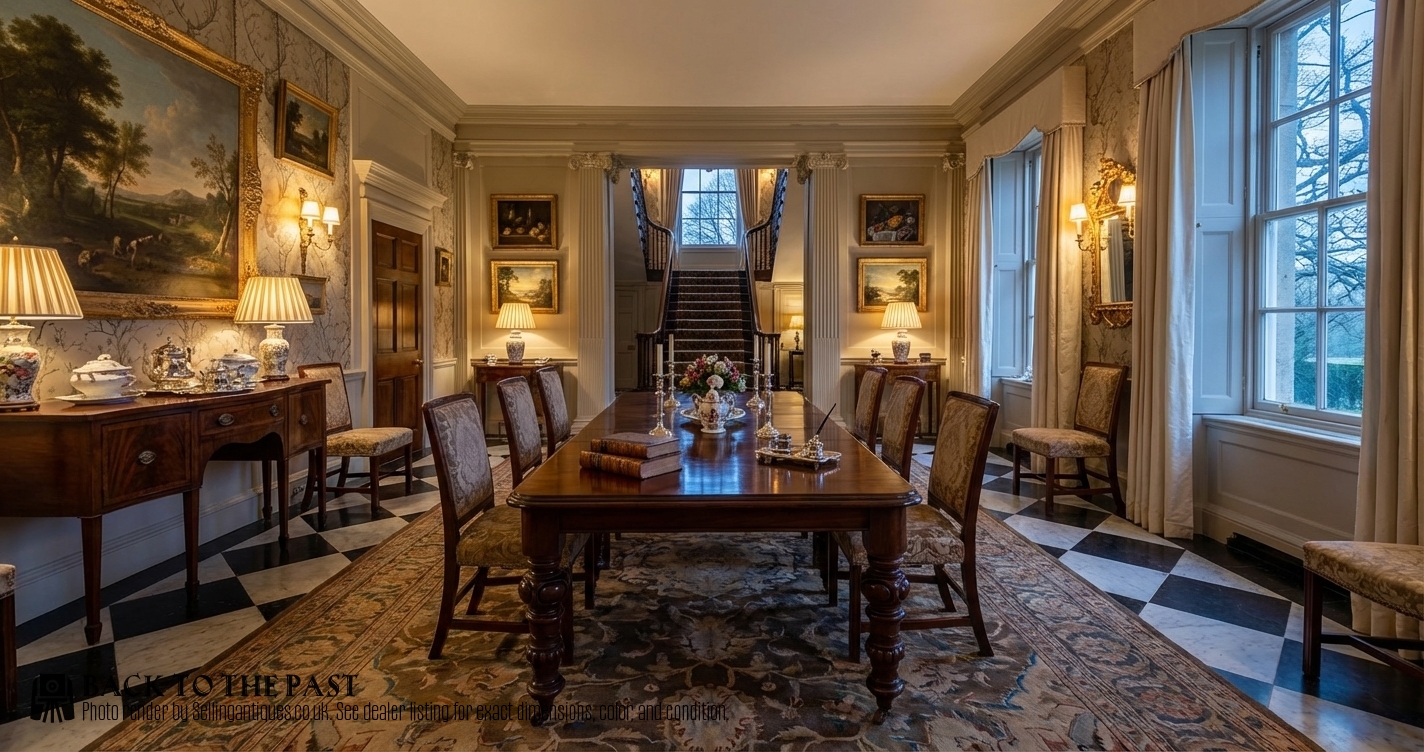
Victorian Leaf Table
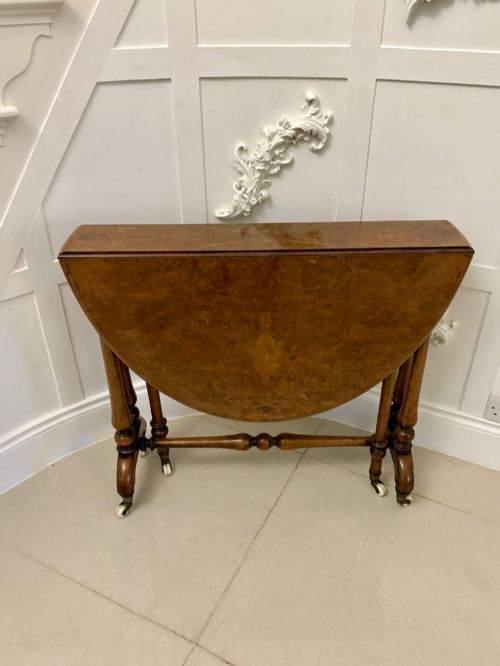
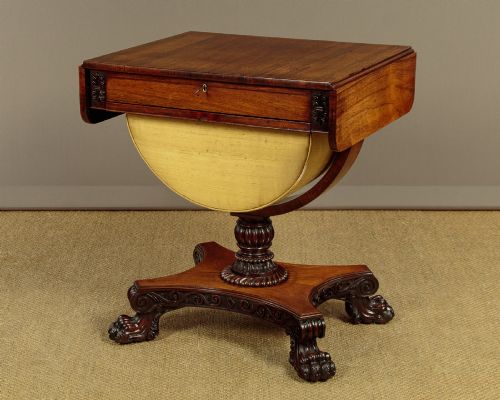
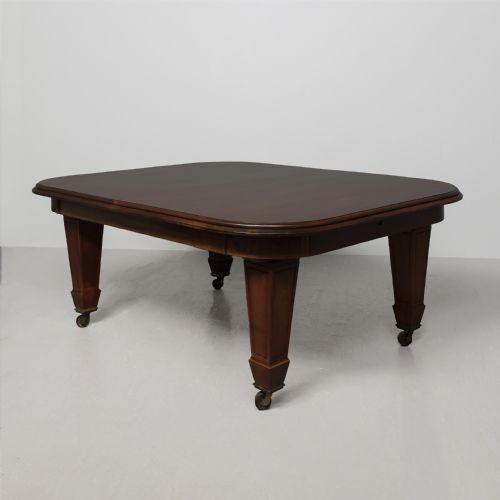
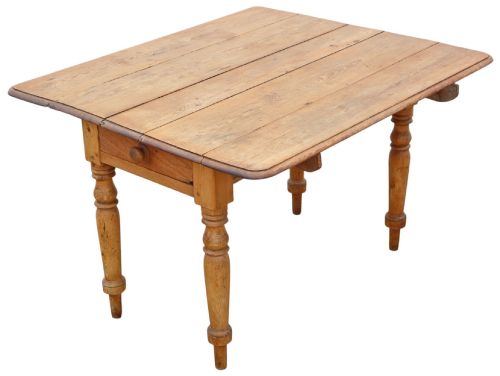
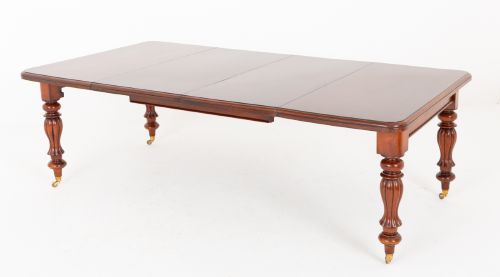
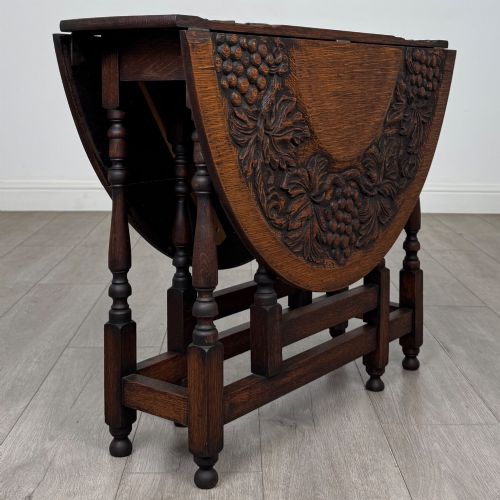
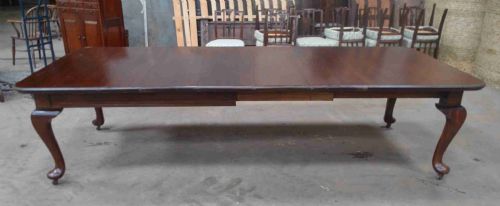
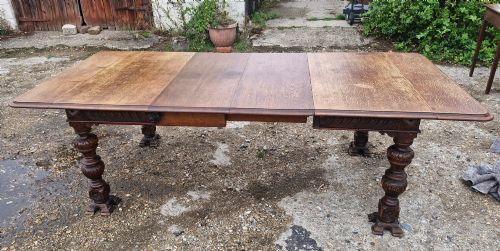
A victorian leaf table spans several distinct utilitarian and social forms, from large dining tables designed for expansion to smaller occasional, card, and Pembroke pieces intended for parlours. The listings show a strong presence of mahogany and walnut extending formats alongside folding drop-leaf tables in oak and pine.
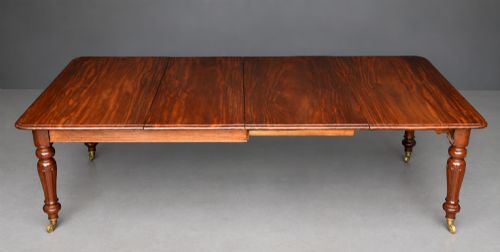
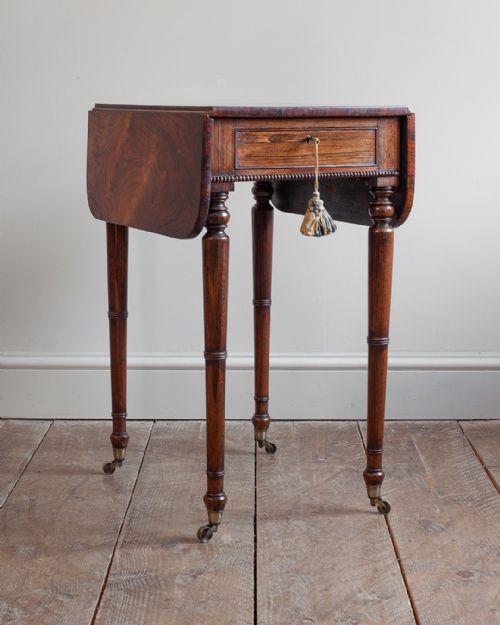
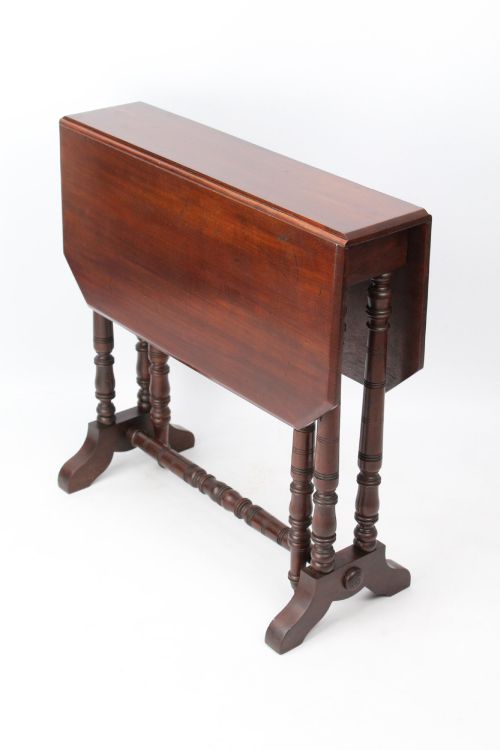
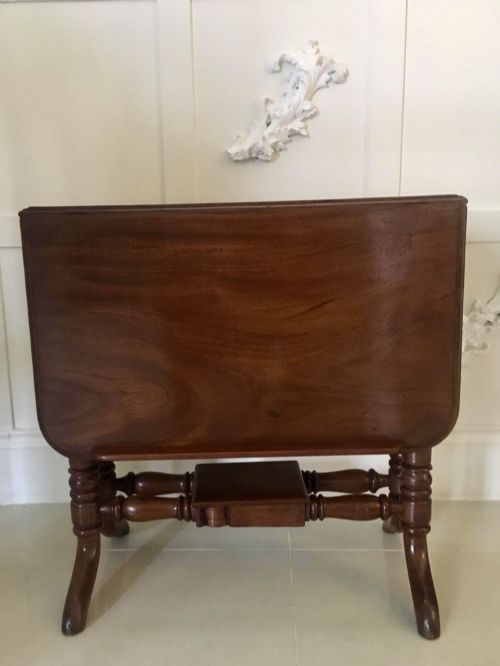
Dining examples frequently utilise wind-out mechanisms to accommodate multiple leaves, while smaller Sutherland and Pembroke tables rely on hinged flaps supported by swinging legs. These versatile surfaces originate predominantly from the nineteenth century, reflecting a period of domestic innovation in space-saving furniture.
Materials and Construction
Cabinet makers relied heavily on dense hardwoods such as mahogany and walnut, frequently incorporating burr walnut veneers for decorative surfaces on smaller occasional tables. Pine and oak appear regularly in kitchen and utilitarian drop-leaf variants, providing sturdy support for daily domestic labour.
Extension tables employ internal runner frames and metal wind-out screws to separate sections evenly, ensuring stability when additional leaves are inserted. Hinges, brass castors, and scissor actions facilitate the smooth movement of folding flaps and drop leaves.
The listings demonstrate that mahogany and walnut dominate the formal dining and Sutherland tables, while pine and oak form the primary materials for kitchen drop-leaf furniture.
Distinctions in Grade
Quality rests in the integrity of the timber selection and the precision of the mechanics, visible in the matching grain across added leaves and the smooth operation of extension runners. Superior examples display refined hand-carving on supports and pedestals rather than purely utilitarian assembly.
The presence of original leaves, matching brass castors, and intact folding mechanisms elevates a piece above standard domestic utilitarian ware. Finer tables balance decorative marquetry or figured veneers with robust structural joinery that withstands repeated adjustment.
The Victorian Leaf Table Glossary
- Drop leaf
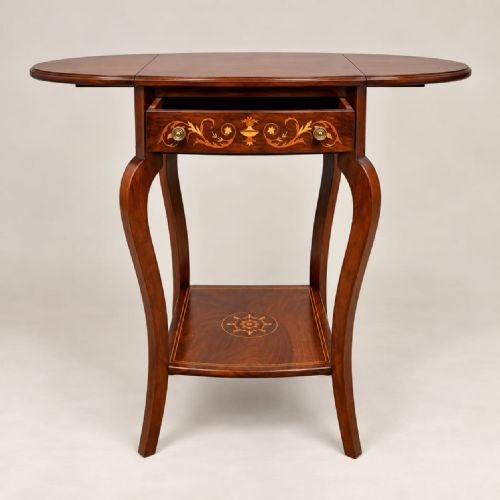
- A table featuring fixed centre sections with hinged flaps on either side that fold down when not in use. These flaps are typically supported by swing legs or brackets.
- Wind out
- An extending dining mechanism operated by a detachable crank handle that turns an internal screw thread to draw table sections apart for extra leaves. This system became widespread during the nineteenth century.
- Sutherland table
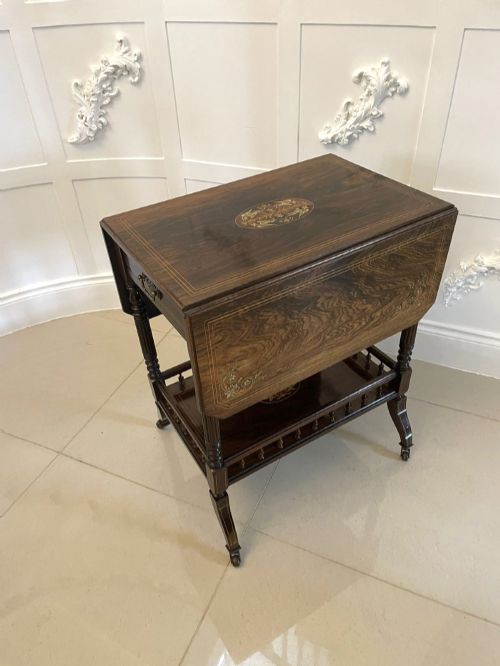
- A narrow-profile drop leaf table featuring exceptionally slender folding flaps that hang almost vertically when lowered. They often rest on twin gateleg supports and castors.
- Pembroke table
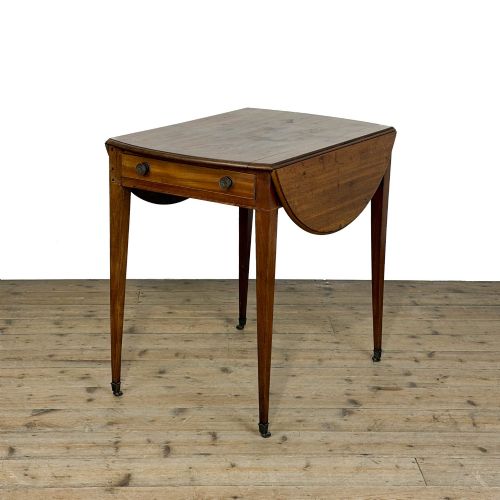
- A small rectangular side table with two hinged drop leaves on opposing sides, frequently fitted with one or more small drawers. These tables originated in the eighteenth century but remained popular through the Victorian era.
- Draw leaf
- A table equipped with underleaves that slide out from beneath the main top surface to extend its length without requiring separate loose leaves. The mechanism relies on sliding bearer rails.
Victorian Leaf Table: Frequently Asked Questions
How do extending tables work?
Extending tables rely on internal wooden runners and metal screw mechanisms operated by a crank handle to part the central halves. Additional timber leaves drop into the resulting gap to expand the surface area.
Once fully opened, brass clips or alignment pins secure the leaves tightly together to ensure a level dining surface without gaps.
What is a Sutherland table used for?
A Sutherland table serves as a compact tea or occasional table designed to occupy minimal floor space when its narrow flaps hang down. Dropping the leaves allows the piece to slide against a wall or beside a chair.
Raising both leaves transforms the narrow top into a wider surface suitable for books, games, or tea service.
How do I identify a Pembroke table?
A Pembroke table is recognised by its distinctive proportions, featuring a small rectangular centre top flanked by two short hinged flaps. It frequently includes a single friwe drawer and tapered legs fitted with castors.
These tables were traditionally positioned beside seating or windows for writing and needlework.
Are leaves usually original to the table?
Original leaves match the primary timber grain, colour, and secondary framing construction of the main table top precisely. Replacement leaves may exhibit subtle discrepancies in wood hue or polish age.
Inspecting the underside reveals whether batten grooves and numbering systems correspond across all sections of the table.