





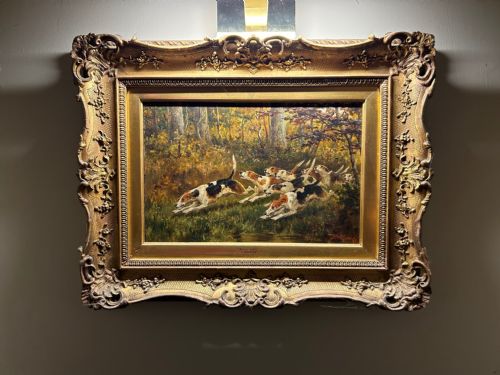
Victorian Landscape Painting Board
A victorian landscape painting board brings the texture of nineteenth-century countryside and coast directly into a room on a solid wooden panel.
Victorian Landscape Painting Board
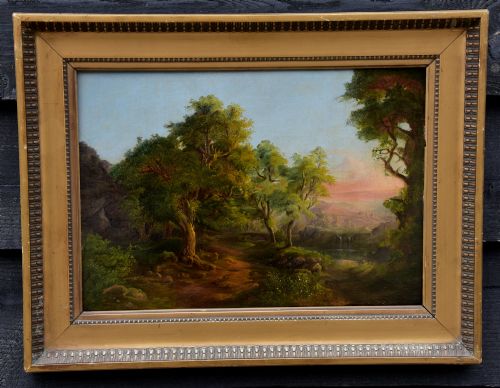
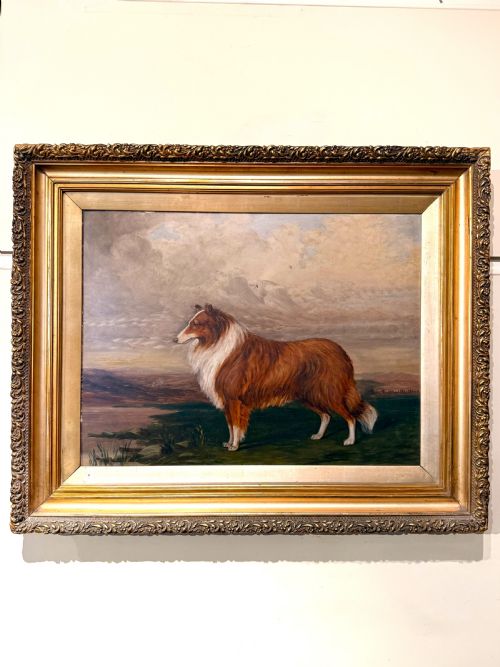
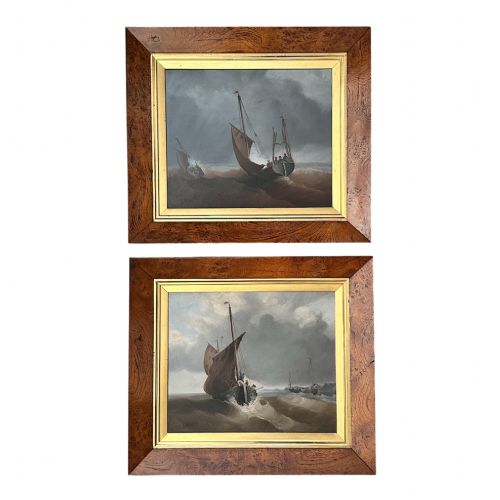
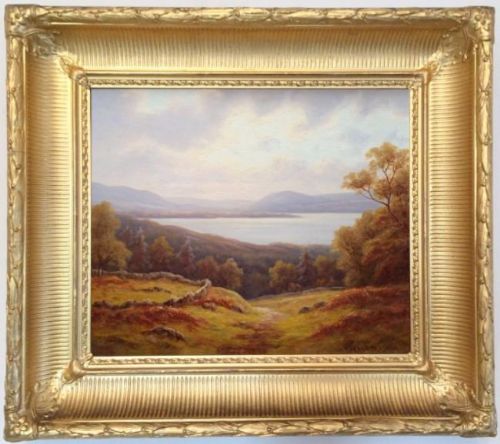
A victorian landscape painting board presents topographical views, coastal scenes, and woodland settings executed during the nineteenth century. These works capture specific locations like Loch Lomond, Windsor Castle, and the south coast through direct observation or romantic interpretation.
The format relies on a rigid wooden panel or board rather than stretched fabric, offering a stable surface for pigment. Buyers encounter woodland vistas, marine subjects, and street scenes that reflect the period's diverse artistic output.
Pieces span various decades of the nineteenth century and extend into the early twentieth century, showing both academic skill and naive folk art traditions. Such variety allows collectors to find works ranging from topographical records to atmospheric coastal views.
Materials and construction
Artists applied oil paint directly onto prepared wooden boards, utilising the rigid support to build up rich textures and fine details. Many of these panels were housed in gilt wood and gesso frames that complemented the painted surface.
The combination of oil paint and wood provided a durable medium that survived decades of domestic display. Artisans sometimes used watercolour on board for specific illustrative compositions, though oil remains predominant.
Victorian Landscape Painting Board Retail Price Guide 2026
Typical asking prices for victorian landscape painting board among the pieces listed under this phrase on Sellingantiques today, from the lower quarter to the upper quarter. They describe what is for sale here now, not the wider market.
The selection includes 19th Century Romanticism, Victorian Maritime Art, and Naive Folk Art styles across various British locations.
Distinctions in quality
Quality rests on the precision of the brushwork and the artist's ability to capture light and atmosphere within a restricted space. Works by documented painters demonstrate controlled handling of perspective and subject matter compared to simpler naive examples.
The preservation of the painted surface and the originality of the accompanying gilt frame influence the standing of each piece. Superior examples retain their original pigments and surface character without heavy restoration.
John Moore of Ipswich·Miles Birkett Foster·Everett Watson Mellor·William Mellor·George Hilditch·Thomas Blinks·John Falconar Slater·Benjamin Callow·Richard Wilson
The Victorian Landscape Painting Board Glossary
- Board
- A rigid flat piece of wood used as a support for painting instead of stretched canvas. It provided artists with a stable, non-flexible surface.
- Oil Paint
- Pigment mixed with a drying oil such as linseed, commonly used on nineteenth-century panels. It allowed for slow blending and deep colour saturation.
- Gilt Wood
- Wood covered with a thin layer of gold leaf or gilt finish, frequently found on period frames. This treatment added a decorative border to enhance the artwork.
- Gesso
- A plaster-like mixture applied to frames or panels as a base for painting or gilding. It created a smooth surface for intricate mouldings.
- Tondo
- A circular painting or relief sculpture. This specific format appears in nineteenth-century decorative landscape pairs.
Victorian Landscape Painting Board: Frequently Asked Questions
What is a victorian landscape painting board?
It is a nineteenth-century artwork painted on a wooden panel depicting rural, coastal, or urban scenery. These pieces range from detailed topographical studies to atmospheric romantic compositions.
Artists favoured boards for their rigidity and durability, creating portable works that captured British and international views during the period.
How were these boards framed?
Many works are housed in period gilt wood and gesso frames designed to complement the artwork. These frames often feature decorative moulding typical of the nineteenth century.
Original framing helps preserve the piece and provides context regarding how the artwork was displayed in historic interiors.
How do I care for a painted board?
Keep the panel away from direct sunlight, excessive moisture, and rapid temperature fluctuations to protect the wood and oil paint. Gentle dusting with a soft, dry cloth is sufficient for maintenance.
Avoid using liquid cleaners or abrasive materials on the painted surface or the gilt frame.
How can I tell the age of the board?
Age is indicated by the type of wood, the style of the brushwork, and the framing materials used during the nineteenth century. Signatures, dates, and inscriptions on the reverse often provide specific provenance.
Comparative analysis with documented works by period artists helps confirm the approximate decade of creation.