
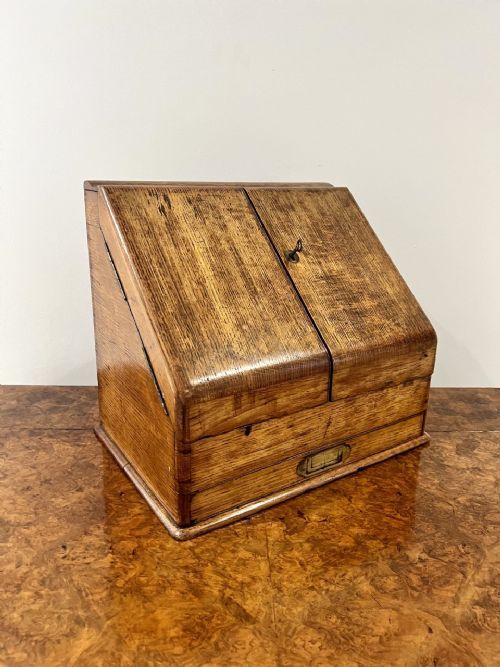


Victorian Key Cabinet
These victorian key cabinet pieces are wall-mounted storage units designed to secure domestic or institutional keys in period interiors.
Victorian Key Cabinet
When you search for a victorian key cabinet, you are looking at practical storage solutions constructed primarily during the nineteenth century. The selection typically includes wall-mounted wooden cupboards equipped with internal hooks, alongside related hallway furniture and reception pieces that incorporate secure locking mechanisms.
The versions you are most likely to meet on this page span the Victorian and Edwardian eras, with oak and mahogany being common timbers. These items range from simple utilitarian cupboards for night porters to ornate glazed wall cabinets designed for grand domestic halls.
How they were made
Cabinet makers utilised dense hardwoods such as oak, mahogany, elm, and rosewood to construct the main bodies of these wall cabinets. Timber selection dictated the durability and visual weight of the piece, often complemented by Burr walnut veneers or decorative inlays.
Brass fittings, including hinges, escutcheons, and locks, provide both structural reinforcement and decorative contrast against the dark wood surfaces. Glazed doors incorporate glass panels to allow visibility of the contents while maintaining security.
One listed night porter cupboard suggests that waking up late in the nineteenth century was strictly discouraged.
What varies in quality
The distinction between standard utility cupboards and finer examples lies in the selection of timber and the sophistication of the joinery. Cabinet makers who employed figured woods like burr walnut or rosewood achieved a superior decorative finish compared to basic workshop productions.
Hardware execution also separates pieces within this category. Heavy cast brass mounts, fully functional original locks with matching keys, and precise internal hook arrangements indicate a higher grade of manufacture than plain replacement fittings.
Milners Safe·GEORGE PRICE·STANDISH
The Victorian Key Cabinet Glossary
- Escutcheon
- A protective plate surrounding the keyhole of a cabinet door. It is typically formed from brass and serves to prevent timber wear around the lock.
- Burr walnut
- A prized timber veneer showing swirling growth patterns caused by tree deformities. It was selected for high-status Victorian cabinet doors and drawer fronts.
- Tantalus
- A locking drink cabinet holding decanters visible behind wooden or metal bars. This mechanism prevented unauthorized access while displaying the bottles.
- Arts and Crafts
- A design movement emphasising handcraftsmanship and simple vernacular forms. Pieces in this style reject heavy industrial ornamentation in favour of honest construction.
Victorian Key Cabinet: Frequently Asked Questions
What is a victorian key cabinet used for?
These cabinets were manufactured to organise and secure multiple keys for large Victorian households, hotels, or institutions. They kept important locks managed in one central location.
Inside, small brass hooks arranged in rows held individual keys, often labelled to identify specific rooms or doors within the building.
How do I hang a wall cabinet safely?
Original mounting brackets or internal screw holes at the back of the cabinet provide the primary fixing points. Given the weight of dense hardwoods like oak and mahogany, secure wall anchors are essential.
Ensuring the fixings catch wall studs or masonry prevents the cabinet from pulling free once loaded with heavy metal keys.
How do I date a key cabinet?
Dating relies on examining the timber species, construction techniques, and hardware styles. Victorian pieces frequently utilise mahogany or oak with hand-cut dovetails and brass mortise locks.
Stylistic cues such as Aesthetic movement inlays or Arts and Crafts ironwork help narrow the period down to the late nineteenth century.
Are original keys usually included?
Some cabinets retain their original working brass keys, while others have been fitted with replacement locks or keys over time. Finding a matching period key is common but not guaranteed.
Locks on these cupboards were primarily intended for basic privacy rather than high-security vaults.