
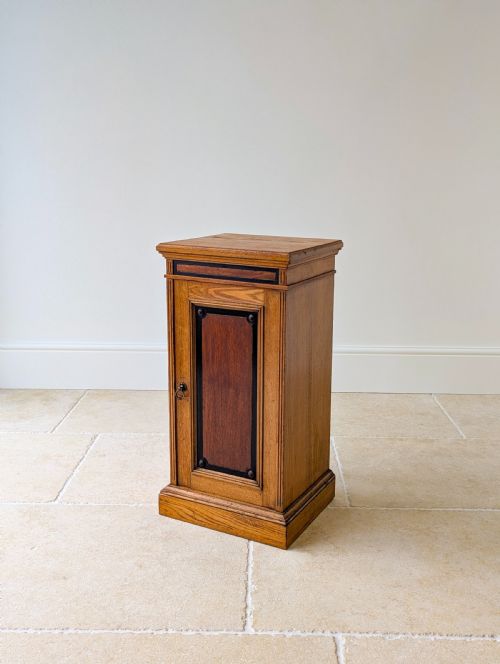


Ebonised Oak Cabinet
An ebonised oak cabinet brings dark, dramatic grain and striking contrast to a room, offering both substantial storage and deep historical character.
Ebonised Oak Cabinet
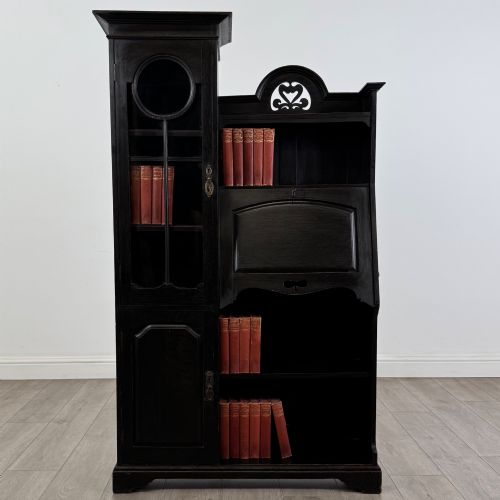
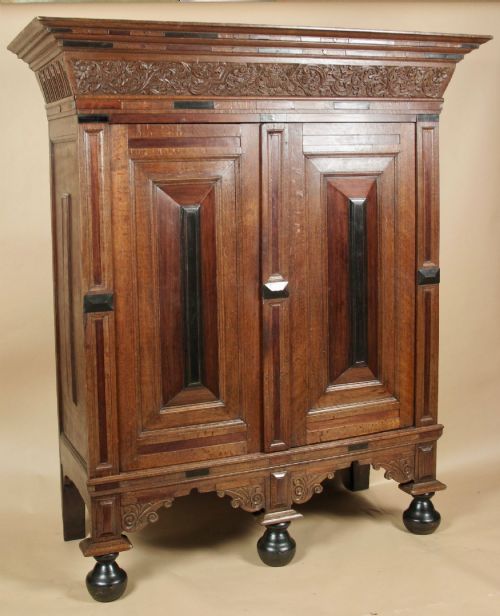
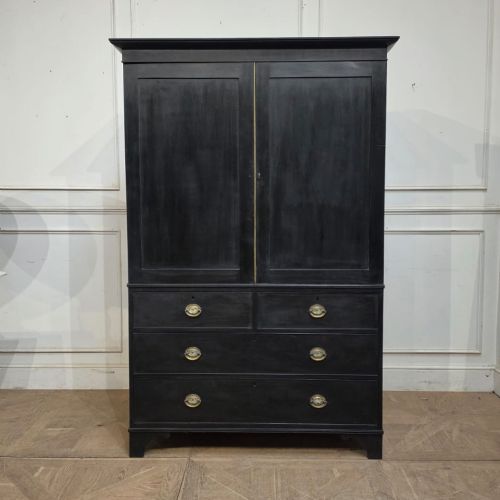
When you search for an ebonised oak cabinet, you encounter dark-stained or blackened timber surfaces applied over sturdy oak carcasses. These pieces span multiple eras, encompassing both monumental Dutch Baroque armoires and refined Victorian bedside units.
You are most likely to meet Victorian and Aesthetic Movement examples on this page, often featuring disciplined geometric lines or subtle carved elements. Earlier seventeenth-century kasten and smaller side cabinets also appear, showing deep regional traditions in Dutch and Flemish joinery.
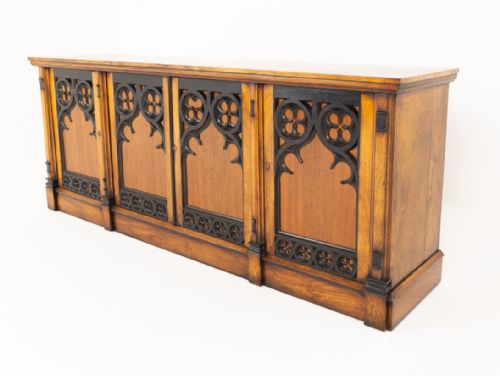
The functional forms vary widely across the inventory, ranging from tall linen cupboards and music cabinets to compact bedside units and expansive credenzas. Each object balances structural oak framing with the polished, light-absorbing finish of ebonisation.
How they were made
Joiners built these carcasses primarily from solid oak, sometimes incorporating pollard oak or rosewood veneers to create rich textural contrast. Workshops achieved the distinctive dark finish through ebonisation, treating the timber with chemical solutions or black pigments to imitate costly solid ebony.
Hardware played a structural and decorative role, with brass hinges and escutcheons fitted to secure heavy doors on cupboards and kasten. Glazed panels and carved Gothic elements appeared on nineteenth-century pieces, reflecting the revival styles popular among Victorian cabinet makers.
Tool trunks masquerading as polite reception hall cabinets remind us that Victorian craftsmen kept their finest dovetails locked strictly away from apprentices.
What varies in quality
The refinement of the ebonised finish and the crispness of the timber carving separate standard utility pieces from exceptional workshop creations. Superior pieces exhibit even, deep blackening that respects the underlying oak grain rather than masking structural clumsiness.
The integrity of the underlying construction, from dovetailed drawer linings to properly fitted brass furniture, dictates the longevity and standing of the cabinet. Maker attribution also elevates certain Aesthetic Movement pieces, where documented craftsmanship aligns with sophisticated architectural proportions.
Garnett & Sons
The Ebonised Oak Cabinet Glossary
- Ebonised
- Wood treated with stains, dyes or chemical solutions to produce a deep black finish that mimics ebony. This technique was widely utilised during the Victorian and Aesthetic periods.
- Kast
- A large, architectural wardrobe or cupboard originating from the Netherlands and Flanders during the seventeenth century. These substantial pieces often feature cushion-moulded panels in rich woods.
- Aesthetic Movement
- A late nineteenth-century design style emphasising visual beauty, simplicity and Japanese-inspired motifs over heavy Victorian ornamentation. Cabinets from this movement frequently employ ebonised surfaces.
- Pollard oak
- Timber taken from trees that were pollarded, resulting in tightly clustered, swirling grain patterns. Cabinet makers prized this wood for decorative drawer fronts and panel inserts.
- Credenza
- A low-profile sideboard or cabinet used primarily for storage and display. Victorian examples often incorporated glazed sections and heavy architectural mouldings.
Ebonised Oak Cabinet: Frequently Asked Questions
What is an ebonised oak cabinet?
An ebonised oak cabinet is a storage piece constructed from oak and finished with a dark, blackened surface treatment. These pieces range from compact Victorian bedside units to large Aesthetic Movement sideboards.
The ebonisation process gives the sturdy oak grain the appearance of solid ebony, creating a sharp, dramatic visual contrast suited to formal interiors.
How do I date an ebonised oak cabinet?
Dating relies on examining the construction methods, hardware types and stylistic elements present in the piece. Seventeenth-century kasten show heavy architectural mouldings and regional joinery, while Victorian examples often feature Aesthetic Movement or Gothic revival motifs.
Interior linings, drawer construction techniques and secondary woods also offer reliable clues to determine whether a piece originates from the seventeen hundreds or the late nineteenth century.
Where were these cabinets used?
Original owners placed these cabinets in principal reception rooms, hallways, bedrooms and formal dining spaces. Smaller bedside units and music cabinets served private chambers and parlours.
Larger armoires and linen cupboards provided essential storage in grand domestic interiors, combining functional utility with prominent decorative display.
How do I care for ebonised wood?
Care for ebonised surfaces by dusting gently with a soft, dry cloth and avoiding harsh chemical cleaning agents. Direct sunlight can fade the dark finish over time, so placement away from bright windows helps preserve the tone.
Maintaining a stable room temperature prevents the underlying oak timber from expanding or contracting, protecting both the joints and the decorative black surface.