






Dark Oak Medicine Cabinet
A dark oak medicine cabinet brings honest timber and dependable utility to any wall, offering rich grain and lasting storage.
Dark Oak Medicine Cabinet
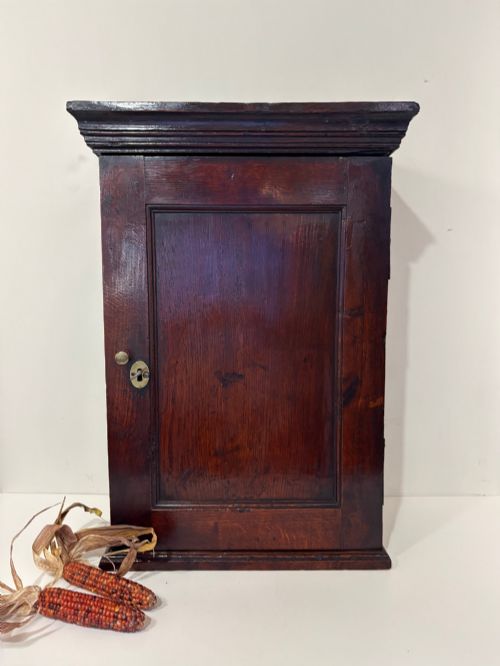
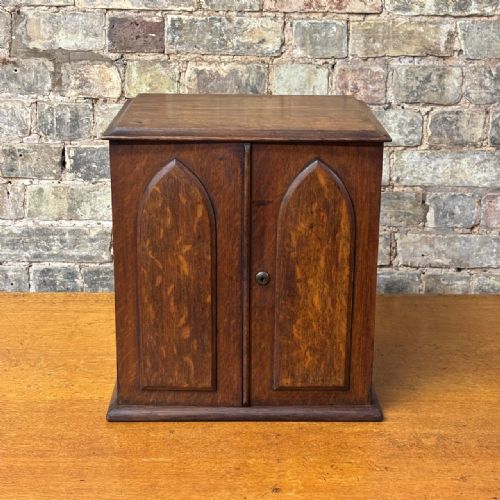
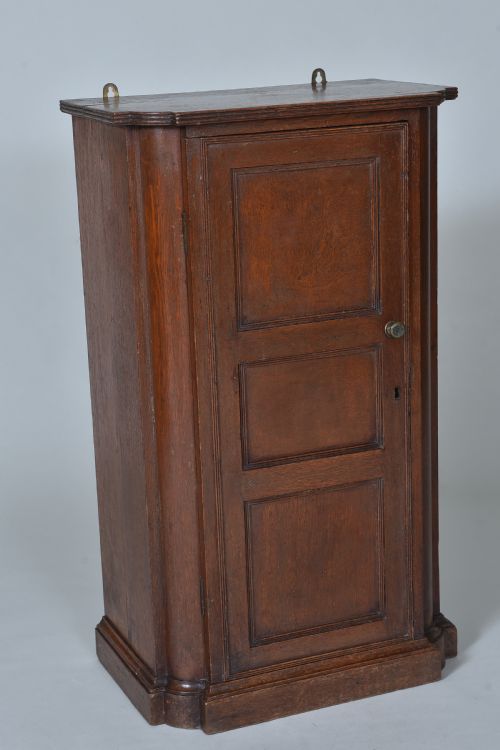
When you search for a dark oak medicine cabinet, you are looking at practical storage pieces built from sturdy timber, spanning periods from the eighteenth century through the Victorian era. The selection draws together wall-hanging spice cupboards, corner cupboards, and table cabinets fashioned in Georgian, Arts and Crafts, Gothic Revival, and Welsh vernacular styles.
You are most likely to meet wall-mounted oak cupboards and spice cupboards from the eighteenth and nineteenth centuries, often featuring panel doors, interior shelves, or small drawers. These versatile forms were originally built to house provisions, spices, or household sundries in estate houses, country homes, and reception halls.
Materials and construction
These pieces rely primarily on solid oak, frequently paired with brass hardware such as hinges and escutcheons, alongside glass and iron elements. Cabinetmakers utilised traditional joinery techniques, mounting doors with panel inserts and constructing frames designed to hang securely on walls or rest upon counters.
Surface treatments vary from natural waxed finishes highlighting the dark oak grain to occasional ebonised wood details. Carved panels and Gothic design motifs appear across the nineteenth-century examples, showing careful hand-detailing by regional makers and estate workshops.
Listings span the 18th century, 19th century, Georgian, and Victorian periods, utilising oak, brass, glass, iron, and ebonised wood across diverse regional forms.
Assessing quality and character
The distinction between standard utility cupboards and finer examples lies in the depth of timber selection and the precision of the joinery. Superior pieces display carefully matched oak boards, well-hung panel doors with original brass fittings, and crisp hand-carving that survives intact.
Proportion and structural integrity separate robust vernacular pieces from heavier or altered examples. Cabinets retaining their original mounting points, uncompromised backboards, and authentic period hardware command greater interest among collectors of early woodwork.
The Dark Oak Medicine Cabinet Glossary
- Spice cupboard
- A small wall-hanging or table cabinet traditionally used for storing culinary spices and valuable ingredients. These compact pieces often contain multiple tiny internal drawers behind a single panel door.
- Gothic Revival
- An architectural and decorative style popular in the nineteenth century that mimics medieval forms. Pieces in this style frequently incorporate pointed arches, quatrefoils, and heavy tracery carved into the oak panels.
- Welsh vernacular
- Regional furniture traditions characteristic of rural Wales, utilising local timber and straightforward construction methods. These items prioritize functional design and sturdy construction over elaborate ornamentation.
- Ebonised wood
- Timber treated with a chemical stain or finish to imitate the dark, dense appearance of ebony. Victorian makers often applied this technique to highlight contrasting mouldings or decorative accents.
Dark Oak Medicine Cabinet: Frequently Asked Questions
What were dark oak medicine cabinets originally used for?
These cabinets served multiple domestic purposes, frequently functioning as spice cupboards, food safes, or secure wall cupboards in early households. They kept valuable provisions, small dry goods, and household sundries protected from pests and dampness.
Over subsequent generations, many of these compact wooden cupboards found a natural second life in bathrooms and hallways for storing medicines and personal care items.
How can I tell an eighteenth century cabinet from a Victorian one?
Eighteenth-century examples, such as Georgian spice cupboards and food cupboards, generally exhibit simpler, robust proportions with hand-cut peg joinery and patinated oak surfaces. Their hardware often consists of wrought iron or early brass H-hinges.
Victorian and Gothic Revival pieces tend to feature more pronounced surface decoration, such as carved panel doors, ebonised details, or stylistic influences from the Aesthetic and Arts and Crafts movements.
How do I care for dark oak furniture?
Solid oak requires stable environmental conditions away from direct heat sources and strong sunlight to prevent the timber from splitting or warping. Maintain the finish by applying a traditional beeswax polish sparingly and buffing it with a soft cloth.
Avoid using modern liquid silicone sprays or harsh chemical cleaners, as these can strip the natural wax patina built up on the oak over centuries.