


Victorian Kerosene Hurricane Lamp
These Victorian kerosene hurricane lamps bring functional nineteenth-century lighting and rich coloured glass into modern rooms.
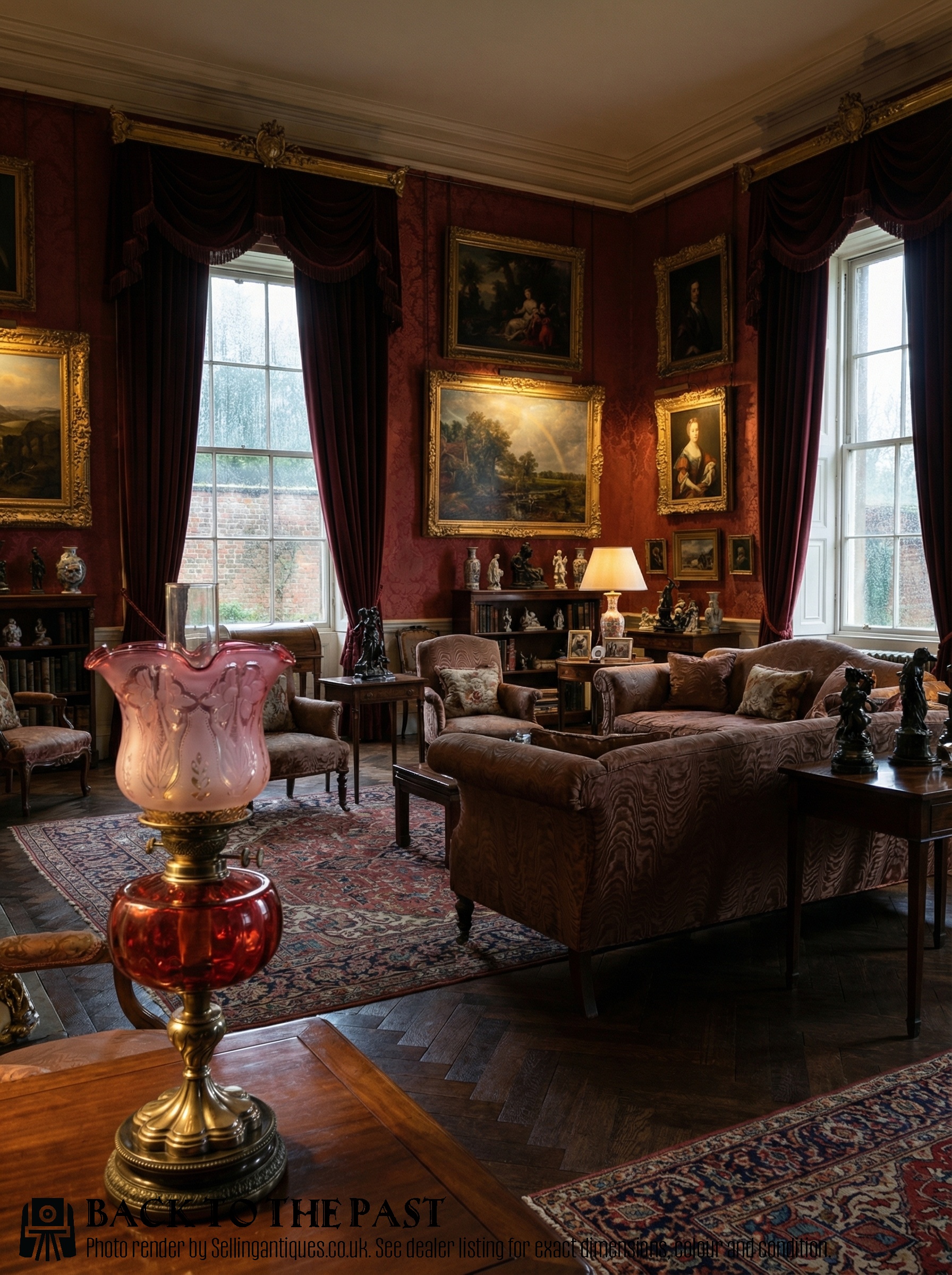
Victorian Kerosene Hurricane Lamp
A victorian kerosene hurricane lamp is a nineteenth-century lighting piece designed to burn paraffin or kerosene safely with a protective glass shade or chimney. The examples found here span the Victorian and Edwardian periods, stretching from the middle decades of the nineteenth century up to nineteen hundred.
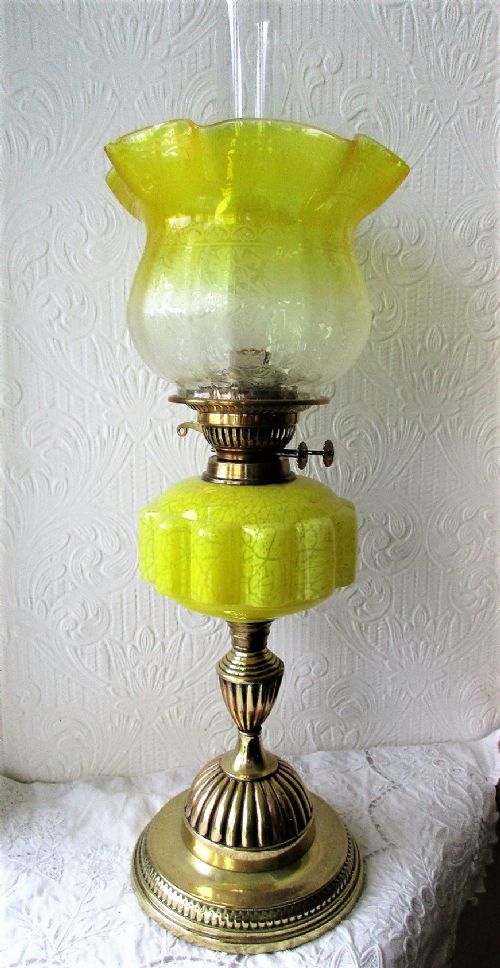
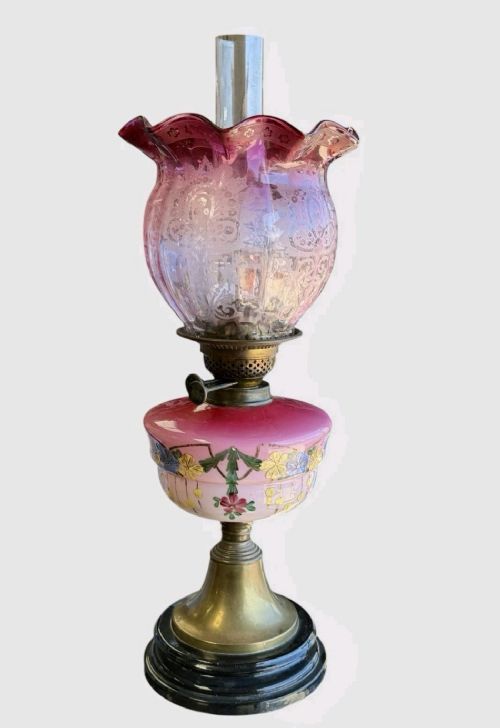
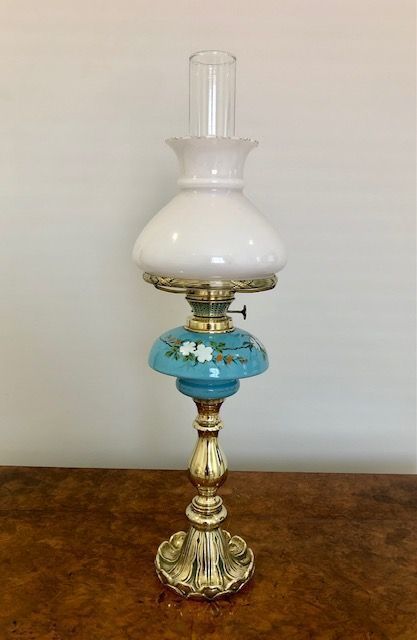
Most pieces encountered on this page combine a sturdy metal base with a decorative glass reservoir or font. You will frequently meet heavy brass columns alongside coloured glass elements, including striking cranberry glass, opaline glass, and hand-painted decorative finishes.
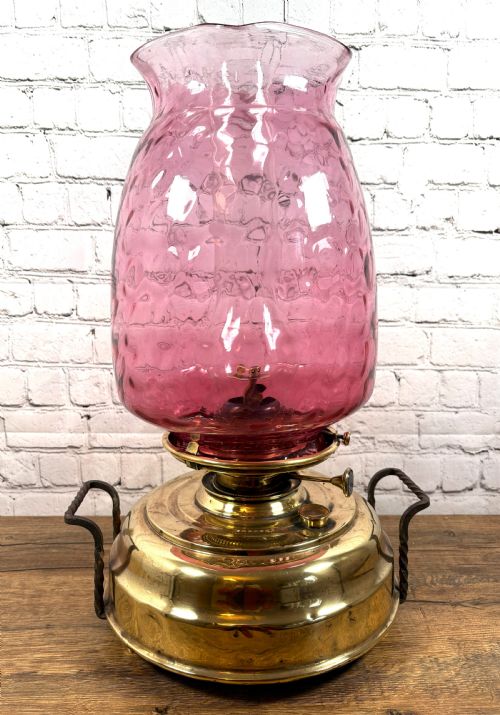
The forms range from simple table oil lamps to larger pulpit oil lamps and embossed brass designs with tinted shades. English origins predominate among the listings, showcasing domestic metalwork and glass production from the 1860s through to the turn of the century.
How they were made
The construction of a victorian kerosene hurricane lamp relies upon the combination of durable metals and blown or moulded glass. Workshops utilised cast and sheet brass for the structural bodies, sometimes pairing them with heavy iron or slate to ensure stability on the table.
Glass reservoirs and shades demonstrate skilled manipulation through hand-painting, gilt decoration, and vibrant colour integration such as cranberry and opaline hues. Embossed metal techniques added texture to the brass columns, while specialised fittings secured the glass chimneys and burners safely in place.
The listings span the nineteenth century, including specific dates from eighteen sixty, eighteen seventy, eighteen eighty, and nineteen hundred.
What varies in quality
The distinction between standard utility lighting and superior examples lies in the ambition of the materials and the crispness of the decoration. Elaborate hand-painted floral motifs on cranberry glass fonts and deeply embossed brass work indicate a higher grade of production intended for formal reception rooms.
Proportion and material weight also separate the tiers, with substantial brass castings and complex crystal or tinted glass shades creating a more commanding presence than simpler plated metal alternatives.
The Victorian Kerosene Hurricane Lamp Glossary
- Opaline glass
- A milky, semi-translucent glass popular in Victorian lighting that softly diffuses the light emitted from the burner.
- Cranberry glass
- A rich red glass created by adding gold chloride to the molten batch, frequently utilised for Victorian lamp fonts and shades.
- Paraffin lamp
- An alternative term for an oil lamp utilising petroleum-derived paraffin fuel, commonly referenced alongside kerosene lighting.
- Embossed brass
- Sheet metal pressed or hammered with raised decorative patterns, adding texture and visual depth to the lamp columns.
Victorian Kerosene Hurricane Lamp: Frequently Asked Questions
What is the difference between Victorian and Edwardian lamps?
Victorian examples generally date from the mid to late nineteenth century and often feature heavier brass castings alongside intense cranberry or hand-painted glass. They reflect a period of ornate domestic ornamentation and robust metal engineering.
Edwardian pieces emerging around nineteen hundred tend to show a shift in aesthetic lightness and subtle stylistic refinements while maintaining similar brass and opaline glass constructions.
Are all these lamps English in origin?
The evidence on this page highlights British made and English pieces specifically attributed to the nineteenth century. Domestic workshops produced a high volume of these brass and glass lighting fixtures during the Victorian era.
Makers utilised regional metalworking and glassblowing traditions to supply households before electric lighting became universal.
How do I identify cranberry glass on a lamp?
Cranberry glass displays a distinctive deep pinkish-red hue derived from the gold content in the glass mixture. On these lamps, it appears chiefly as the decorative font or matching shade paired with brass hardware.
When held to the light, the colour remains vibrant and evenly saturated throughout the blown or moulded glass body.