
Victorian Interior Art
Victorian interior art captures domestic scenes and furnished spaces on canvas and paper, offering a direct window into nineteenth-century domestic life.
Victorian Interior Art
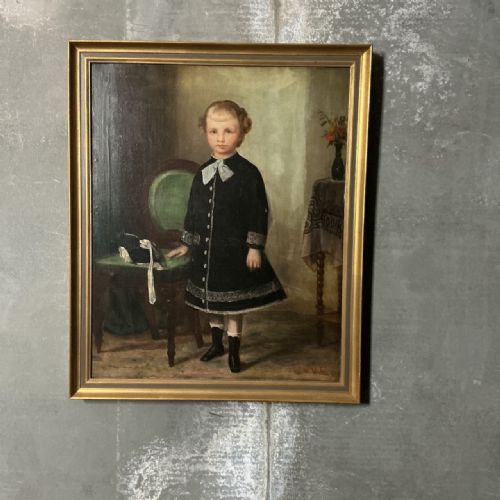
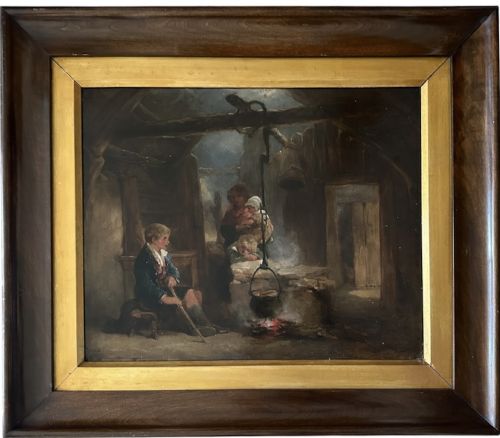
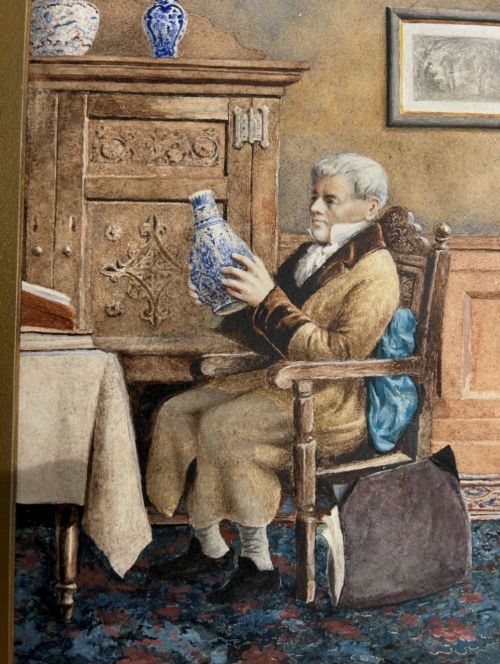
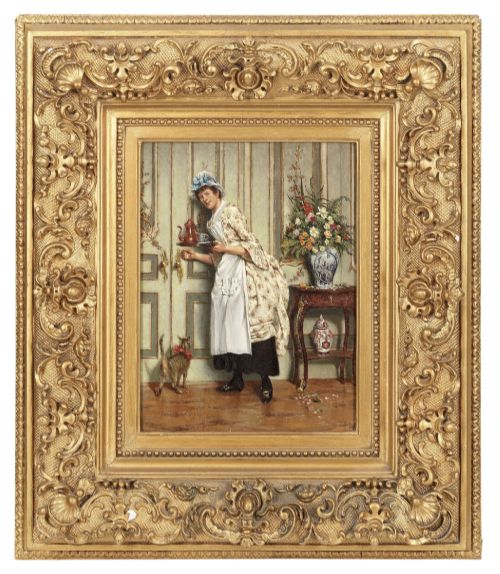
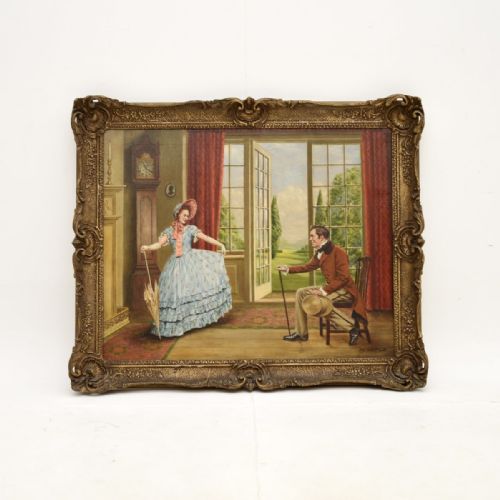
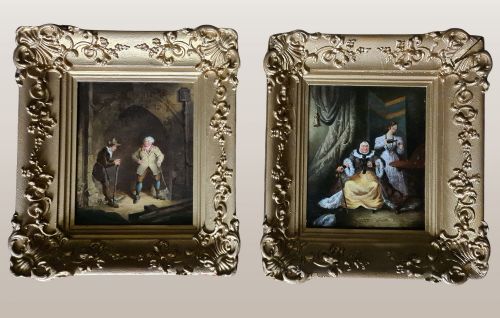
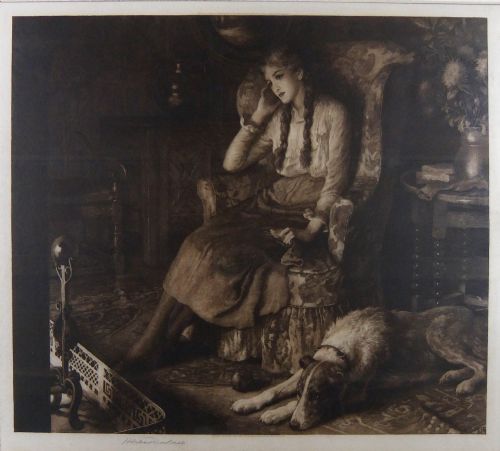
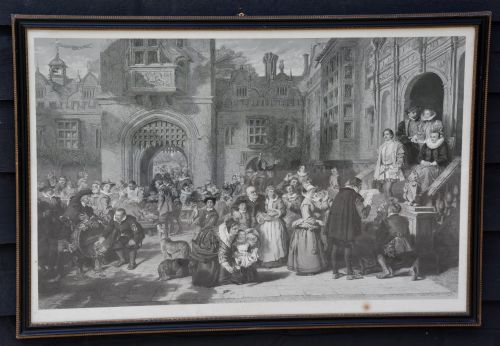
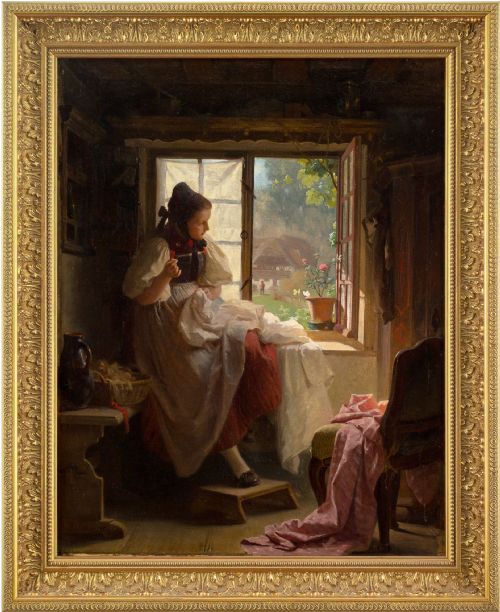
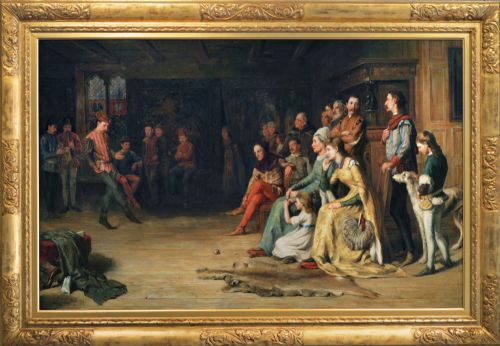
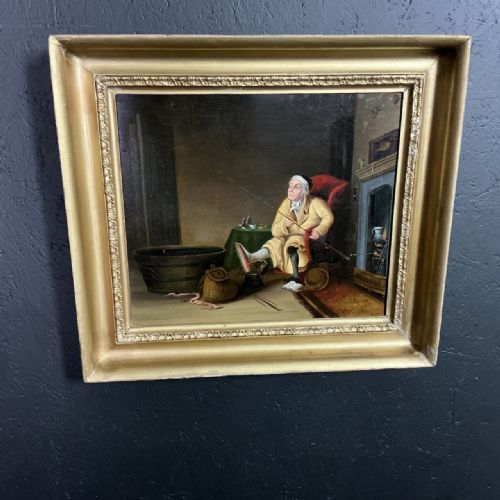
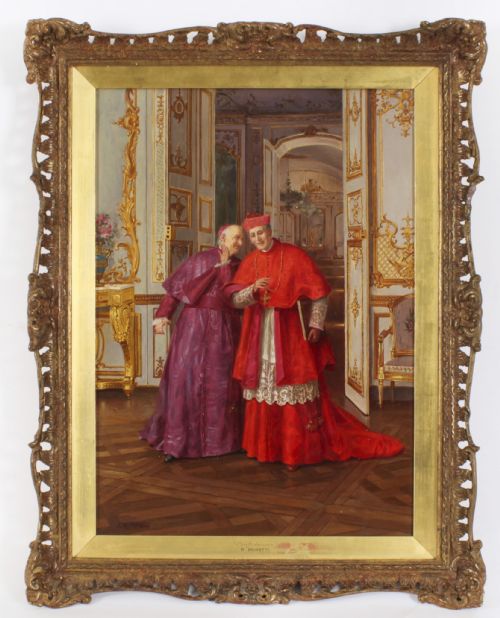
Victorian interior art encompasses framed oil paintings, watercolours, and engravings depicting domestic rooms, cottages, country houses, and historical chambers. These works record the daily habits, furnishings, and social interactions of past occupants within enclosed spaces.
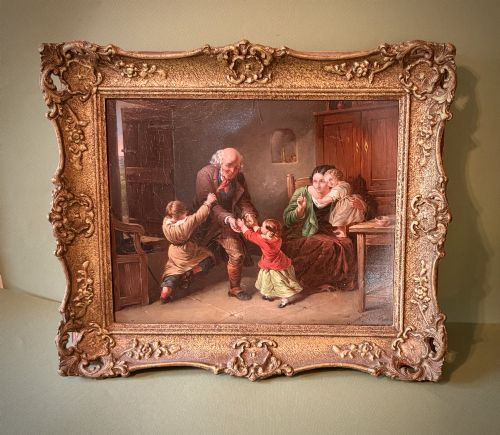
The pieces most frequently met on this page are genre paintings and watercolours executed on canvas, paper, or panel during the nineteenth century and the early twentieth century. Subjects range from quiet cottage corners to grand domestic gatherings.
Artists working within this category utilised observational skill to document architectural details, period costumes, and household objects alongside human figures. Collectors select these artworks to study period interiors and narrative domestic traditions.
Materials and Methods
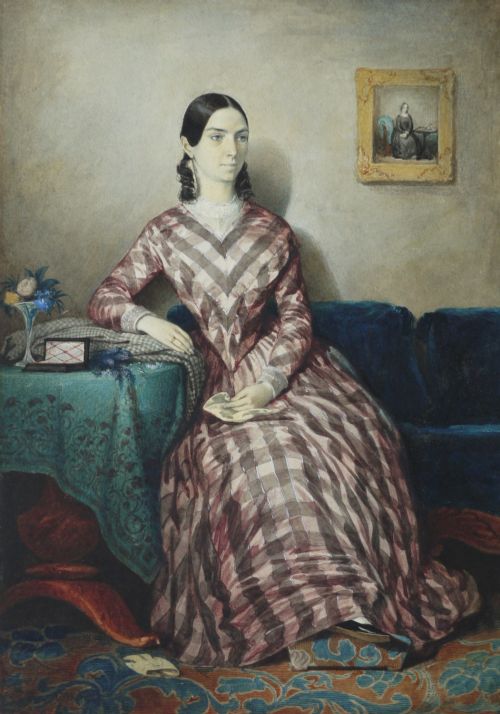
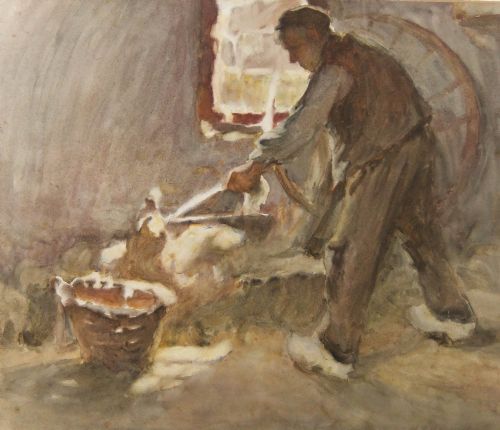
Makers utilised oil paint on stretched canvas or wooden panel to build layered compositions with depth and varied texture. Watercolours on paper offered a lighter medium for detailed room studies and intimate domestic portraits.
Finished works were housed in giltwood frames, ornate moulded frames, or original Hogarth frames which protected the perimeter and complemented the domestic subject matter. Gold leaf and glass frequently finished the framing assemblies for presentation.
Several canvases record domestic cats and dogs sleeping near the hearth, proving that Victorian pets mastered the art of relaxation centuries ago.
Distinctions in Quality
Quality diverges according to the artist's command of perspective, lighting, and the psychological nuance rendered in human figures. Works by exhibited academicians show superior anatomical precision and atmospheric rendering compared to anonymous studio output.
The handling of interior details such as textiles, furnishings, and secondary background elements separates accomplished compositions from mechanical copies. Preservation of the original paint surface and the retention of period framing also influence overall standing.
Henry Stacy Marks·Stephen Samuel Lewin·Henry Silkstone Hopwood·Alfred Lyndon Grace·Herbert Dicksee·Max Kaltenmoser·James Hamilton·Harry Brooker·Byam Shaw·George Kilburne·Alexander Rosell·John Arthur Lomax·Albert Clark·John Watkins Chapman·Charles Haigh Wood·Frank Moss Bennett·Haynes King·James Kyd·Edwin Thomas Roberts·Robert Alexander Hillingford·George Smith·Edwin Hughes·Hermann Armin Kern·Benjamin Cam Norton
The Victorian Interior Art Glossary
- Genre painting
- Genre painting depicts aspects of everyday life by portraying ordinary people engaged in common activities. These scenes often take place in domestic interiors or rural settings.
- Oil on canvas
- Oil on canvas involves applying slow-drying paint made with pigmented powders suspended in oil onto a woven fabric support. This technique allows for rich colour blending and substantial surface texture.
- Watercolour
- Watercolour utilises water-soluble pigments suspended in a solution for application onto paper surfaces. It produces translucent washes and delicate tonal gradations.
- Giltwood
- Giltwood refers to wood surfaces decorated with thin gold leaf or powder applied over a prepared ground. It is commonly found on traditional picture frames.
- Engraving
- Engraving is a printmaking process where an artist cuts lines into a metal plate to hold ink for transfer onto paper under pressure. This method produces sharp, linear graphic reproductions.
Victorian Interior Art: Frequently Asked Questions
How do I date a piece of Victorian interior art?
Dating relies on stylistic evidence, artist signatures, and framing materials recorded across the nineteenth and early twentieth centuries. Costume details, interior furnishings, and architectural styles depicted within the scene offer additional chronological markers.
Inscribed dates on the front or back of the canvas or paper often confirm the exact year of creation.
Where should I hang these paintings at home?
These works suit traditional reception rooms, studies, and hallways where their domestic subject matter complements period architecture and furniture. Stable environmental conditions away from direct sunlight protect the canvas or paper support.
Displaying them at eye level allows viewers to examine the fine brushwork and narrative details present in the room.
Are watercolours as durable as oil paintings?
Watercolours on paper require greater protection from light and moisture than oil paintings on canvas or panel. Glazing with conservation glass helps shield the pigments from fading over time.
Oil paintings offer a more resilient surface but still benefit from stable humidity levels and careful handling of the giltwood frame.