


Charles Hunt Painting
These charles hunt painting works capture sporting pursuits and rural domestic scenes across Victorian and Edwardian periods.
Charles Hunt Painting
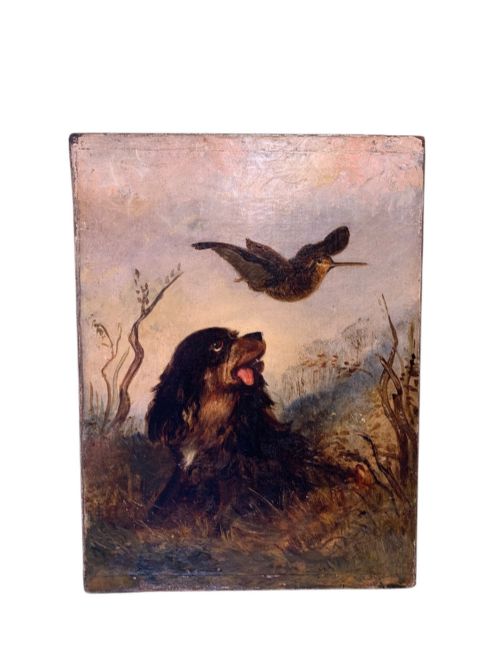
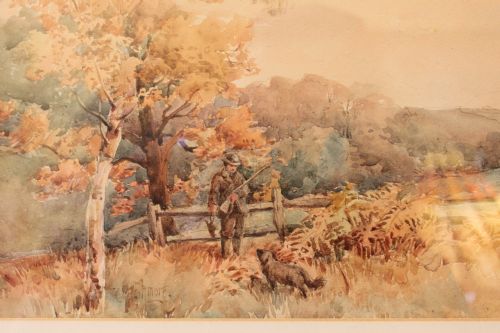
A charles hunt painting brings traditional British sporting art and rural genre subjects directly into view. The selection spans oil on canvas, oil on wooden panel, and watercolour on paper, framed in wood, glass, and gilt wood. You encounter the work of Charles Hunt himself alongside pieces associated with his circle, Charles Hunt Jnr, and related sporting artists.
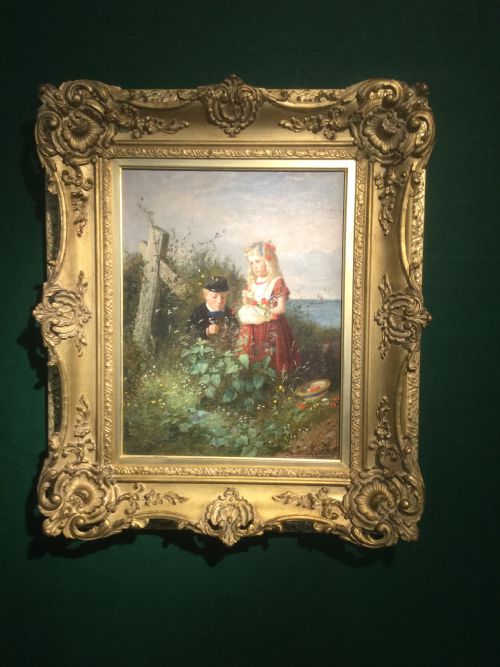
The subjects divide cleanly between spirited hunting scenes and domestic cottage interiors populated by figures and animals. Canvases depict spaniels, woodcocks, horses, hounds, and riders in full cry across moorland settings. Meanwhile, panel and canvas works by Charles Hunt Jnr portray domestic interior narratives featuring donkeys, piglets, and ponies alongside human figures.
Materials and Technique
Works in this category rely upon traditional mediums including oil on canvas, oil on wooden panel, and watercolour on paper. Painters applied pigments with precision to build rich textures in animal coats and landscape foliage. These are paired with supportive surrounds of wood, glass, and gilt wood framing.
The execution encompasses detailed brushwork characteristic of Victorian sporting art and Edwardian sporting art. Artists balanced the swift action of horses and hounds in open country with the intimate detail of cottage interiors and still life elements.
Guinea pigs occasionally share cottage floors with ponies, donkeys, and piglets in the domestic genre scenes.
Variations in Quality
The distinction in these works rests upon the handling of anatomy, movement, and light within the composition. Stronger examples display energetic brushwork that successfully captures the dynamism of hounds in motion or the character of domestic animals.
Preservation of the original paper or canvas surface and the integrity of the framing materials influence the character of each piece. Finer works maintain clear pigment saturation in watercolours and stable surfaces across oil paintings.
Charles Hunt·Charles Hunt Jnr·Charles Johnson Payne Snaffles·Charles Faulkner·Charles Clifford Turner·John Charles Tunnard
The Charles Hunt Painting Glossary
- Watercolour
- A painting method where fine pigment is suspended in water-based solution on paper. This medium produces translucent washes and delicate details.
- Oil on Canvas
- Pigment mixed with drying oil applied to a stretched woven fabric support. This technique allows for deep colour saturation and layered textures.
- Genre Painting
- Artwork depicting scenes from everyday life, typically involving human figures and domestic animals. These compositions tell visual stories of rural or cottage existence.
- Sporting Art
- Pictorial representation of rural sports, equestrian activities, hounds, and game animals. This genre holds a distinct place in British artistic tradition.
Charles Hunt Painting: Frequently Asked Questions
What is a Charles Hunt painting?
A charles hunt painting encompasses traditional British sporting art, equestrian scenes, and detailed rural genre works created during the nineteenth and early twentieth centuries.
These pieces capture dogs, horses, and figures in moorland settings or domestic cottage interiors using oil and watercolour mediums.
How are these paintings framed?
Many examples arrive set in period frames constructed from wood and gilt wood, often protected beneath glass for watercolours on paper.
Original frames contribute to the historical character of oil paintings on canvas and wooden panels.
What subjects appear in these works?
The subjects range from high-energy hunting sequences featuring hounds and riders to quiet domestic interiors with donkeys, piglets, and ponies.
Sporting art highlights dogs and gamebirds alongside open landscape views of the British countryside.
How do I care for a watercolour?
Watercolour paintings require protection from direct sunlight to prevent fading of the pigments on paper.
Keeping the works behind glass in stable indoor environments helps preserve the delicate paper support.