


Farm Animal Oil Painting
These farm animal oil paintings bring the rural 19th century into your room with prize bulls, poultry and quiet pastures.
Farm Animal Oil Painting
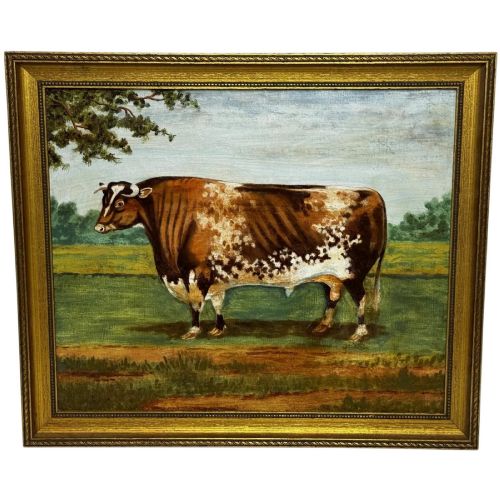
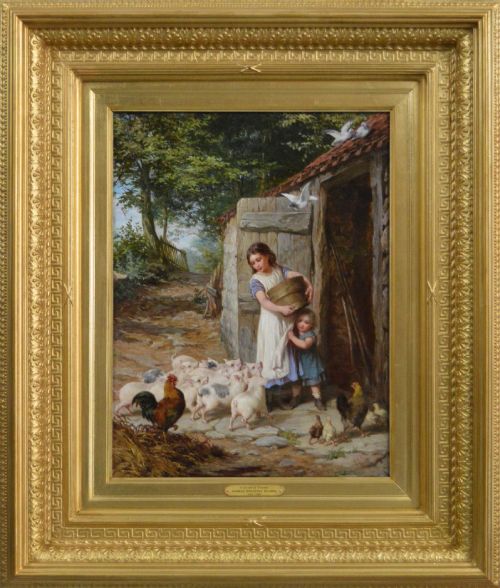
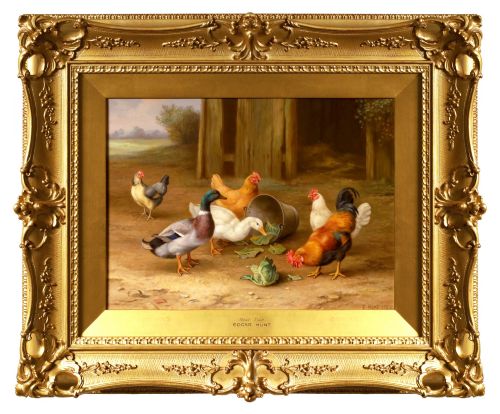
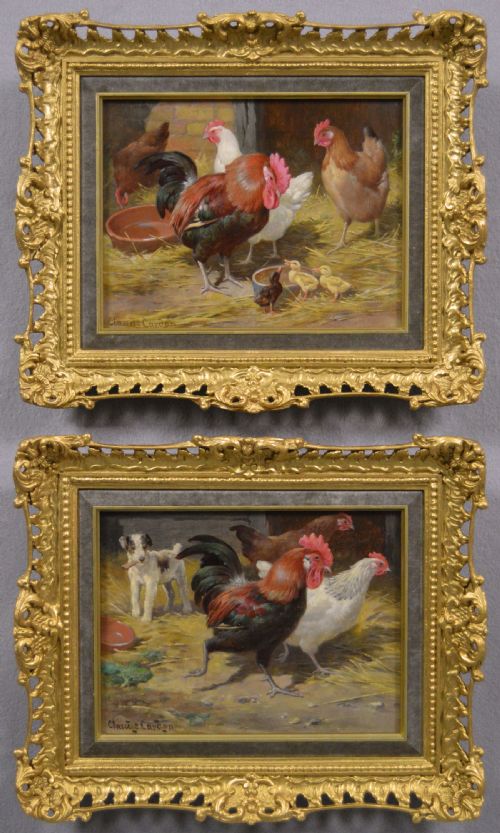
A farm animal oil painting captures the rural life of the nineteenth century, focusing on horses, cattle, sheep and poultry in pastoral settings. You will most frequently meet Victorian works depicting British and Belgian farmyards, often featuring detailed livestock alongside figures or rustic buildings.
The subjects range from solitary shorthorn bulls and resting sheep to bustling farmyard scenes with chickens, ducks and pigs. These canvases reflect a period when agrarian life held central economic and cultural importance, recorded by skilled painters of the British and continental schools.
How They Were Made
Artists worked primarily with oil paint applied to canvas or wood panels, building rich textures and deep tones to render the coats of animals and the light of rural landscapes. Pigments were manipulated to capture the realistic details of feathers, wool and hide under natural daylight.
Listings feature oil paintings on canvas and wood across periods from the mid-nineteenth century to the 1920s.
What Varies in Quality
The distinction between standard works and exceptional pieces lies in the anatomical precision of the livestock and the dexterity of the brushwork. Master painters render the textures of hair and plumage with convincing depth, whereas lesser works rely on formulaic repetition.
Compositional complexity also marks the upper tier, where multiple species and human figures integrate naturally into a coherent landscape. The handling of atmospheric light and the condition of the underlying canvas or wood further separate routine studio output from masterwork.
George Augustus Holmes·Edgar Hunt·Claude Cardon·Franz van Severdonck·John Frederick Herring Jnr·Samuel Joseph Clark·Eugene Verboeckhoven·Percival Glenfern·Pierre Emmanuel Dielmans·Thomas Sidney Cooper·W. A. Clark·George Smith RSA·A Davis·Louis Marie Dominique Robbe·Charles Hunt Jnr·E.S. England·M. Heriot
The Farm Animal Oil Painting Glossary
- Animalier
- An artist who specialises in the realistic depiction of animals. This term applies widely across nineteenth-century British and continental painting schools.
- Giltwood
- Wood carved and coated with gold leaf or gold paint to create a lustrous frame finish. It appears frequently on nineteenth-century oil paintings.
- Genre painting
- Artwork depicting scenes from everyday life, often including figures engaged in domestic or farmyard tasks alongside animals. These pieces tell visual stories of rural work.
- Pastoral realism
- A specific nineteenth-century style focusing on accurate, idealized depictions of rural landscapes and agricultural animals. It emphasises natural light and detailed livestock anatomy.
Farm Animal Oil Painting: Frequently Asked Questions
What periods do these paintings come from?
The available works span the nineteenth century into the early twentieth century, with a strong representation of Victorian production.
Dates cluster around the decades from the 1850s through to the 1920s, capturing shifting British and European pastoral styles.
How should I hang an oil painting?
Select a wall away from direct sunlight and significant temperature fluctuations to protect the canvas and the original giltwood frame.
Ensure the hanging hardware is securely fixed to support the weight of the wooden stretcher and frame.
Are these paintings signed by the artists?
Many pieces carry visible signatures or attributions to recorded nineteenth-century painters, while others represent the work of followers or regional schools.
Signatures add historical context, though unsigned works from the period often display equal technical merit.
What animals appear most often?
Cattle, sheep, horses and poultry dominate these rural scenes, reflecting the agricultural priorities of the Victorian era.
Chickens, ducks and pigs frequently populate farmyard corners, while prize bulls and resting sheep occupy the broader pastures.