


Rustic Cottage Scene
These rustic cottage scene works capture domestic rural life and pastoral quiet across centuries.
Rustic Cottage Scene
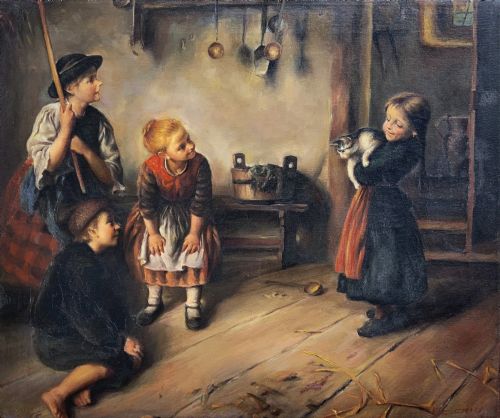
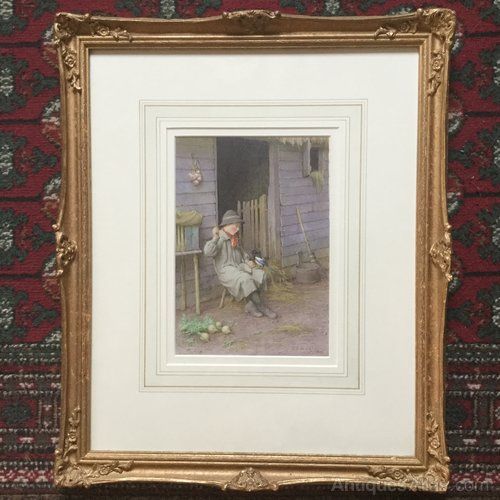
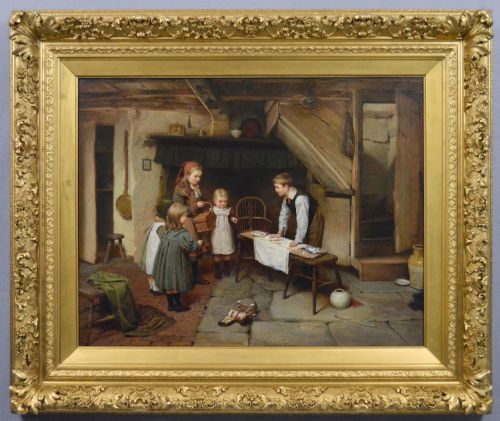
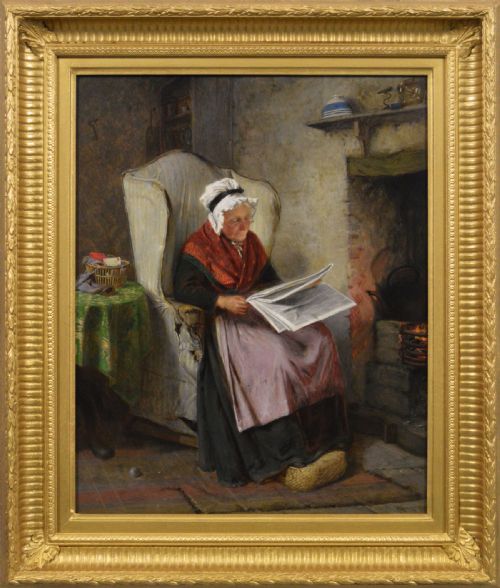
A rustic cottage scene depicts everyday rural life, farmhouses, and domestic interiors across the nineteenth and twentieth centuries. These works frequently feature figures engaged in daily chores, children playing, or animals near traditional dwellings.
The most common examples on this page are oil paintings and watercolour paintings produced during the Victorian and Edwardian periods. Artists working in these styles focused on pastoral tranquility and detailed genre scenes.
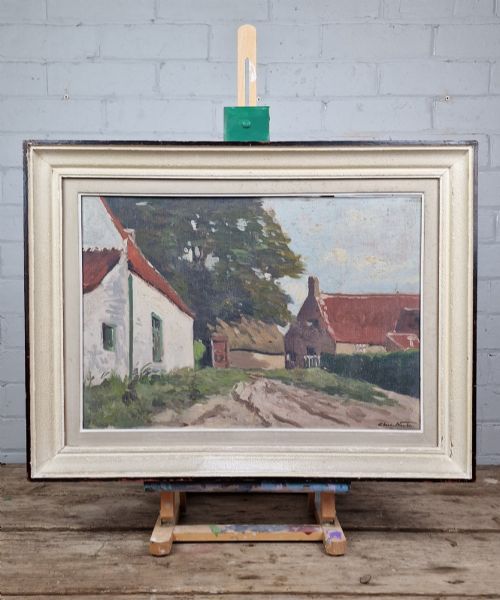
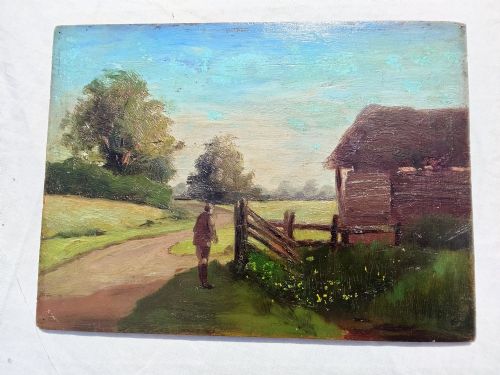
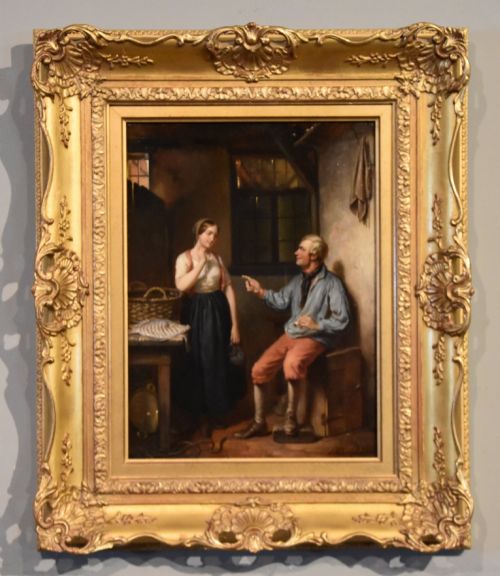
Compositions range from intimate interior views of hearths and spinning maids to wider landscape paintings of thatched cottages and country lanes. British and European painters dominate the selection, spanning from the Georgian era to the mid-twentieth century.
Materials and techniques
Artists painted these scenes primarily using oil on canvas, oil on wooden panel or board, and watercolour on paper. Support materials often reflect the period, with nineteenth-century works utilising heavy canvas and wooden boards, while later pieces employ standard artist papers and boards.
Frames frequently incorporate gilt wood, gesso, and gold leaf to complement the painted surfaces. These traditional framing techniques enhance the depth of the oil paintings and protect the delicate watercolours.
Several cottage interiors feature an unexpected menagerie, packing piglets, ponies, guinea pigs, rabbits, and dogs into a single rustic room.
Variations in quality
Quality in these works depends upon the handling of light, brushwork precision, and compositional depth. Superior examples demonstrate a careful balance of chiaroscuro and atmospheric detail within the cottage interior or landscape.
The skill of the artist in rendering human figures and domestic animals convincingly separates standard decorative works from fine art paintings. Signed works by documented painters generally exhibit greater mastery of colour and proportion.
Charles Houben·Jacob Akkersdijk·Charles Edward Wilson·Harry Brooker·Haynes King·James Kyd·Charles Vickers·Thomas James Lloyd·David Woodlock·Henry Spernon Tozer·Henry Sylvester Stannard·Walter Henry Sweet·Thomas Nicholson Tyndale·T B Garvie·William Greaves·James Ward·George Morland·Alfred Provis·Henry Silkstone Hopwood·Jonathan Pratt·James Hughes Clayton·Charles Hunt Jnr·John F Pasmore·G R Vaughan
The Rustic Cottage Scene Glossary
- Genre painting
- Depiction of aspects of everyday life by portraying ordinary people caught in common activities. These works often show domestic interiors or rural cottage scenes.
- Chiaroscuro
- The use of strong contrasts between light and dark, usually bold contrasts affecting a whole composition. Painters utilised this technique to create dramatic illumination within cottage interiors.
- Watercolour painting
- A method of painting in which the paints are made of pigments suspended in a water-based solution. Paper serves as the primary support for these translucent works.
- Oil on panel
- A painting executed on a flat wooden board rather than canvas. This solid support was favoured by artists seeking a rigid surface for detailed brushwork.
- Gesso
- A paint mixture consisting of a neutral binder mixed with chalk, gypsum, or pigment. It is applied to wood or canvas to prepare a surface for painting or gilding.
Rustic Cottage Scene: Frequently Asked Questions
What periods do these paintings date from?
The works span from the Georgian and Victorian eras through the Edwardian period and into the mid-twentieth century. Many pieces reflect nineteenth-century realism and British impressionism.
Dates recorded by artists and dealers range across the nineteenth and twentieth centuries, with a heavy concentration of works produced between eighteen-eighty and nineteen-thirty.
How were these artworks framed?
Period frames often consist of wood finished with gesso and gold leaf or gilt ornamentation. These decorative surrounds were designed to complement the tones of the oil paint or watercolour.
Original frames provide context for the age and origin of the piece, though many works have been reframed over time to suit modern interiors.
Who are the typical artists behind these scenes?
The selection includes listed British and European painters, watercolourists, and regional school artists. Many creators specialised in pastoral landscapes and domestic genre subjects.
Signatures or attribution notes on the canvas, board, or paper often link the works to documented painters of the nineteenth and twentieth centuries.
What subjects appear most frequently?
Common subjects include thatched cottages, farmyards, domestic interiors, and figures engaged in traditional rural work like spinning wool or tending livestock. Landscapes with country lanes and inns also recur.
These depictions capture a romanticized view of rural life and country communities that appealed to Victorian and Edwardian buyers.