


Victorian Insect Brooch
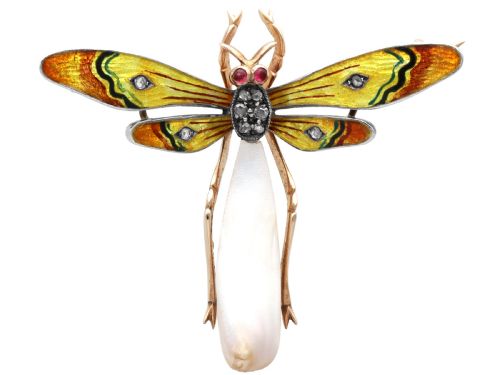
A victorian insect brooch brings winged creatures and crawlers into fine jewellery, offering winged beetles, dragonflies, and spiders set with gems.
Victorian Insect Brooch
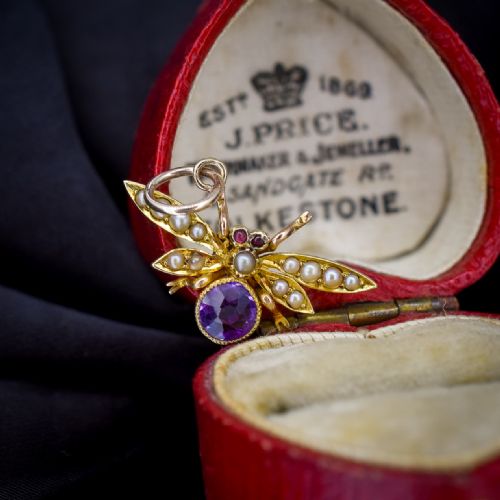
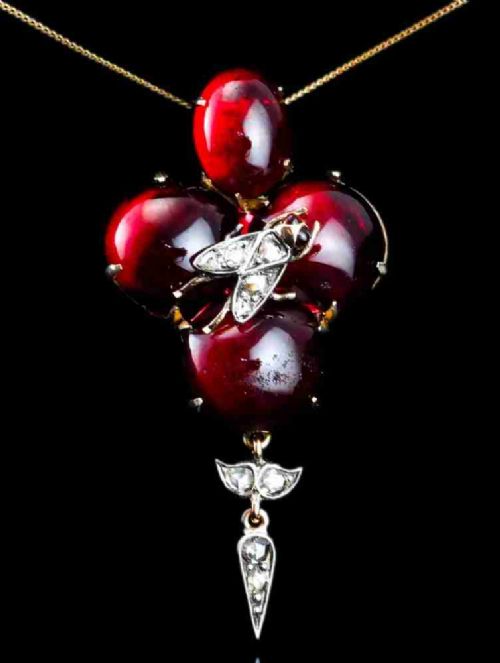
A victorian insect brooch captures creatures of the garden in precious metals and gemstones, ranging from dragonflies to beetles and flies. Buyers seeking a victorian insect brooch will find pieces that double as pendants alongside traditional pin fasteners.
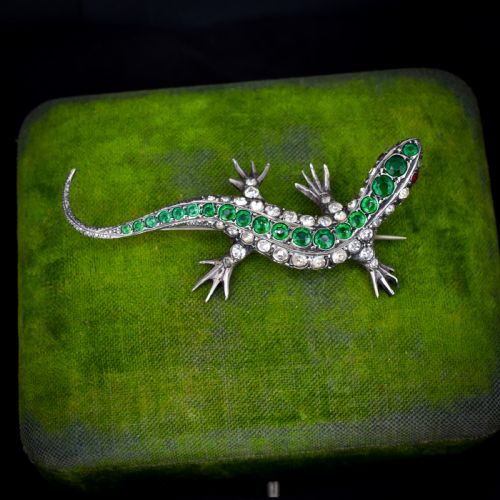
The selections span the Victorian period into the Edwardian era and 1920, utilising forms shaped like butterflies, lizards, spiders, and flies. Gold and silver provide the primary structure for these winged and multi-legged subjects.
Many examples combine multiple gemstone varieties within a single compact body to render colourful carapaces and wings. Multi-gem settings appear frequently across the available forms, mixing rubies, emeralds, sapphires, and seed pearls.
Materials and Construction
Golds of varying caratages, including nine carat, fourteen carat, fifteen carat, eighteen carat, and twenty-one carat yellow gold, form the bodies and mounts of these pieces. Silver frequently backs or frames the stones, particularly in designs incorporating rose cut diamonds and green paste.
Gemstone selection defines the visual weight, employing diamonds, sapphires, emeralds, rubies, garnets, amethysts, turquoise, labradorite, bloodstone, and topazes. Seed pearls and green paste complete the textured details of wings and abdomens.
The site listings span the Victorian period, 1880, 1890, 1900, Edwardian, and 1920 eras in gold and silver.
Evaluating Quality
The choice of precious metals and stone combinations establishes the baseline quality of each piece, moving from lower carat golds to higher purity mounts set with substantial diamonds and fine coloured stones. The complexity of the insect form, from simple bar pins to convertible pendant brooches, influences the character of the item.
The integration of diverse gems such as basaltic sapphires, emeralds, and rubies demonstrates greater ambition in lapidary work. Convertible settings that allow a brooch to function as a pendant require more intricate mechanical planning.
The Victorian Insect Brooch Glossary
- Convertible pendant
- A piece fitted with both a pin and a loop so it can be worn pinned to fabric or suspended from a chain.
- Rose cut diamond
- An antique diamond cut featuring a flat base and a domed crown with triangular facets.
- Green paste
- Hand-cut glass used in historical jewellery to imitate emeralds or other green stones.
- Seed pearl
- A very small natural or saltwater pearl, often drilled and strung or set in clusters.
Victorian Insect Brooch: Frequently Asked Questions
What insects appear in these brooches?
The available pieces depict butterflies, dragonflies, beetles, flies, spiders, and lizards.
Butterflies and dragonflies are the most commonly encountered winged forms.
How were these brooches worn historically?
They were pinned to garments, bodices, hats, or lapels during the Victorian period and later eras.
Several examples feature dual functionality as both brooches and pendants.
What metals are used in these pieces?
Yellow gold in various caratages ranging from nine to twenty-one carat forms the primary structure.
Silver is also utilised, often combined with gold settings.
What gemstones decorate the insects?
Designs incorporate diamonds, rubies, emeralds, sapphires, garnets, amethysts, turquoise, and labradorite.
Seed pearls and green paste are also frequently integrated into the wings and bodies.