

Victorian Inlaid Walnut Credenza
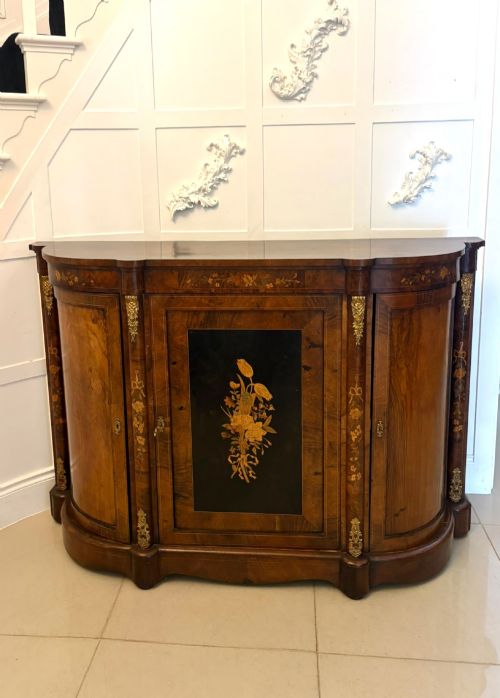
When you examine a victorian inlaid walnut credenza, you encounter a masterpiece of nineteenth-century cabinet-making that anchors a grand drawing room with its rich timber and gilt mounts.
Victorian Inlaid Walnut Credenza
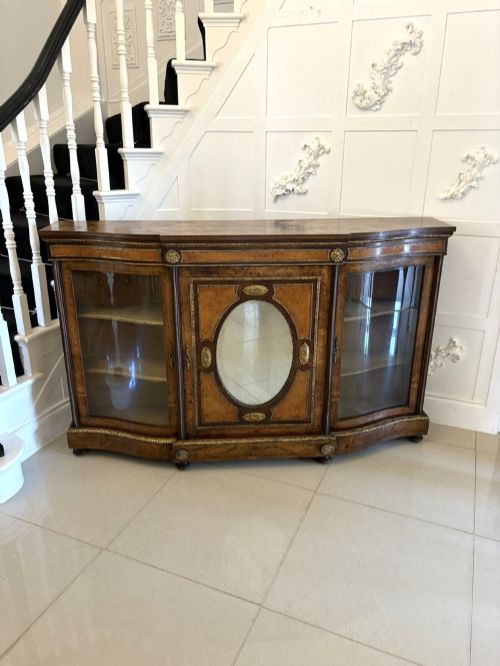
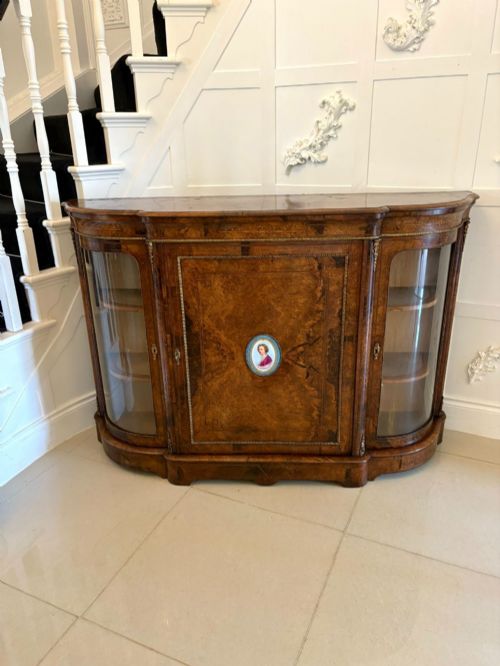
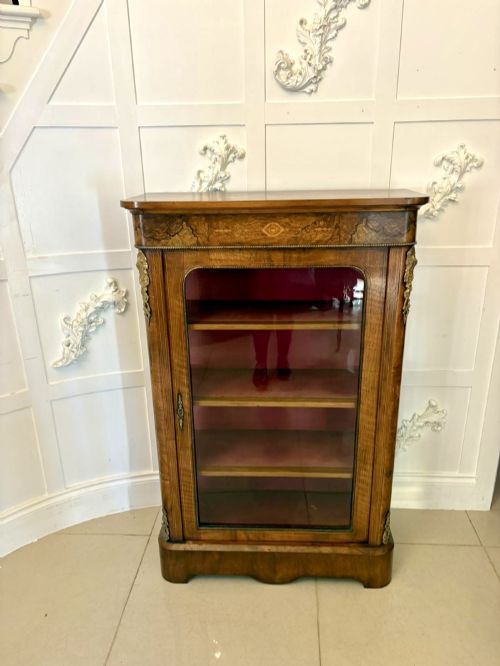
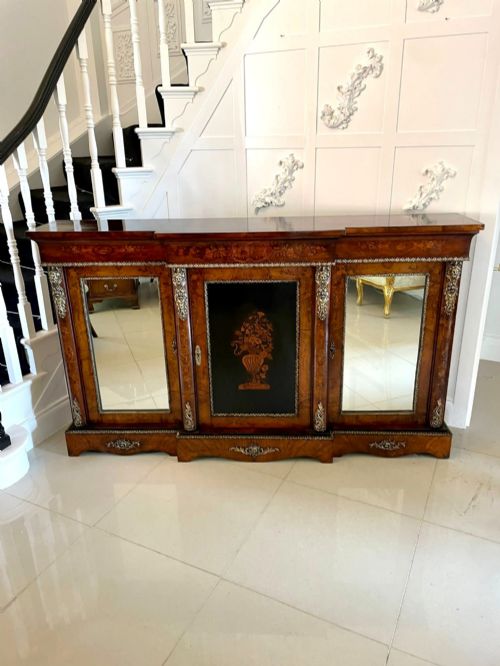
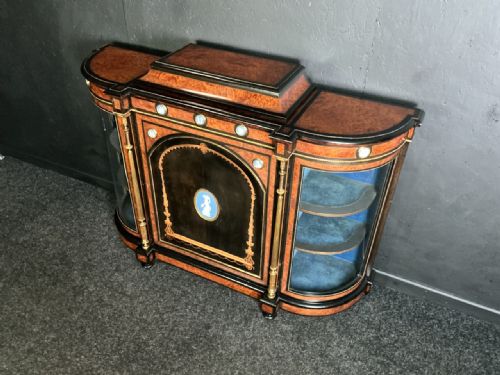
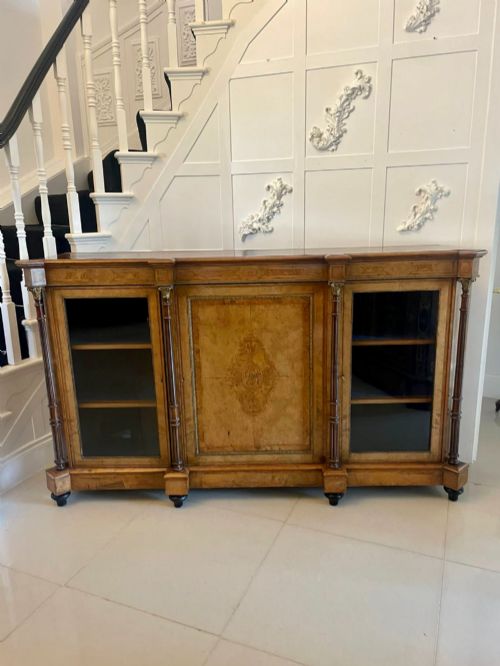
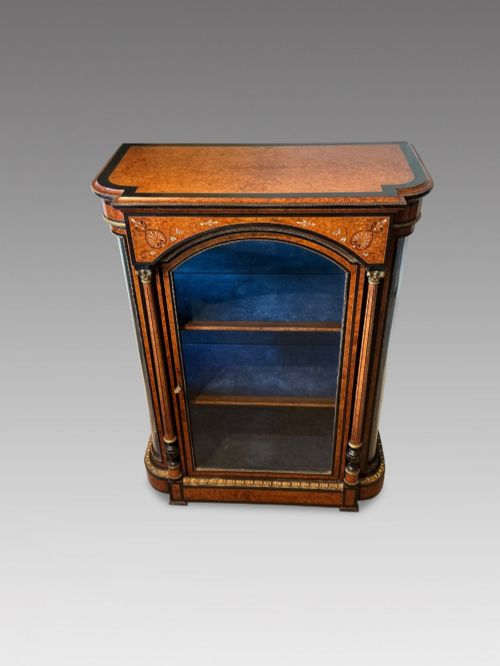
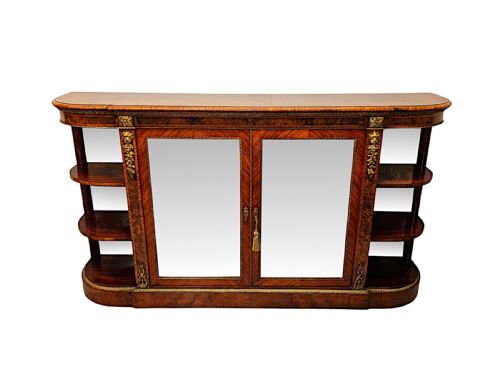
A victorian inlaid walnut credenza is a low, freestanding display cabinet designed for formal reception rooms during the nineteenth century. These pieces typically feature a central mirrored door flanked by curved glazed side cupboards, providing both enclosed storage and display space for porcelain.
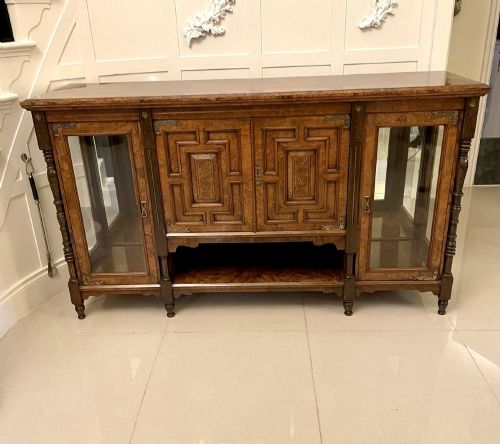
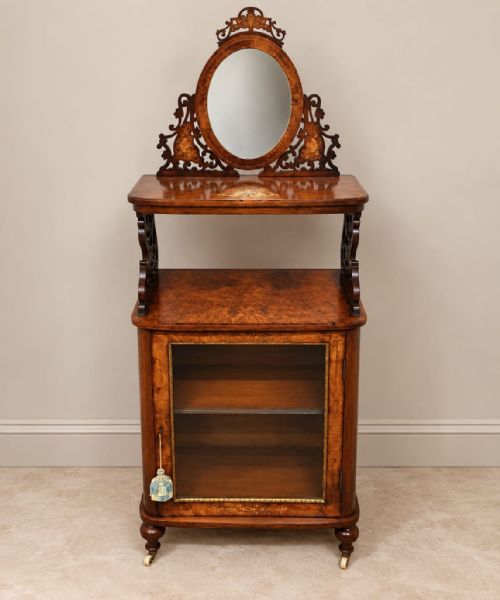
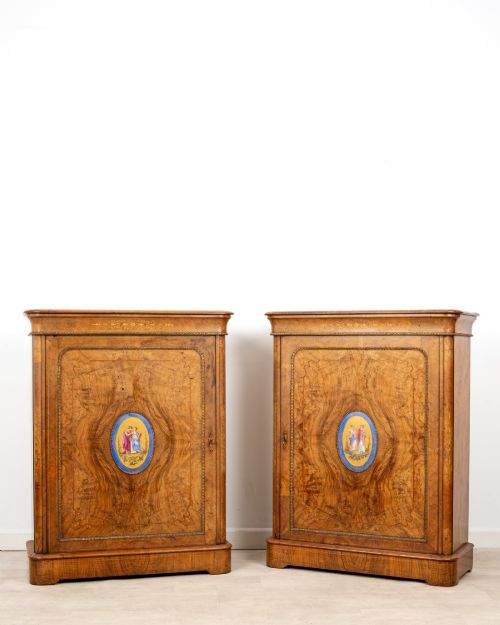
The prevailing form on this page dates predominantly from the middle decades of the Victorian era, specifically around eighteen sixty. Alongside standard three-door credenzas, buyers encounter related side cabinets, pier cabinets, and serpentine-fronted variants.
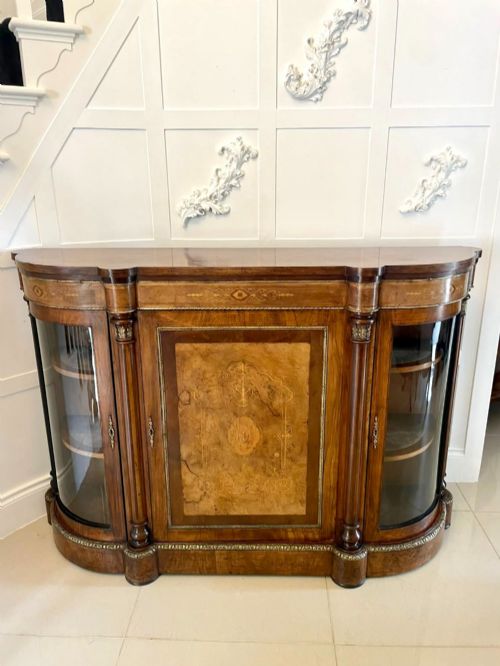
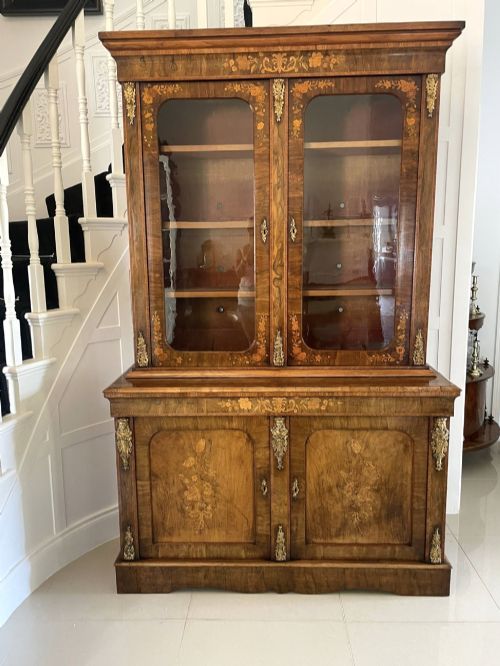
Makers of the period utilised rich burr walnut veneers to create striking symmetrical grain patterns on the main body of the furniture. These surfaces serve as a backdrop for elaborate floral marquetry and fine boxwood inlay.
Materials and Construction
Craftsmen built these cabinets using supportive secondary timbers faced with thin veneers of burr walnut, chosen for its swirling, highly figured grain. Artisans applied intricate marquetry using contrasting woods and boxwood inlay to create delicate floral and scrolling motifs.
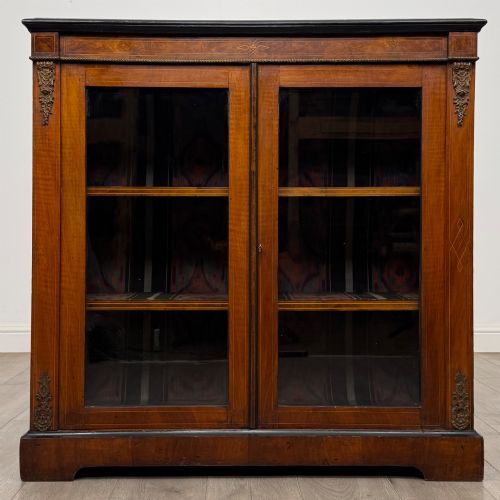
Gilded bronze or brass ormolu mounts were cast and chased to accentuate the architectural curves, framing the doors and corners. Glazed central and side compartments incorporated bevelled glass panes, while interiors often featured velvet linings and adjustable shelving.
Some credenzas feature removable wooden backs designed to let patterned silk wallpaper show straight through the glass.
Assessing Quality and Execution
The distinction between ordinary and exceptional pieces lies in the selection of the burr walnut veneer and the precision of the marquetry. Superior examples display perfectly matched grain symmetry across the entire front elevation without patching or distortion.
The weight, crispness, and fire-gilding of the ormolu mounts indicate the workshop standard. Heavy, finely detailed cast brass elements securely fastened to the structure separate masterworks from simpler production furniture of the later period.
Gillows·Lamb of Manchester·Maison Gagneau·Edwards and Roberts
The Victorian Inlaid Walnut Credenza Glossary
- Credenza
- A low cabinet originating in Italy and adapted in Victorian Britain primarily for drawing room display and storage. It typically includes glazed end compartments and a central door.
- Burr Walnut
- Timber taken from a tree growth or burl, yielding highly decorative swirling grain patterns. Cabinet-makers sliced this wood into thin veneers for polished furniture surfaces.
- Marquetry
- The art of applying pieces of veneer to a structure to form decorative patterns and pictures. Craftsmen used various tinted and natural woods for floral designs.
- Ormolu
- Gilded bronze or brass mounted onto furniture as decorative embellishments. The technique involves applying a mercury-gold amalgam to cast metal and heating it.
- Serpentine
- A furniture front shape curving inward in the centre and outward at the ends, or vice versa. This contour requires advanced woodworking skill to veneer accurately.
Victorian Inlaid Walnut Credenza: Frequently Asked Questions
What is a credenza used for?
Victorian households utilised these low cabinets to display treasured ceramics, glassware, and decorative ornaments in formal reception rooms. The interior shelving also provided practical storage for family silver or documents.
Today, they serve a similar decorative purpose in contemporary dining rooms or living spaces, offering a surface for lamps and art alongside concealed storage.
How do I date a walnut credenza?
Dating relies on examining the construction methods, timber choices, and stylistic markers recorded across the nineteenth century. Pieces from the eighteen fifties and sixties often exhibit finer marquetry and heavier ormolu mounts.
Later Victorian examples from the eighteen eighties tend toward simpler lines or incorporate Aesthetic Movement influences. The presence of specific maker stamps can also narrow down the exact decade of manufacture.
Are credenzas and sideboards the same?
While nineteenth-century terminology sometimes overlapped, a credenza is strictly a low display cabinet designed for a drawing room. Sideboards are taller dining room furniture built primarily for serving food and storing heavy tableware.
Credenzas emphasise glass doors and delicate marquetry rather than the robust utility found in traditional dining room sideboards.
How do I care for burr walnut?
Burr walnut veneer requires stable environmental conditions away from direct sunlight and strong heat sources to prevent warping and fading. Regular dusting with a soft, dry cloth preserves the polished finish.
Applying quality furniture wax occasionally helps maintain the moisture and natural lustre of the nineteenth-century wood without building up a heavy residue.