




Victorian Inlaid Nightstand
A victorian inlaid nightstand brings rich timber and delicate marquetry to the bedside, offering compact storage with nineteenth-century character.
Victorian Inlaid Nightstand
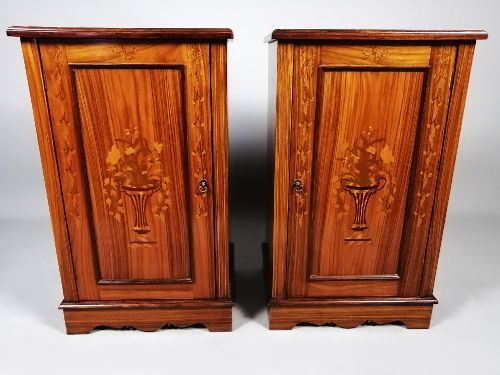
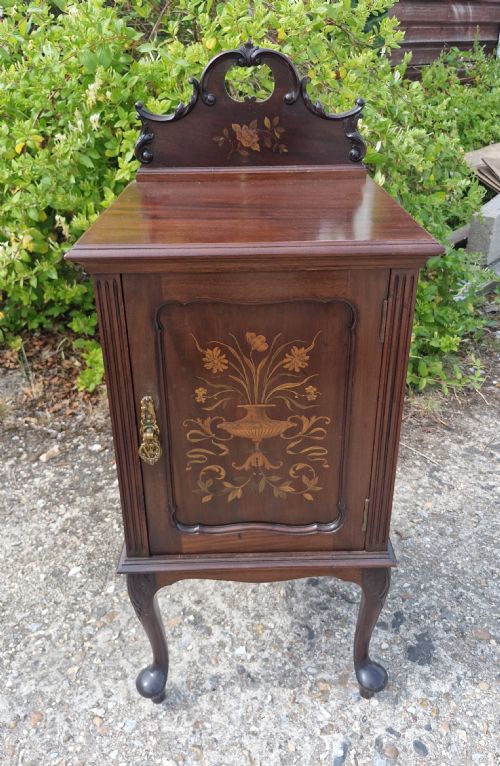
When you search for a victorian inlaid nightstand, you are looking at nineteenth-century bedside cabinets, cupboards, and small tables designed to hold chamber lighting and personal items. These pieces frequently appear as single cabinets or matched pairs dating from the middle to the late nineteenth century.
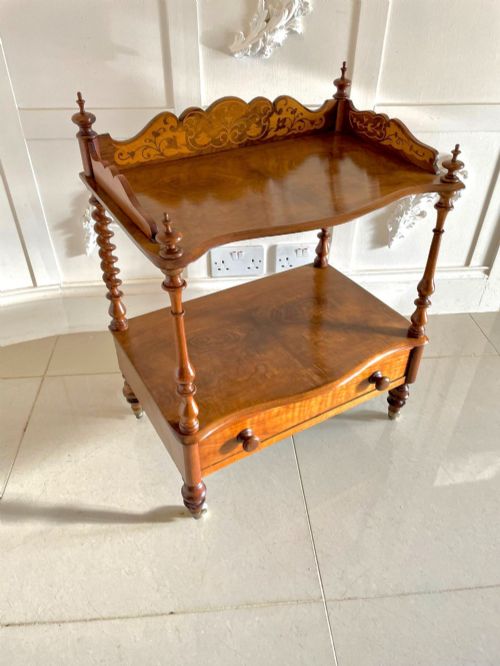
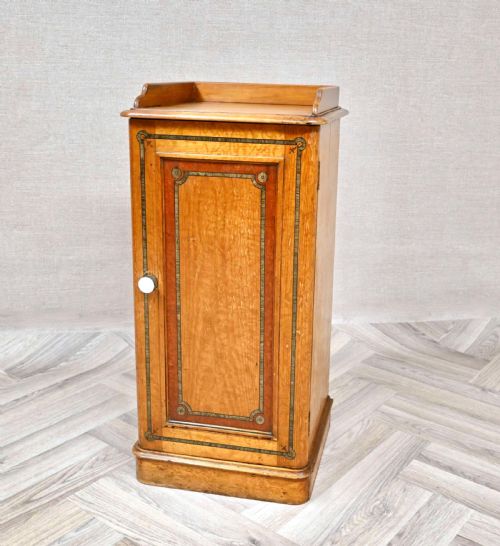
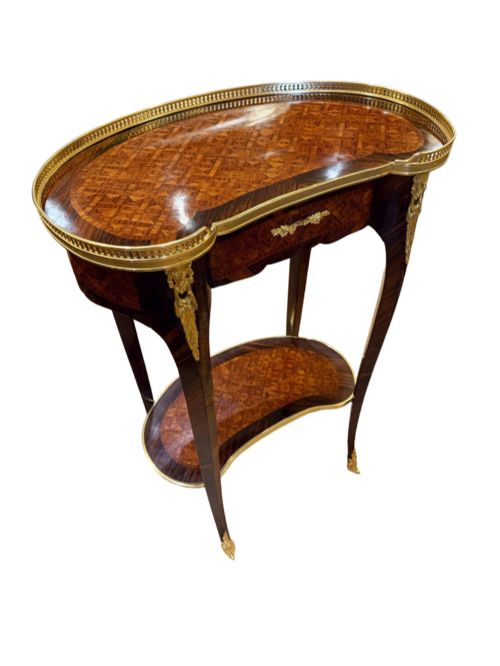
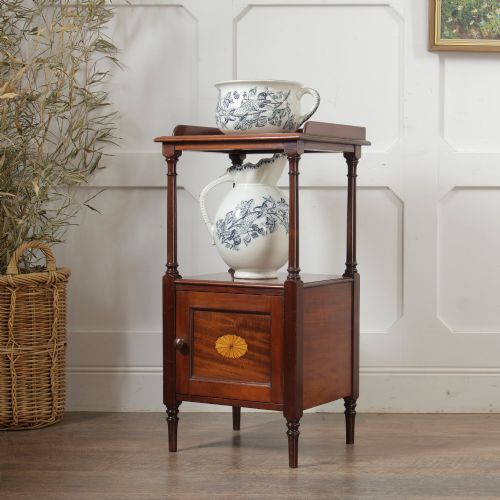
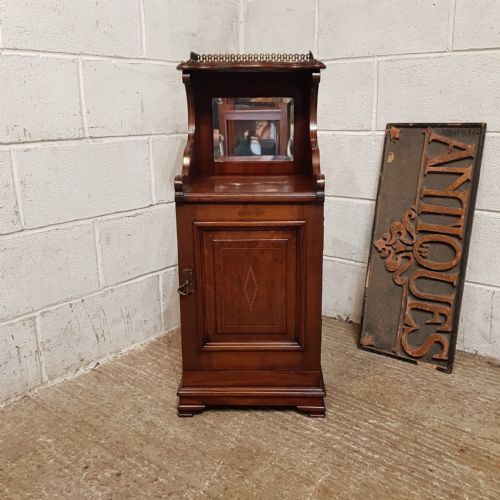
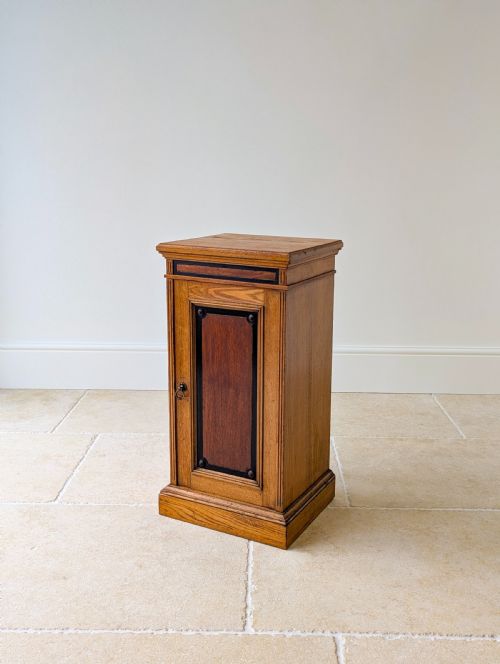
The forms range from enclosed pot cupboards with single doors to open bedside tables and bowfront chests. Many examples incorporate decorative marquetry and parquetry patterns across the top surface and door panels.
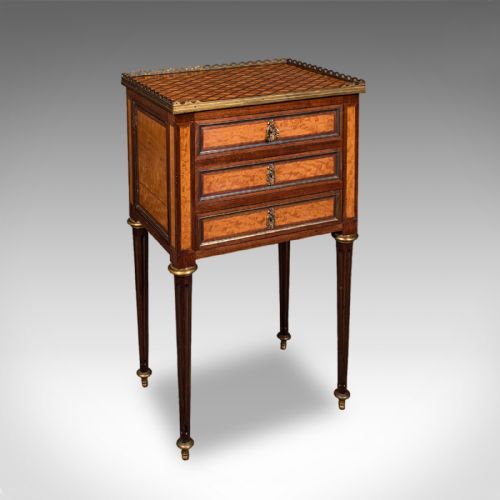
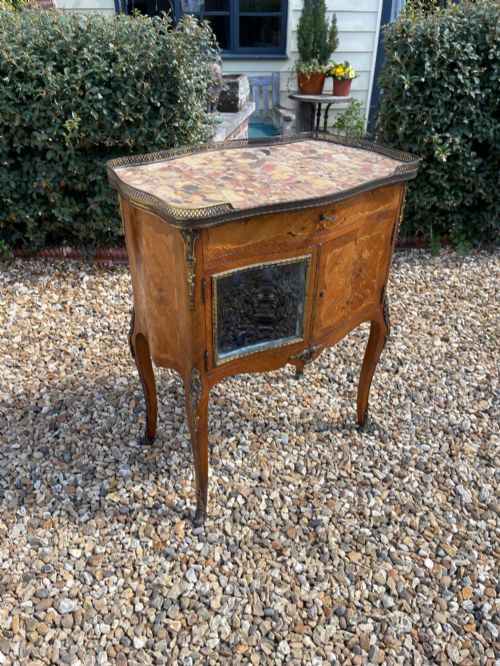
Makers of the period drew upon various design influences, producing pieces that align with Louis XVI revival styles, Aesthetic Movement principles, and Sheraton revival tastes. Walnut, mahogany, and rosewood serve as the primary foundational timbers for these bedside items.
How they were made
Cabinet makers utilised dense hardwoods such as mahogany, walnut, and rosewood, often applying lighter contrasting veneers like satinwood and kingwood for decorative banding. Marquetry panels were painstakingly hand-cut and fitted into the timber surfaces to create floral or geometric motifs.
Brass handles, hinges, and gallery rails frequently provide functional metallic contrast to the polished wood grains. Marble tops appear on several French and Continental-influenced examples, adding weight and a cool stone surface above the wooden carcase.
What varies in quality
The standard of a victorian inlaid nightstand rests upon the precision of the timber matching and the intricacy of the inlay work. Finer examples display crisp, tight joints in the marquetry without gaps between the contrasting woods.
The choice of primary timber and secondary wood thickness dictates the durability and visual depth of the cabinet. Substantial walnut or figured mahogany carcases with well-preserved polished surfaces represent the higher tier of surviving pieces.
Liberty & Co·Collinson & Lock
The Victorian Inlaid Nightstand Glossary
- Marquetry
- Decorative veneer work forming pictorial or geometric patterns using various coloured woods. It is applied carefully to table tops and cabinet doors.
- Parquetry
- Geometric mosaic woodwork arranged in repeating patterns such as cubes or chequers. This technique decorates many tabletop surfaces.
- Pot cupboard
- A small bedside cabinet originally constructed to house a chamber pot behind a single door. These pieces now function primarily as standard nightstands.
- Ebonised wood
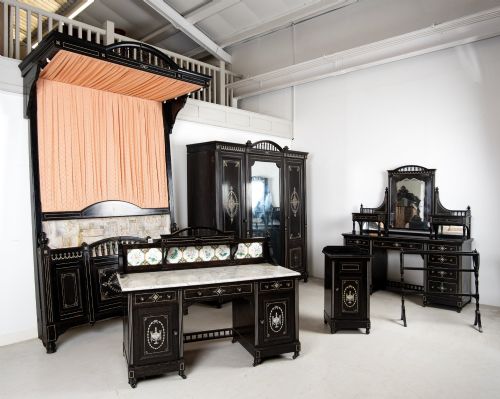
- Timber treated to imitate ebony through a dark staining or finishing process. It provides sharp contrast against lighter inlaid veneers.
- Bowfront
- A convex curved cabinet front that swells outward toward the viewer. This shaping requires specialised joinery skills during construction.
Victorian Inlaid Nightstand: Frequently Asked Questions
How were these nightstands originally used?
These cabinets sat beside beds to hold chamber pots, night lighting, and personal belongings within enclosed cupboards or drawers.
Their compact proportions kept necessities close at hand while concealing utilitarian items behind panelled wooden doors.
Are pairs difficult to find?
Matching pairs occur less frequently than single cabinets because furniture was often produced or purchased individually.
When two identical nightstands survive together, they offer balanced symmetry for flanking a larger bed frame.
What woods appear most often?
Walnut and mahogany form the structural base for the majority of these nineteenth-century bedside pieces.
Satinwood, rosewood, and kingwood are frequently employed alongside these darker timbers for contrasting stringing and marquetry details.
How do I distinguish revival styles?
Louis XVI revival pieces often feature marble tops, fine kingwood veneers, and slender tapered legs derived from French neoclassical design.
Sheraton revival and Aesthetic Movement variants lean toward British traditions, utilising satinwood, ebonised elements, and geometric marquetry.