
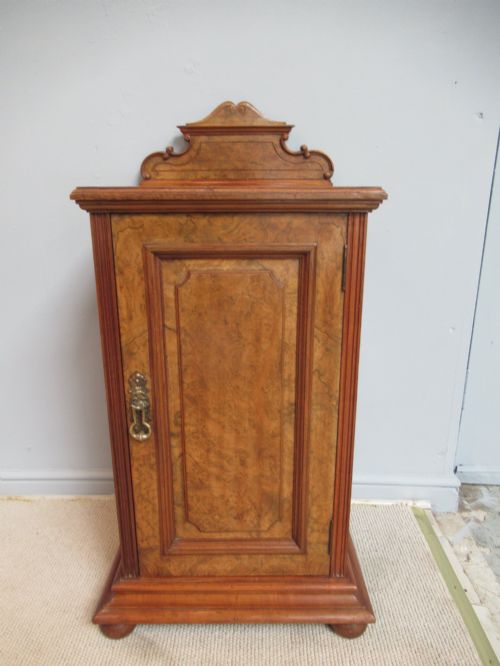
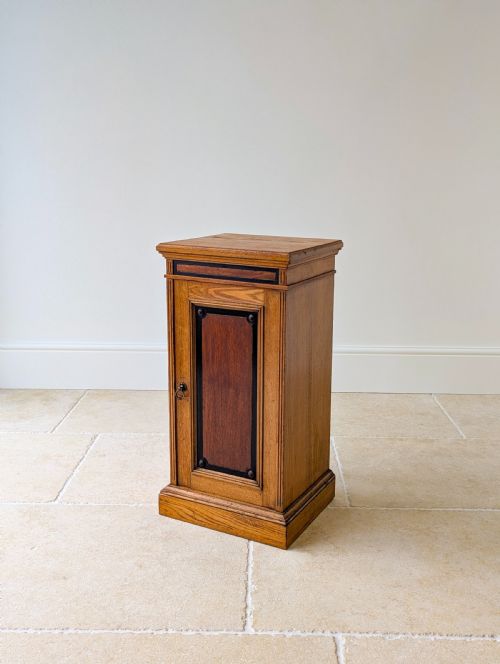
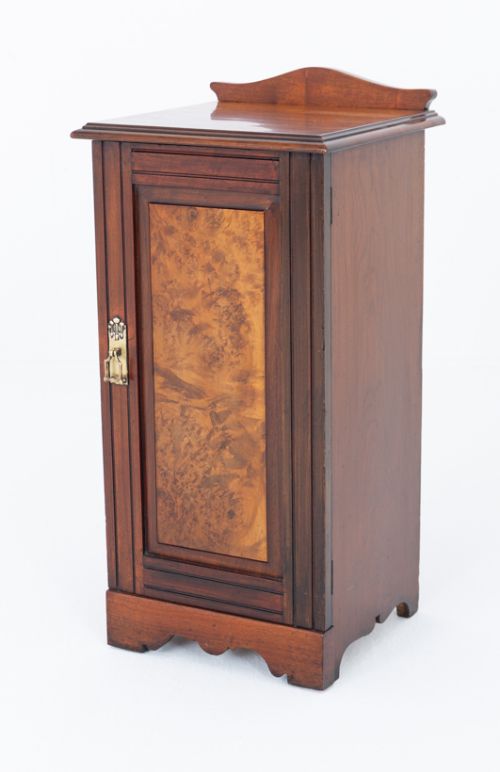


Late Victorian Bedside Pedestal
A late victorian bedside pedestal offers compact bedside storage in rich timber, combining period craftsmanship with everyday utility.
Late Victorian Bedside Pedestal
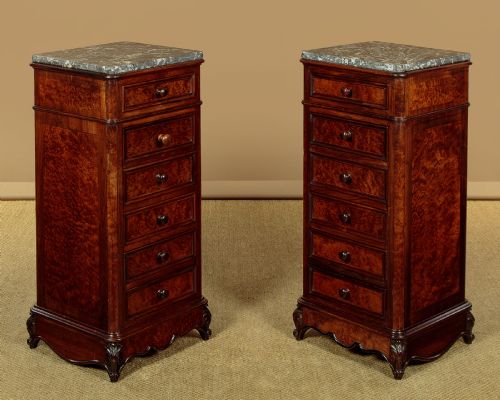
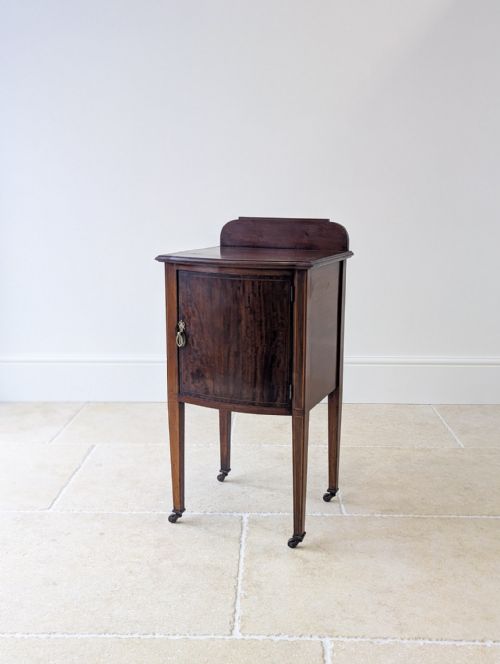
When you search for a late victorian bedside pedestal, you are looking at small functional cabinets and lockers designed for nineteenth century bedrooms. The pieces seen here span the Victorian era, specifically drawing from the late nineteenth century around eighteen eighty to nineteen hundred. Most frequently, you will encounter single cabinets or matched pairs in this selection.
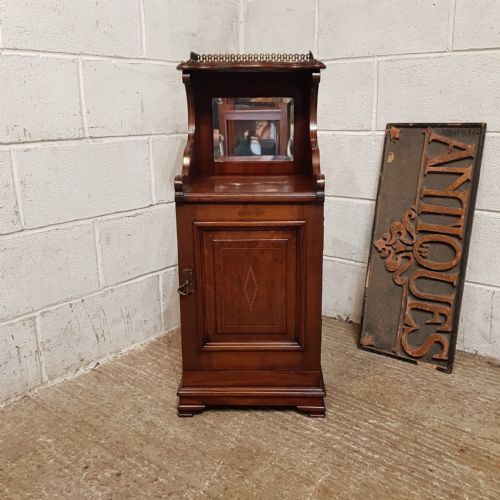
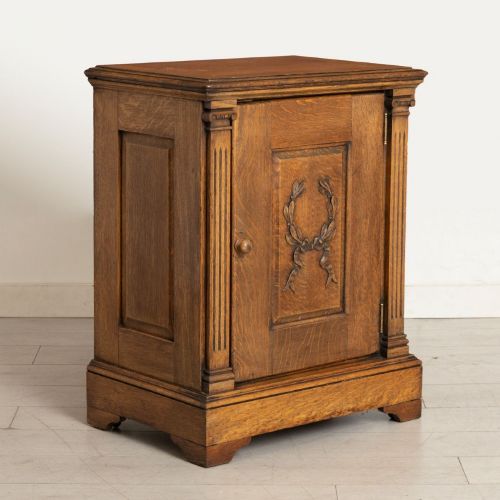
The forms vary from simple cupboards and drawer pedestals to taller lockers and pot stands. Alongside standard single-door cabinets, the listings include configurations with multiple drawers and open compartments. These pieces were intended to stand beside the bed to hold night-time necessities.
Makers and designers of this period utilised a range of regional cabinet-making traditions across England. The items range from plain utilitarian chamber pieces to more decorative examples finished with distinct stylistic touches.
How they were made
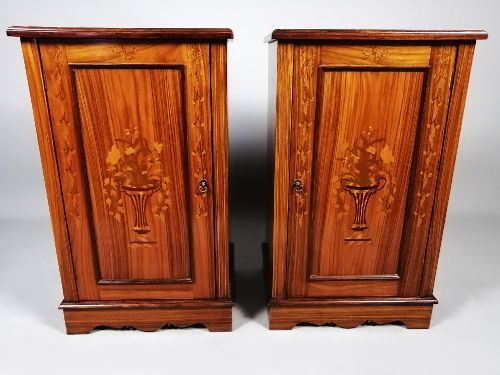
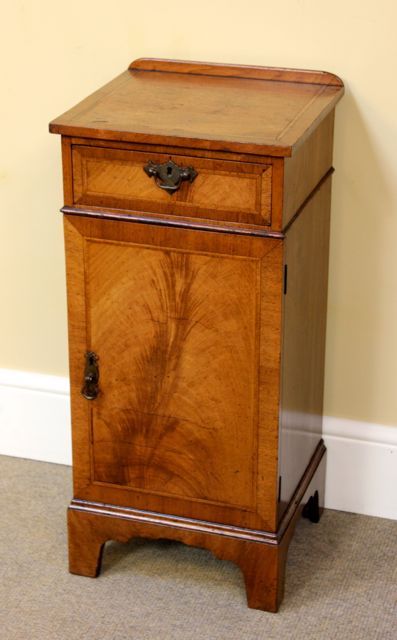
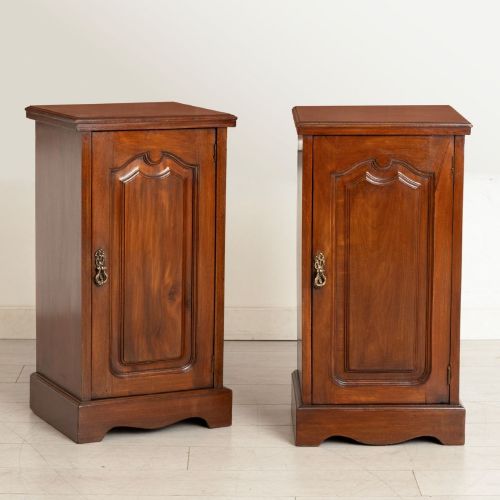
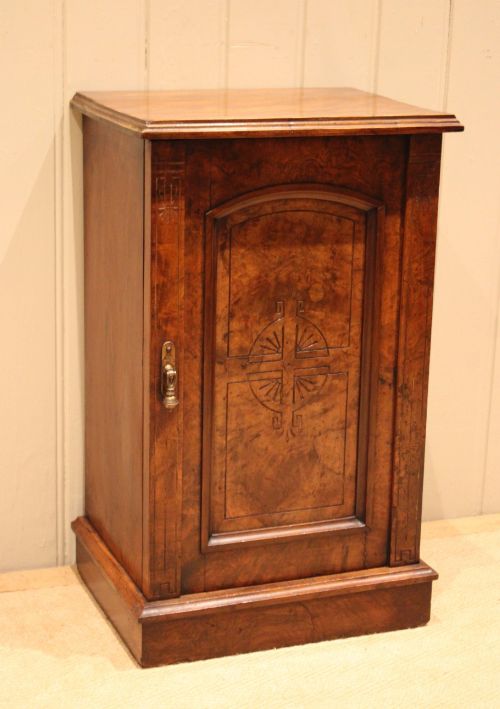
Cabinet makers built these pedestals using solid timber frames with matched veneers applied to the visible surfaces. Mahogany and walnut form the structural core of many pieces, often enhanced by decorative grain patterns found in burr walnut or amboyna.
Surface ornamentation relied on contrasting natural materials rather than applied synthetic finishes. Boxwood inlay, brass handles, and subtle stringing provided linear definition to drawer fronts and door panels.
Listings for this phrase include pieces from the Victorian era constructed in walnut, mahogany, oak, rosewood, and exotic hardwoods.
What varies in quality
The grade of timber selection and the precision of the veneer work dictate the refinement of a pedestal. Finer examples display carefully matched grain patterns across doors and drawer fronts, while simpler versions use straightforward plank construction.
Hardware choices and internal fittings indicate the original tier of manufacture. Solid brass mounts, dovetailed drawer construction, and secondary softwood linings reveal the underlying standard of workshop production.
The Late Victorian Bedside Pedestal Glossary
- Pedestal
- A free-standing support or cabinet designed to hold small objects at a convenient height. In bedroom furniture, it denotes a closed cupboard or set of drawers standing beside the bed.
- Veneer
- A thin layer of superior wood adhered to a secondary timber base to provide a decorative surface. Burr walnut and amboyna veneers were frequently applied to create striking grain patterns.
- Inlay
- A technique of inserting contrasting strips or pieces of wood into a recessed surface to form geometric patterns. Boxwood was commonly utilised for fine contrasting lines on dark timbers.
- Lockers
- A nineteenth-century term for enclosed bedside cabinets fitted with a door or multiple drawers. These pieces served to keep personal items out of sight in the sleeping chamber.
- Aesthetic Movement
- A late nineteenth-century design style that emphasised visual beauty and artistic reform over heavy historicism. Pieces in this style often incorporate simplified forms and contrasting wood tones.
Late Victorian Bedside Pedestal: Frequently Asked Questions
What is a late victorian bedside pedestal?
A late victorian bedside pedestal is a small enclosed cabinet or set of drawers made in the final decades of the nineteenth century. They were designed to sit beside a bed for storage.
These pieces typically feature timber construction such as mahogany or walnut, often with panelled doors or small stacked drawers.
How do I identify a bedside locker?
Bedside lockers from this period are usually upright wooden cabinets with a single hinged door or several small drawers. They offer enclosed storage for chamber items.
Look for traditional joinery, timber framing, and period hardware like brass handles or small key escutcheons.
Which woods were used?
Cabinet makers predominantly used mahogany, walnut, and oak for the main structure and panels. Finer examples incorporate decorative veneers like burr walnut, amboyna, and rosewood.
Details were often added using contrasting timbers such as boxwood for inlay work and stringing.
Are pairs common for these pieces?
Matched pairs appear frequently among late nineteenth-century bedroom furniture, reflecting the layout of double beds. Finding two identical pedestals together is a regular feature of this category.
Single cabinets also appear, reflecting individual bedroom arrangements of the period.