


Victorian Inlaid Music Stand
A victorian inlaid music stand is a refined piece designed to hold sheet music, bringing distinct nineteenth-century cabinet work into a modern room.
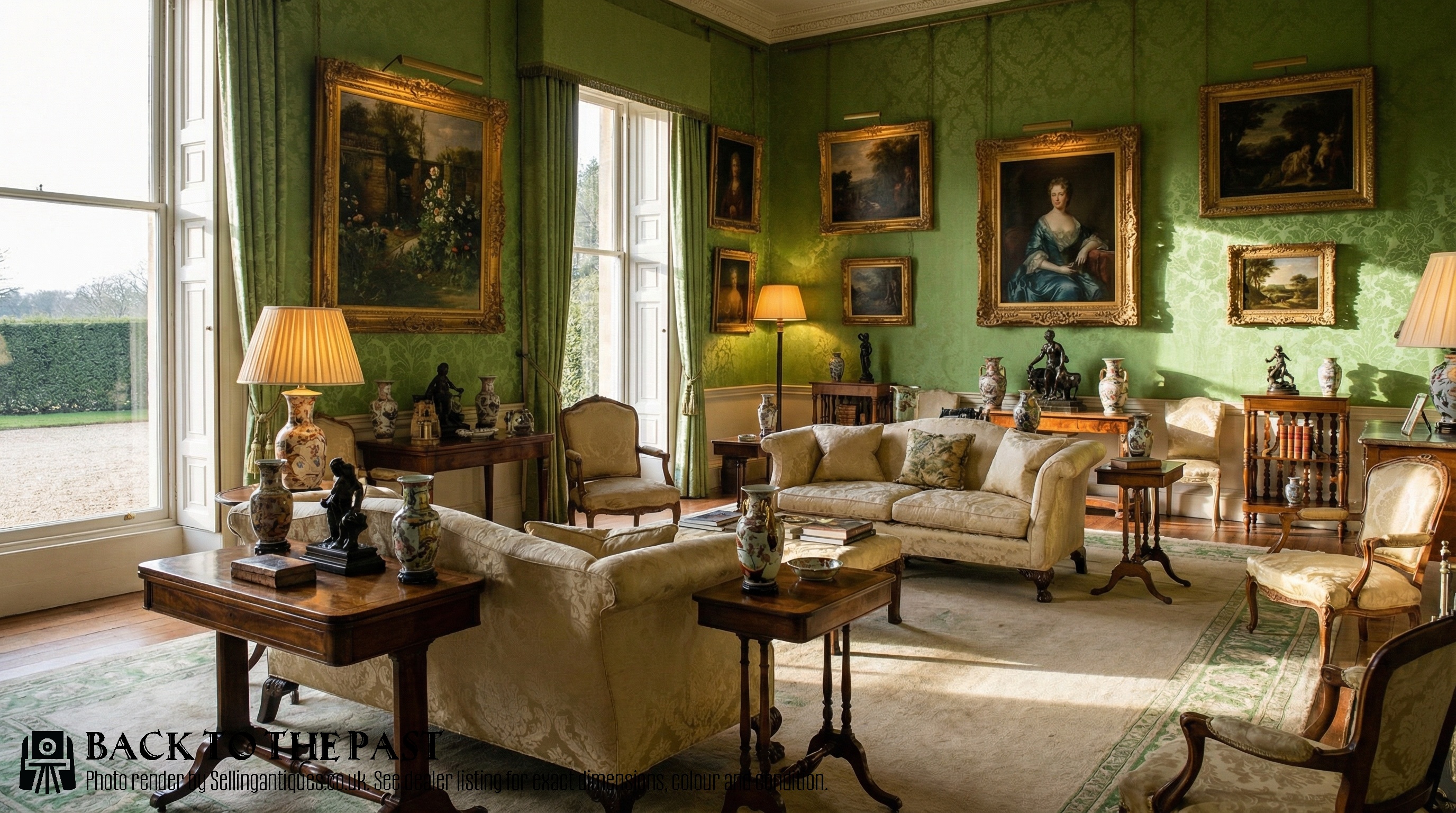
Victorian Inlaid Music Stand
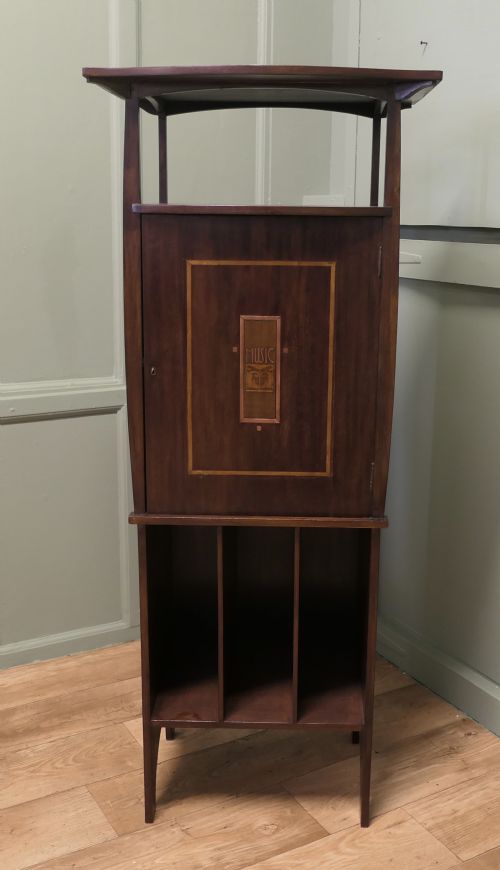
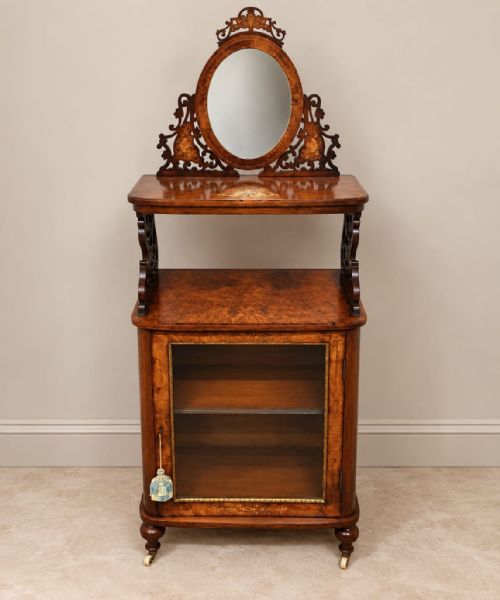
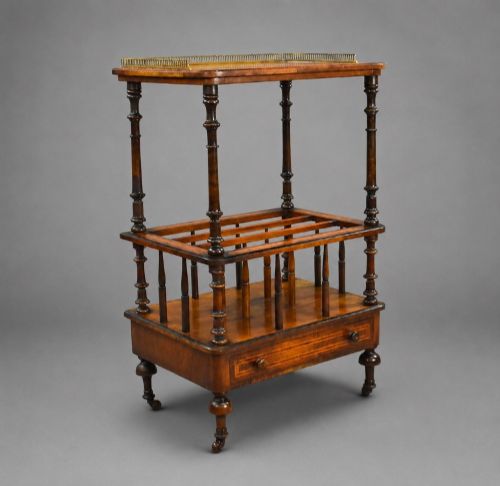
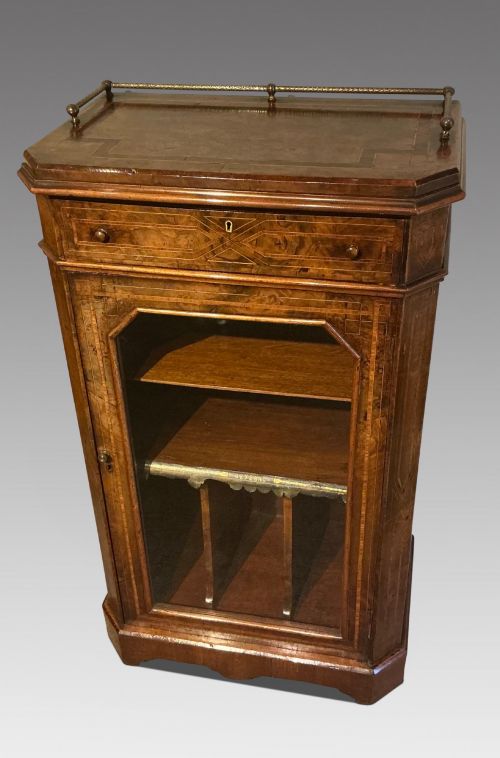
When you search for a victorian inlaid music stand, you encounter a variety of forms including music cabinets, canterburys, whatnots, and reading tables from the nineteenth century. The most common versions on this page are burr walnut music cabinets and canterburys decorated with wood inlay.
These pieces date from periods such as the Victorian era, the William IV period, and the Arts and Crafts movement. They reflect the domestic musical habits of the nineteenth century, serving both practical holding duties and decorative functions in the parlour.
How They Were Made
Cabinet makers utilised dense timbers such as burr walnut, mahogany, rosewood, and black walnut as the structural foundation for these stands and cabinets. Wood inlay and marquetry patterns were then set into the primary wood surfaces to create geometric or floral ornamentation.
Brass fittings, glass doors, and ceramic elements frequently appeared alongside fretwork details to complete the construction. These materials combined structural timber with decorative veneer work executed by period artisans.
Listings feature woods including burr walnut, mahogany, rosewood, and gonçalo alves across various nineteenth-century styles.
What Varies in Quality
The degree of refinement in the wood inlay and the choice of primary timber distinguish the standard of manufacture. Pieces utilising figured burr walnut or rosewood with detailed marquetry represent a higher grade of cabinet making than simpler hardwood versions.
The integrity of the internal divisions, the presence of drawers, and the execution of turned supports or brass mounts determine the overall sophistication of the piece. Superior examples maintain balanced proportions and crisp execution across all decorative elements.
GM Elwood for JS Henry
The Victorian Inlaid Music Stand Glossary
- Canterbury
- A low stand with partitioned sections designed originally for holding sheet music or portfolios. It often incorporates a single drawer at the base.
- Marquetry
- The art of applying pieces of veneer to a structure to form decorative patterns and pictures. It differs from simple inlay by covering the entire surface in assembled wooden puzzle pieces.
- Burr walnut
- A prized timber harvested from the abnormal growth of a walnut tree, yielding swirling, highly figured grain patterns. Cabinet makers utilised veneers of this wood for prominent exterior surfaces.
- Fretwork
- Ornamental work consisting of interlaced or perforated designs cut from wood. It frequently appears on nineteenth-century music cabinets and canterburys as decorative panels.
- Whatnot
- A set of open shelves supported by slender pillars, used for displaying ornaments or holding books and music. In nineteenth-century interiors, it served multiple utility roles.
Victorian Inlaid Music Stand: Frequently Asked Questions
What is a music cabinet?
A music cabinet is a specialised nineteenth-century piece designed with internal shelves or sliding trays specifically sized for holding sheet music. They usually feature a panelled door, sometimes glazed, to protect the contents.
These pieces sat in the drawing room where family members gathered around the piano. Today they function equally well as bedside tables or small storage cabinets.
How do I date a music stand?
Dating relies on observing the combination of timber, style, and construction methods. Pieces from the middle of the nineteenth century often use burr walnut and heavy marquetry, while later examples may show Arts and Crafts influences.
Examining the secondary timbers inside drawers and the type of brass hardware provides further clues to the decade of manufacture.
Where did they place canterburys?
Canterburys were designed to stand beside pianos or seating areas in nineteenth-century drawing rooms. Their partitioned sections kept sheet music organised and accessible for musicians.
In modern rooms, their distinct shape makes them suitable for holding magazines, folios, or books next to armchairs.
What is marquetry inlay?
Marquetry is a technique where different tinted veneers are fitted together to form pictorial or geometric designs. Artisans cut these shapes meticulously before gluing them onto the carcase of the furniture.
This decorative method distinguishes finer Victorian pieces from plain utilitarian items of the same era.