


Victorian Inlaid Hall Table
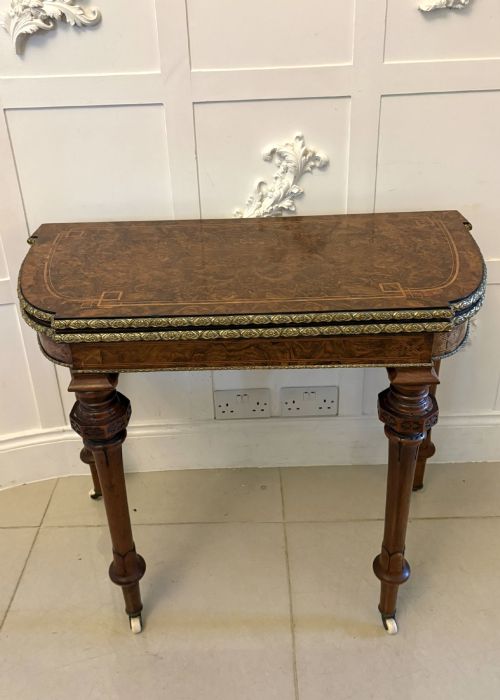
A victorian inlaid hall table brings nineteenth-century craftsmanship directly into a modern entrance, offering both a practical surface and intricate marquetry.
Victorian Inlaid Hall Table
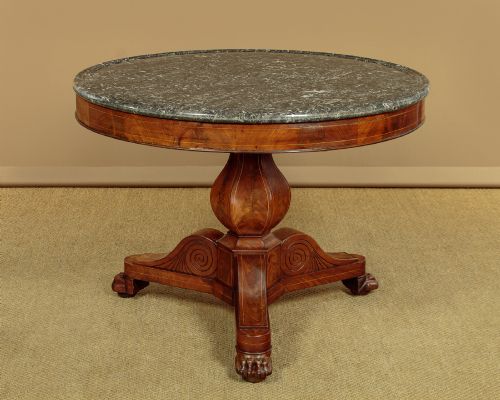
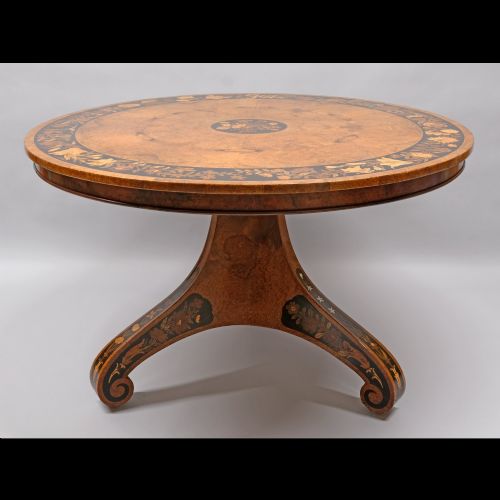
A victorian inlaid hall table sits within a lineage of nineteenth-century occasional, console, and centre tables designed to anchor an entrance space. These pieces emerge across the Victorian period, frequently utilising walnut, burr walnut, mahogany, and rosewood timbers.
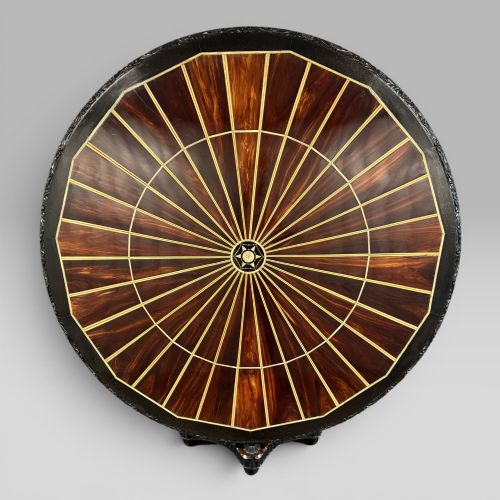
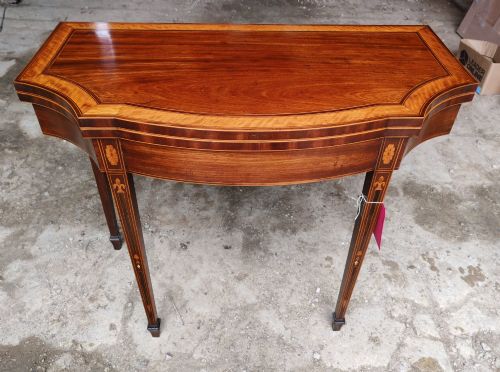
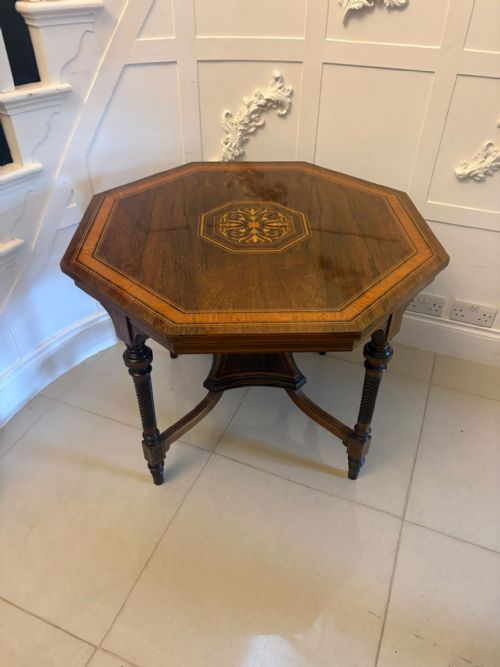
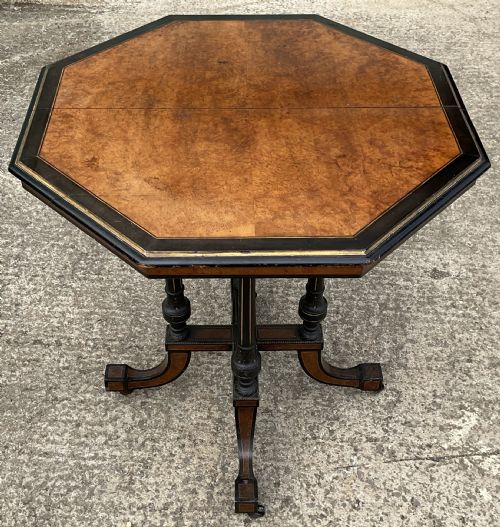
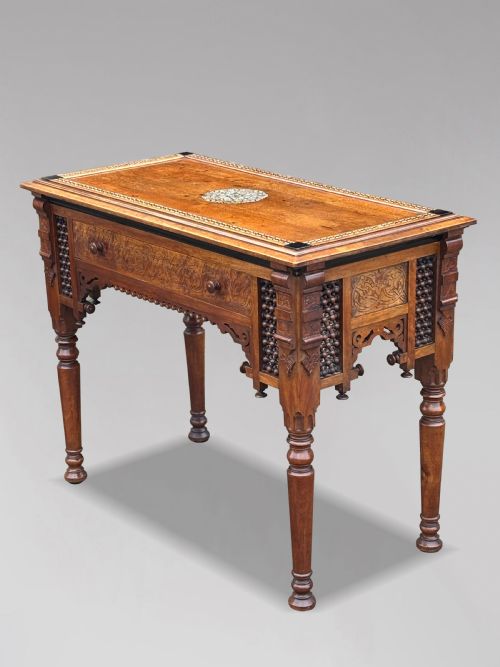
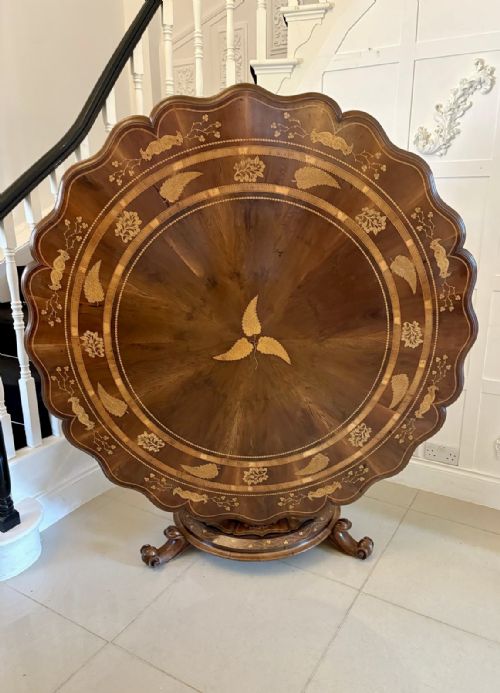
The versions most common on this page combine timber foundations with marquetry or parquetry inlay, drawing upon styles such as Sheraton Revival, Aesthetic Movement, and French Second Empire. Makers shaped these tables in rectangular, round, and octagonal formats, sometimes incorporating pedestal or basket bases.
Beyond standard hall tables, related forms include card tables, writing desks, and sofa tables that served multifunctional roles in nineteenth-century domestic interiors. Their surfaces often display meticulous wood inlay, brass mounts, and satinwood borders that define their visual character.
Materials and construction
Cabinet makers relied heavily on dense hardwoods like walnut, burr walnut, mahogany, and rosewood, often applying decorative veneers over secondary timbers to achieve stable yet striking surfaces. Marquetry inlay utilised contrasting woods such as satinwood, ebony, and various specimen timbers to create pictorial or geometric patterns across the top.
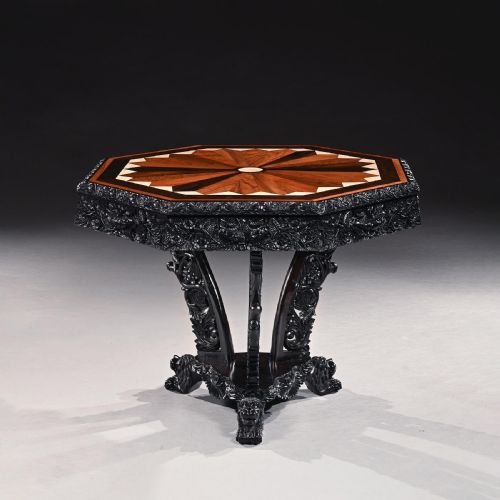
Structural integrity relied on traditional joinery combined with turned pedestals, stretcher bases, or scroll-carved supports depending on the specific Victorian sub-style. Ormolu mounts and brass accents occasionally complemented the inlaid wooden surfaces, securing the junction between the top and the base.
Recorded styles include Aesthetic Movement, Anglo-Indian Colonial, and Victorian Sheraton Revival across centre, console, and occasional table formats.
Assessing the craftsmanship
The distinction between standard production and top-tier work rests on the precision of the marquetry and the choice of timber. Pieces utilising highly figured burr walnut, amboyna, or delicate satinwood banding demonstrate a superior tier of manufacture compared to simpler mahogany or oak examples.
Execution of the inlay work itself separates workshops, where tight joints between contrasting wood species remain seamless over generations. Attribution to known makers or documented workshops elevates a piece, reflecting meticulous hand-cut detailing in both the structural joinery and the decorative surface.
Holmes Baldock·Egan Workshop·Holland and Sons·Gregory and Co·James Winter·Walker and Hall
The Victorian Inlaid Hall Table Glossary
- Marquetry inlay
- Decorative patterns formed by fitting small pieces of veneer into a prepared surface. This technique creates complex pictorial or geometric designs using contrasting timbers.
- Burr walnut
- Timber taken from the wart or growth on a walnut tree, yielding highly twisted and intricate grain patterns. Cabinet makers prized this wood for its decorative visual depth on table tops.
- Ormolu
- Cast bronze finished with a gold-coloured metallic coating, applied as mounts on nineteenth-century furniture. It serves a decorative and protective function on legs and friezes.
- Parquetry
- Geometric mosaic woodwork arranged in regular patterns like squares, triangles, or stripes. This technique differs from marquetry by focusing on repeating abstract shapes rather than pictorial scenes.
- Satinwood
- A lustrous, hard timber native to Ceylon and India with a yellowish sheen. It provided a bright contrast against darker woods like mahogany and rosewood in inlaid borders.
Victorian Inlaid Hall Table: Frequently Asked Questions
Where did a hall table stand?
Nineteenth-century households placed these tables in entrance halls, corridors, and reception rooms where they functioned as drop-off points for calling cards and small personal items. They stood against walls or operated as freestanding centre tables depending on the layout of the hallway.
Their placement was intended to make an immediate impression on visitors entering the home, combining utility with decorative display.
How do I care for inlaid wood?
Maintaining these surfaces requires keeping them away from direct sunlight and maintaining stable room humidity to prevent the veneer from lifting. Gentle dusting with a dry, soft cloth preserves the polish without introducing moisture to the delicate wood joints.
Applying specialised furniture wax occasionally helps nourish the historic timber while protecting the intricate marquetry from drying out.
What is the difference between marquetry and parquetry?
Marquetry involves cutting and assembling various wood veneers to create figurative, floral, or scrollwork designs across the table top. It allows artisans to picture complex scenes using contrasting tones of natural timber.
Parquetry relies strictly on geometric arrangements, utilising repeating shapes like cubes or chequers to form structured, symmetrical patterns across the surface.
How can I date a Victorian table?
Dating relies on examining the timber choices, structural framing, and prevailing design styles associated with specific decades within the nineteenth century. Early pieces often feature heavier mahogany or rosewood construction, whereas later examples incorporate ebonised finishes and Aesthetic Movement motifs.
Maker marks, stamps, and specific workshop attributions also help narrow down the period of manufacture alongside the complexity of the inlay techniques employed.