




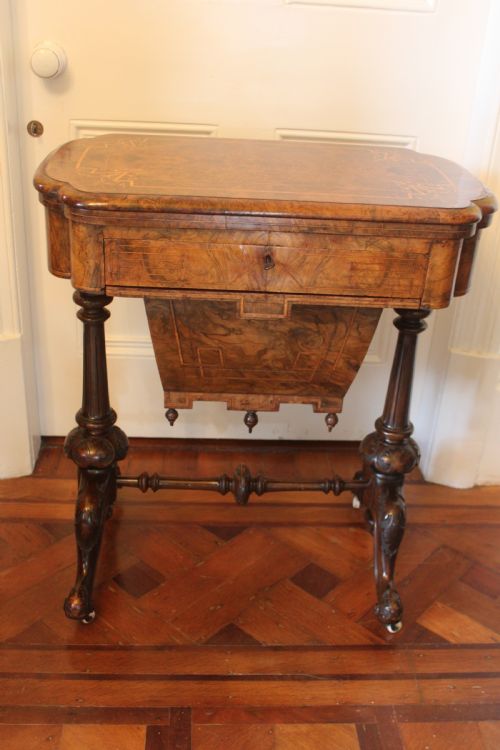


Victorian Inlaid Games Box
These Victorian inlaid games box pieces offer intricate marquetry surfaces designed for entertainment and storage during the nineteenth century.
Victorian Inlaid Games Box
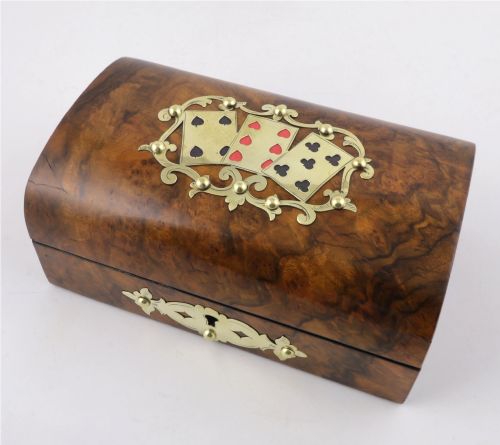
A Victorian inlaid games box brings together compact table top caskets and larger multi-functional furnishings designed for nineteenth century parlour entertainment. When you search for a Victorian inlaid games box, you encounter items intended to hold playing cards, chess pieces, and backgammon boards.
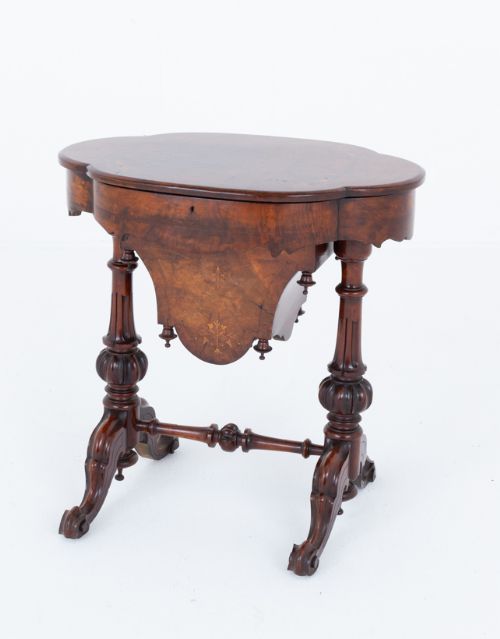
The pieces on this page span tabletop boxes, folding tables, and combined sewing or work tables dating from the nineteenth century. Walnut, burr walnut, rosewood, and mahogany form the primary body types seen across these listings.
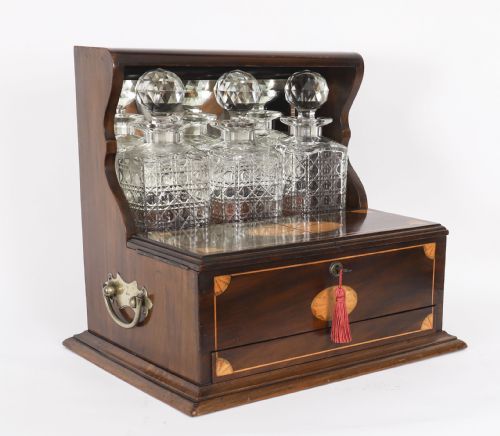
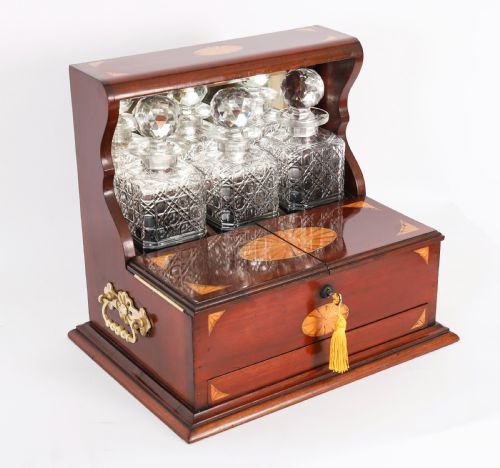
Many examples combine storage for cards and dice with integrated boards for chess and backgammon. You also find specialised caskets alongside more elaborate tantalus and games combinations from the late nineteenth century.
Materials and construction methods
Cabinet makers utilised dense hardwoods such as walnut, mahogany, and rosewood as the structural foundation for these caskets and tables. Burr walnut and satin wood provided richly figured surfaces for the exterior lids and panels.
Wood inlay and marquetry techniques created geometric patterns, floral motifs, and detailed playing boards across the surfaces. Boxwood, mother of pearl, and brass served as contrasting inlay materials to delineate squares and decorative borders.
The listings on this site record walnut, burr walnut, rosewood, mahogany, and satin wood among the primary construction materials.
Assessing quality and craftsmanship
The fineness of the marquetry and the precision of the wood inlay establish the baseline of a piece's execution. Tighter joints, balanced timber selection, and crisply cut contrasting woods signal superior cabinet making.
Integration of internal components, such as fitted compartments for cards, counters, and cribbage boards, demonstrates the maker's attention to functional detail. The preservation of original brass hinges, locks, and crystal decanters where present also influences the standing of an example.
The Victorian Inlaid Games Box Glossary
- Marquetry
- Decorative veneer work forming pictures or geometric patterns on a wooden surface. Skilled artisans cut contrasting woods to fit precisely within the background veneer.
- Burr walnut
- Timber taken from a growth on a walnut tree, yielding a swirling and highly figured grain. Cabinet makers prized this material for prominent exterior surfaces.
- Tantalus
- A locking wooden stand holding decanters to prevent unauthorized access to spirits. Nineteenth-century versions frequently incorporated games compartments into their design.
- Cribbage box
- A small specialised container designed to store playing cards and cribbage pegs. These boxes often feature sliding lids and numbered tracks.
- Tunbridge ware
- Woodware decorated with tiny mosaic tiles of different coloured woods to form geometric or pictorial designs. This technique originated in the spa town of Tunbridge Wells.
Victorian Inlaid Games Box: Frequently Asked Questions
What games were played with these boxes?
These boxes housed equipment for chess, backgammon, cards, and cribbage. Interiors often featured dual-purpose boards and dedicated compartments for counters and dice.
Victorian households utilised these compact caskets for evening parlour entertainment and social gatherings.
How do I care for rosewood and walnut?
Keep wooden boxes away from direct sunlight and steady heat sources to prevent the timber from drying out. Gentle dusting with a dry cloth maintains the polished finish.
Avoid using modern chemical polishes that can damage historic veneer and traditional wax finishes.
Are the internal game pieces usually original?
Many surviving boxes retain partial sets of counters, dice, or cribbage pegs, while others were reunited with compatible pieces over time. Complete original sets of chessmen or cards are less common.
Inspect the interior fit and wear patterns to understand how the components have aged together.
What is the difference between a games box and a games table?
Games boxes are portable caskets designed to sit on a table or surface during play. Games tables incorporate folding tops and built-in legs to function as standalone pieces of furniture.
Both forms utilise wood inlay and marquetry to signal their recreational purpose.
How can I tell a nineteenth-century box from a later copy?
Examine the construction methods, timber choice, and secondary woods used inside the compartments. Nineteenth-century pieces typically show hand-cut dovetails and period hardware.
Look for natural ageing in the rosewood, mahogany, or walnut veneers rather than uniform modern finishes.