
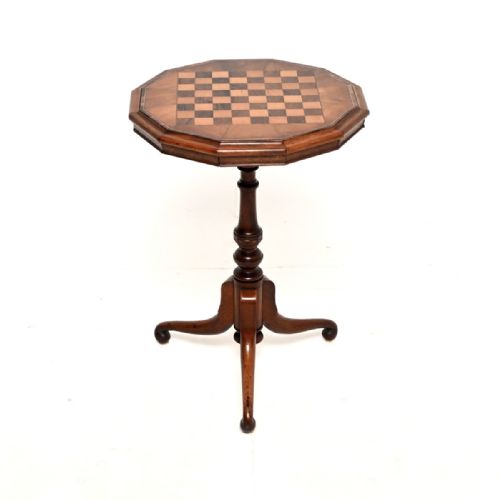
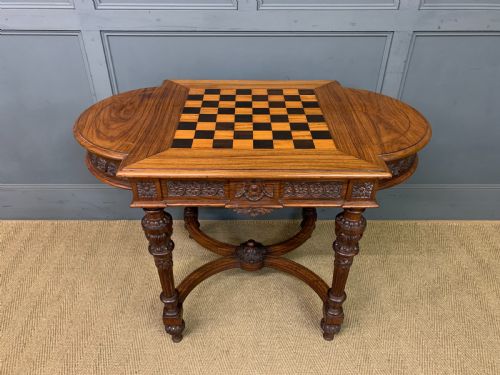


Victorian Inlaid Games Board
A victorian inlaid games board brings functional parlour play into domestic spaces with crisp geometric wood marquetry.
Victorian Inlaid Games Board
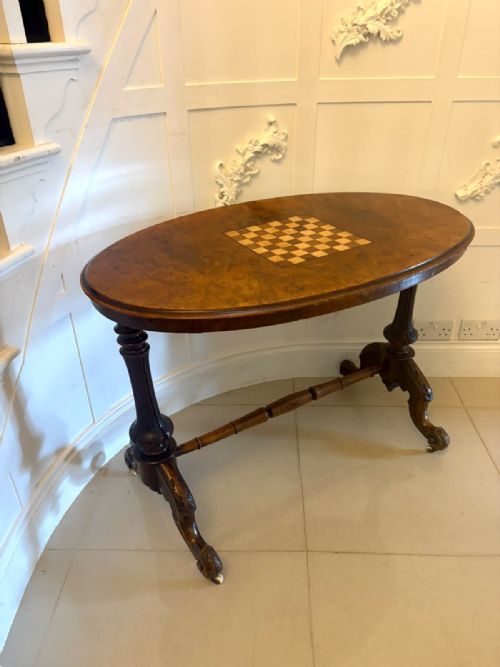
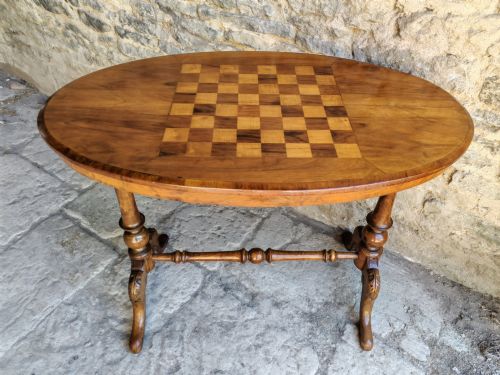
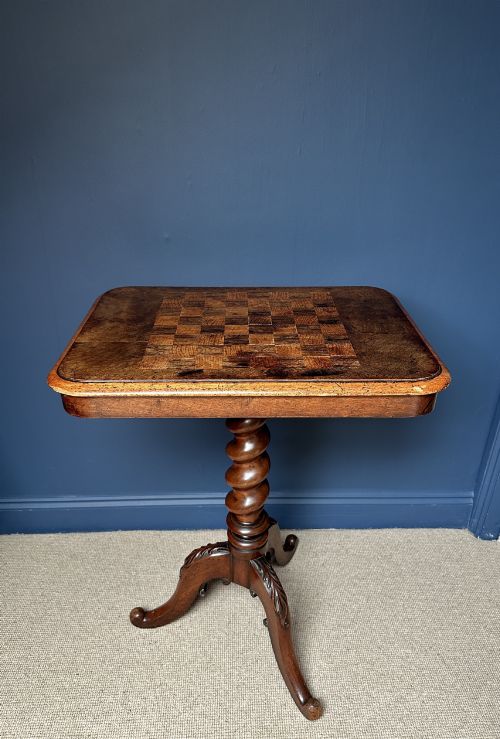
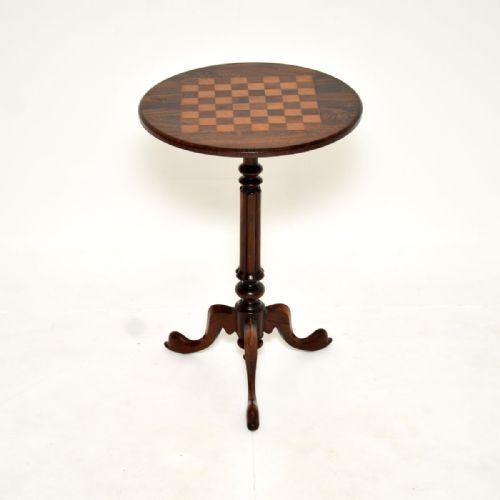
A victorian inlaid games board encompasses folding boards, table tops, and compendium boxes produced across the nineteenth century. The most frequent examples on this page are walnut and rosewood tables featuring integrated chess or backgammon squares.
Makers adapted domestic furniture to include gaming surfaces, producing occasional tables and sewing boxes that open to reveal cribbage tracks or backgammon interiors. Anglo-Indian variants and Tunbridge ware pieces also appear alongside standard British productions.
Materials and construction
Craftsmen built these pieces using structural carcases of mahogany, walnut, or rosewood, applying burr walnut veneers to tabletops for decorative figuring. Boxwood, sycamore, and bone formed the contrasting light and dark squares of the inlaid boards.
Specialised workshops executed precise wood inlay and marquetry to create flush playing surfaces. Mother of pearl elements occasionally featured within the inlaid designs, particularly on games boxes and boards.
Listings feature walnut, burr walnut, rosewood, and mahogany, often enhanced with boxwood and bone inlay.
Judging quality
Quality rests in the precision of the wood inlay and the selection of timber veneers on the playing surface. Burr walnut with strong natural figuring elevates a table above plain mahogany or standard walnut equivalents.
The integration of multiple gaming layouts within a single box or table, such as combined chess and backgammon interiors, indicates finer workshop production. Mechanical actions on fold-over tops and sewing drawers also separate standard items from superior pieces.
A British Chess Company·Burroughes and Watts
The Victorian Inlaid Games Board Glossary
- Marquetry
- Decorative patterns created by fitting thin pieces of wood veneer onto a structural surface. This technique defined the contrasting squares of nineteenth century boards.
- Cribbage board
- A wooden board featuring drilled tracks for peg scoring during card games. These appear as standalone boxes or integrated table elements.
- Tunbridge ware
- Small wooden items decorated with mosaic tile patterns formed from multiple tiny tinted wood segments. The technique originated in Kent.
- Compendium
- A fitted box containing equipment for several different parlour games. They bring together chess, backgammon, and cribbage sets in one container.
Victorian Inlaid Games Board: Frequently Asked Questions
What games do these boards support?
These items commonly feature inlaid squares for chess and draughts, alongside internal boards for backgammon. Many also incorporate drilled tracks for cribbage.
Multi-game boxes and tables allowed nineteenth-century households to play several different pastimes using a single piece of fitted furniture.
How do I care for inlaid wood?
Keep wooden games boards away from direct sunlight and steady heat sources to prevent the veneers from lifting. Gentle dusting and occasional wax polish maintain the finish.
Avoid excessive moisture on bone elements and mother of pearl inlays to protect the delicate geometric work.
Are all these pieces Victorian?
The selection spans the nineteenth century, with specific dates ranging from around 1850 to 1900. Most items align with the Victorian era and late Victorian periods.
Alternative regional styles such as Anglo-Indian productions also feature alongside standard British domestic furniture.
How were games tables used?
Victorian households utilised games tables as functional occasional furniture in parlours and drawing rooms. Fold-over tops allowed surfaces to convert from writing desks or tea tables into active gaming boards.
Fitted interiors below the playing surface stored cards, bone pieces, and cribbage pegs when not in use.