

Victorian Inlaid Display Case
A victorian inlaid display case brings warmth and polished glass to a room, framing precious collections behind curved or glazed doors.
Victorian Inlaid Display Case
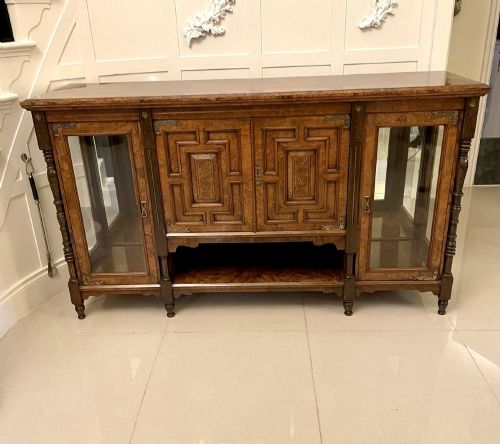
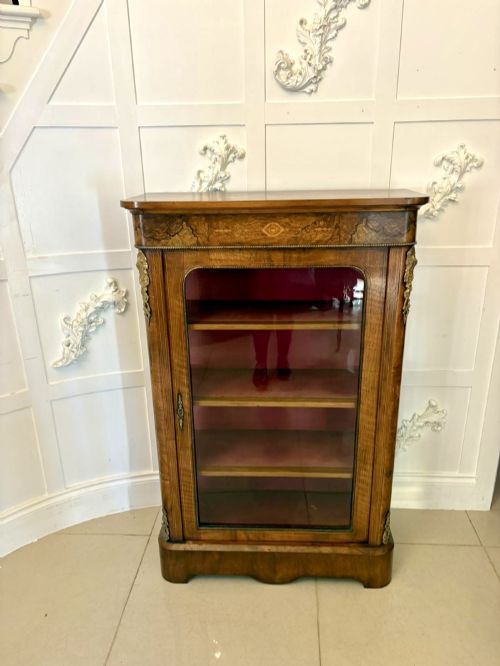
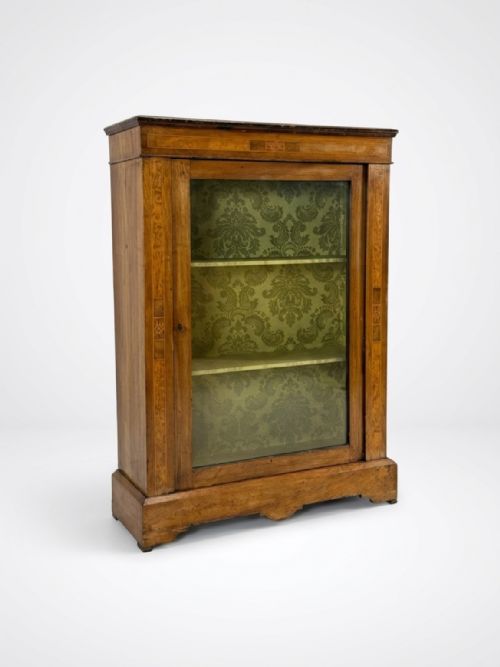
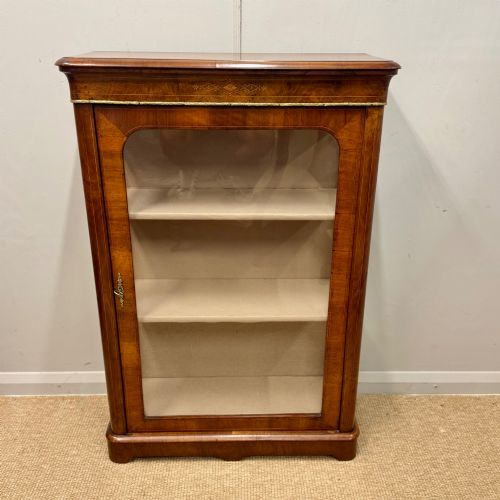
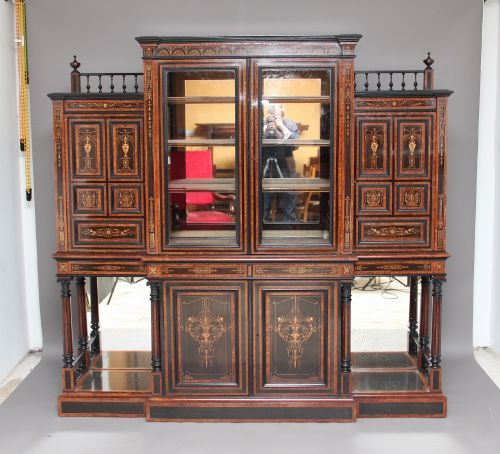
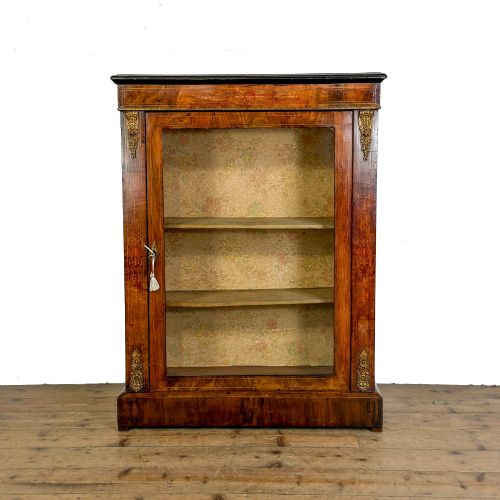
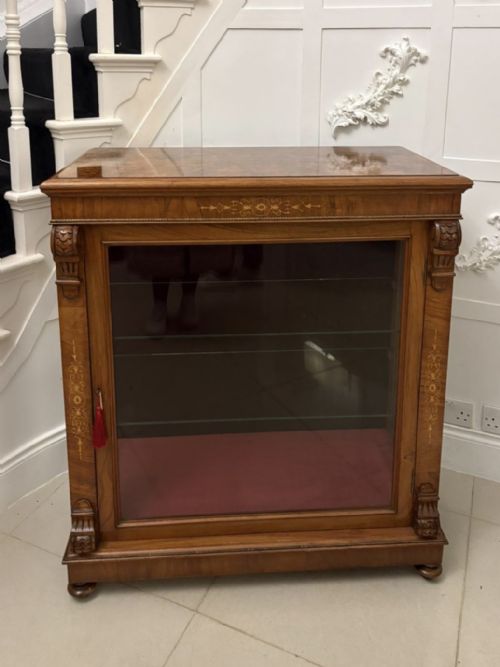
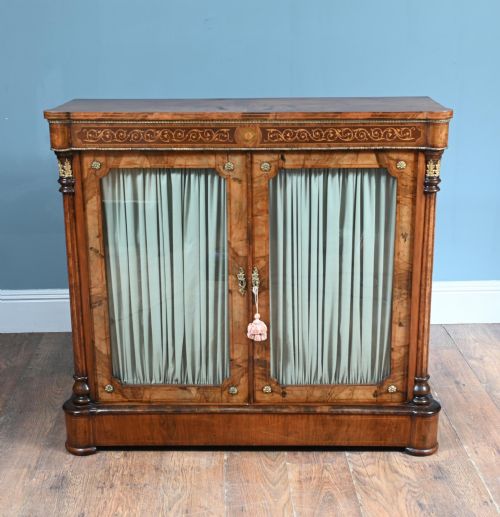
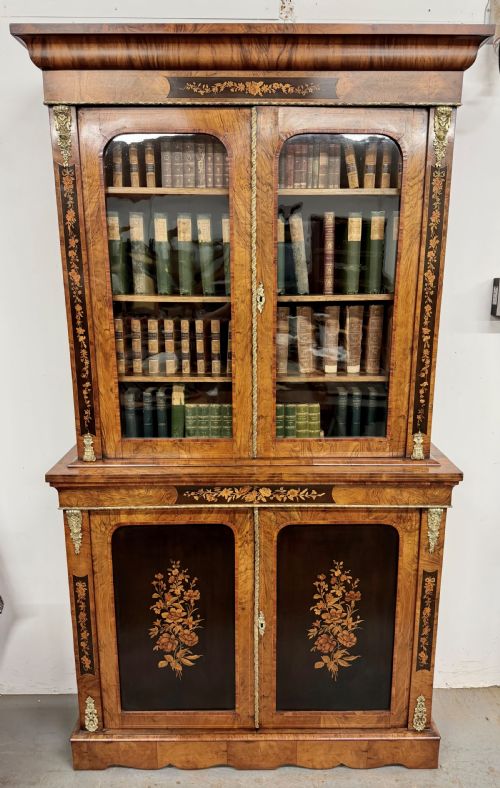
A victorian inlaid display case encompasses a range of formal storage furniture, most frequently encountered here as pier cabinets, credenzas, and glazed bookcases dating from the mid-to-late nineteenth century.
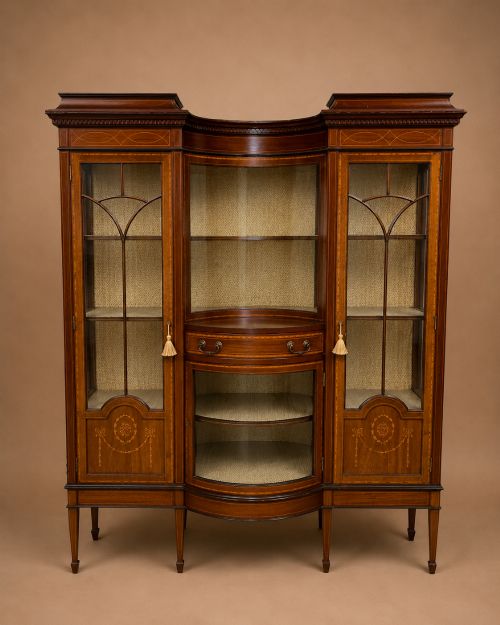
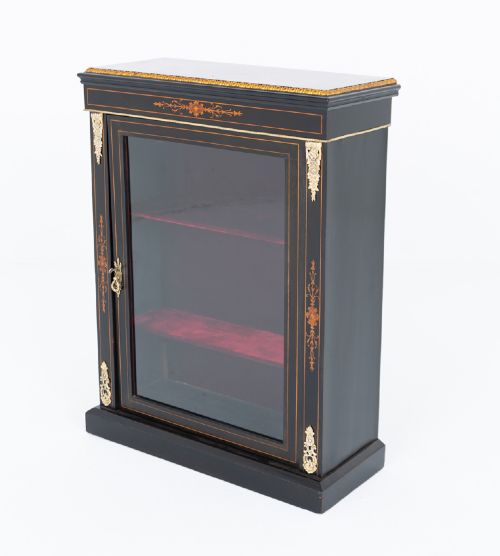
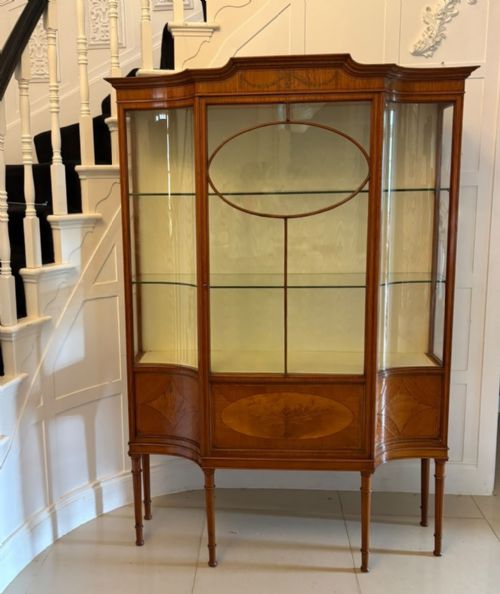
Makers of the Victorian period produced these glazed cabinets in walnut, mahogany, and ebonised timber, often incorporating marquetry and satinwood details to catch the light.
The selections span compact corner cupboards and low credenzas alongside tall display cases, reflecting the varied domestic interior requirements of the 1850s to the 1900s.
Materials and Technique
Cabinet makers utilised dense hardwood timbers like burr walnut, mahogany, and amboyna as a base for intricate satinwood and marquetry inlay work.
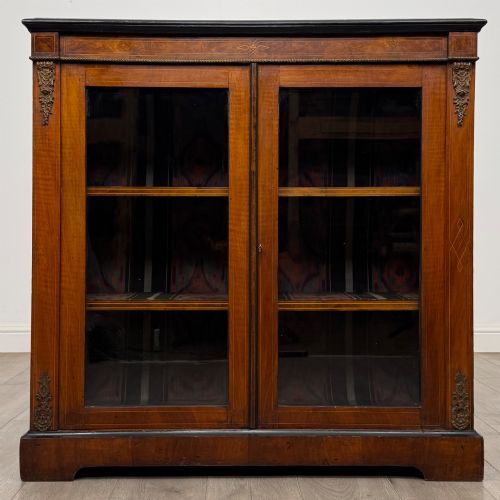
Glazed doors and side panels were framed with precision joinery, while mounts in cast or gilt brass and ormolu reinforced structural corners and glass surrounds.
Interior shelving relied on velvet linings and adjustable wooden supports designed to display porcelain, books, and collections safely.
Cabinet interiors occasionally preserve original velvet shelf edges notched by a century of resting teacups.
Judging the Workmanship
The distinction between standard commercial output and superior craftsmanship rests on the crispness of the marquetry and the depth of the timber figuring in the walnut veneer.
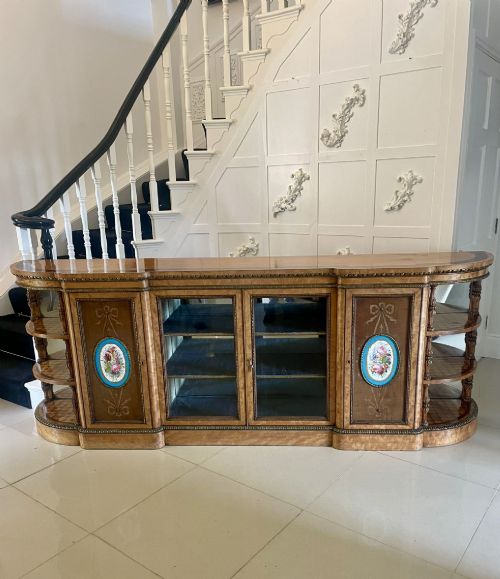
Fine examples integrate heavy cast ormolu mounts and porcelain plaques seamlessly into the casework, whereas simpler pieces rely solely on linear stringing.
The integrity of the curved glass panels and the weight of the mahogany or walnut carcase indicate the original workshop tier.
Lamb of Manchester
The Victorian Inlaid Display Case Glossary
- Pier cabinet
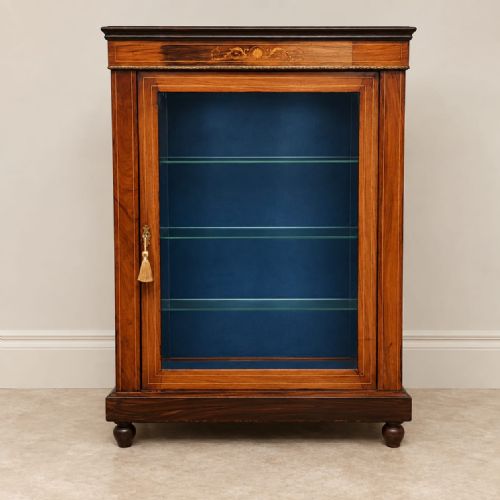
- A narrow glass-fronted cabinet designed to fit the wall space between windows. These slim display cases typically feature a single glazed door and marquetry top.
- Credenza
- A low cabinet featuring central doors flanked by curved glass end cupboards. They often incorporate gilt bronze mounts and elaborate marquetry.
- Marquetry
- Decorative patterns formed by fitting contrasting veneer pieces into a wood background. This technique defines the floral and geometric panels seen on many Victorian doors.
- Ormolu
- Gilded bronze mounts applied to furniture corners and feet. These metal fittings add structural emphasis and decorative contrast to dark timber.
- Burr walnut
- Timber taken from the gnarled growth of a walnut tree, yielding highly patterned swirls and eyes. It served as the primary veneer for elite Victorian display pieces.
Victorian Inlaid Display Case: Frequently Asked Questions
What is a pier cabinet?
A pier cabinet is a slim, glazed display case built to occupy the wall space between windows in a Victorian drawing room. They usually feature a single locking door and flat top surfaces.
Interior velvet lining and glass sides allowed owners to display small porcelain collections and curiosities where natural light could illuminate them.
How do I date a Victorian display case?
Dating relies on timber choices, hardware, and stylistic shifts such as the transition from mid-century walnut marquetry to later ebonised Aesthetic Movement designs. Mid-century pieces often favour burr walnut and ormolu mounts.
Later decades introduced satinwood highlights, lighter mahogany frames, and Sheraton Revival motifs that contrast with heavier early Victorian proportions.
Where should I place a credenza?
Credenzas suit long, uninterrupted walls in dining rooms or reception spaces where their low profile and curved glass ends can be appreciated. They offer substantial surface space alongside enclosed display storage.
Keep them away from direct sunlight and strong heat sources to protect the delicate walnut veneer and internal velvet linings.
What is marquetry?
Marquetry is the art of creating decorative pictures and patterns by assembling thin veneers of different coloured woods, ivory, or shell. Makers cut these elements to fit precisely into a prepared background.
On Victorian cabinets, floral and scrollwork marquetry panels often adorn the central door or the frieze above the glass.