


Victorian Inlaid Chess Board
A victorian inlaid chess board brings nineteenth-century parlour pastimes into the home through precise timber work and folding compartment designs.
Victorian Inlaid Chess Board
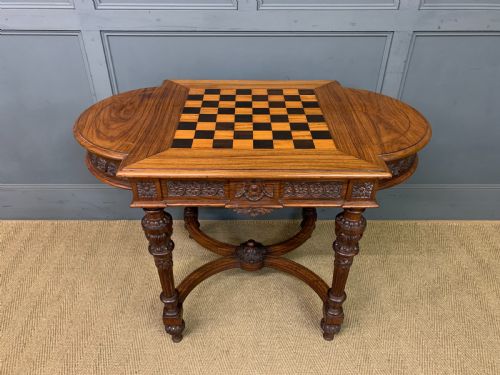
A victorian inlaid chess board typically appears as a folding box, a removable board, or the fixed top of a dedicated games table. These pieces date from the nineteenth century, encompassing walnut, mahogany, and rosewood constructions intended for domestic leisure.
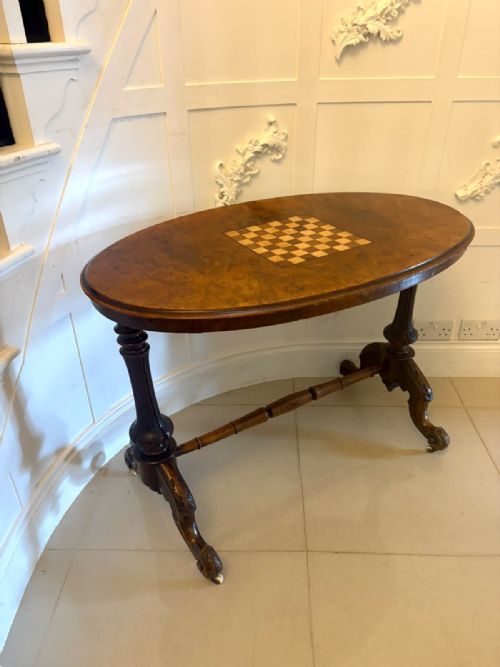
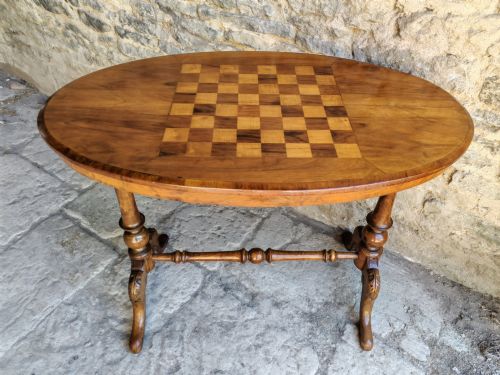
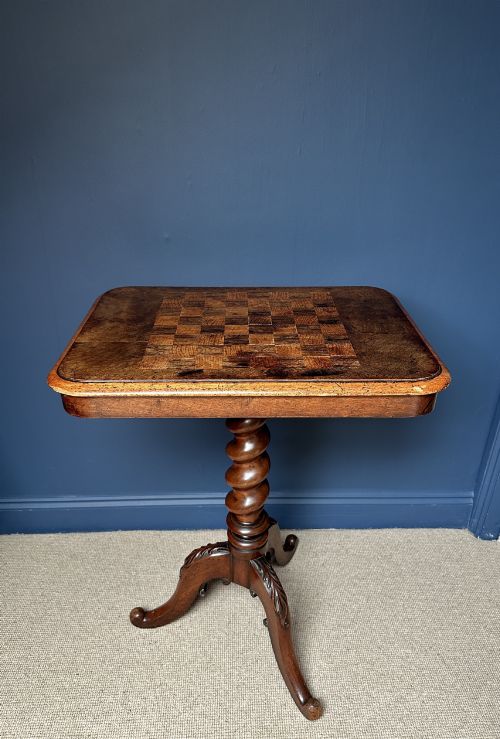
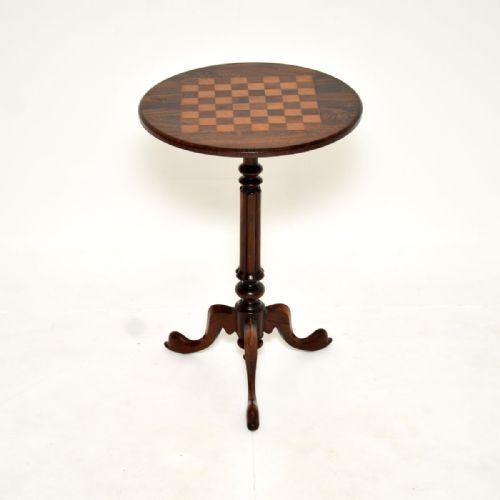
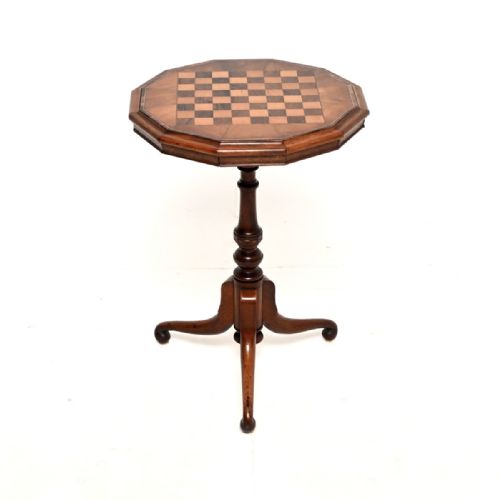
The version most commonly met on this page is the games table, standing on a tripod base or pillar support with a top that pivots, folds, or lifts to reveal internal storage. Alongside these stand portable folding boxes and independent boards designed for table use.
How They Were Made
Cabinet makers utilised dense hardwoods such as walnut, burr walnut, rosewood, and mahogany for the primary structures and table carcases. These timbers provided a stable foundation capable of taking fine edge-joinery and turned supports.
The contrasting squares of the playing surface relied on precision wood inlay, pairing light boxwood or sycamore with darker ebony, walnut, or rosewood. Additional decorative elements occasionally incorporated mother of pearl inserts and detailed wood banding.
The documented forms include occasional tables, sewing boxes, lamp tables, and multi-game compendiums with backgammon interiors.
What Varies in Quality
The distinction at the upper end rests on the choice of timber veneers, particularly the figuring and grain symmetry found in burr walnut and rosewood surfaces. Superior examples display meticulous alignment in the inlaid squares without gaps or uneven joints across the playing field.
Construction complexity also divides the range, moving from simple independent boards to multi-use compendiums, sewing combinations, and tables with rotating or folding tops. The integration of secondary gaming layouts, such as backgammon and cribbage interiors, points to finer workshop production.
The Victorian Inlaid Chess Board Glossary
- Burr walnut
- A highly figured timber taken from the wart-like growths on walnut trees, prized for its swirling grain patterns. Cabinet makers selected these veneers for the prominent top surfaces of games tables.
- Boxwood
- A dense, pale yellow hardwood utilised for the lighter squares on inlaid chess boards. Its fine grain permitted sharp, clean cutting during the inlay process.
- Games compendium
- A multi-game box or table containing equipment for several pastimes, including chess, backgammon, and cards. These comprehensive sets housed all necessary pieces within fitted internal compartments.
- Tripod base
- A three-legged table support branching from a central turned pillar, commonly seen on nineteenth-century occasional and games tables. This configuration allowed comfortable seating without leg obstruction.
Victorian Inlaid Chess Board: Frequently Asked Questions
What is a games compendium?
A games compendium is a fitted box or cabinet containing equipment for multiple parlour pastimes, such as chess, backgammon, and cribbage. These sets gathered all necessary playing pieces and boards into one portable container.
They represent the Victorian appetite for diverse domestic entertainment and structured leisure within the home.
Are all these boards wooden?
The vast majority utilise traditional hardwoods like walnut, mahogany, and rosewood for their main bodies and inlaid squares. However, specific variations incorporate mother of pearl elements alongside the wood veneer.
These contrasting materials created shimmering surfaces designed to catch candlelight in the evening parlour.
Did Victorians use tables only for chess?
Many games tables served multiple functions through clever pivoting tops and concealed storage compartments beneath the playing surface. Lifting the board frequently revealed sewing wells, backgammon layouts, or spaces for writing desks.
This versatility suited the varied activities of nineteenth-century drawing rooms.