

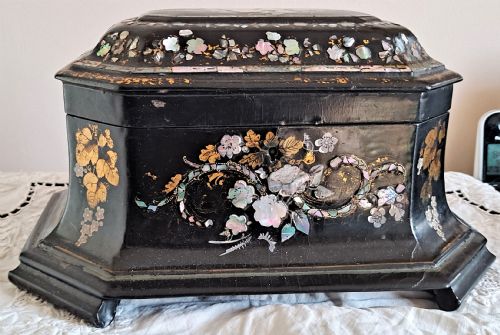


Victorian Inlaid Caddy
A victorian inlaid caddy holds dried tea leaves under a secure lid, offering solid construction and decorative timber surfaces suited to period rooms.
Victorian Inlaid Caddy
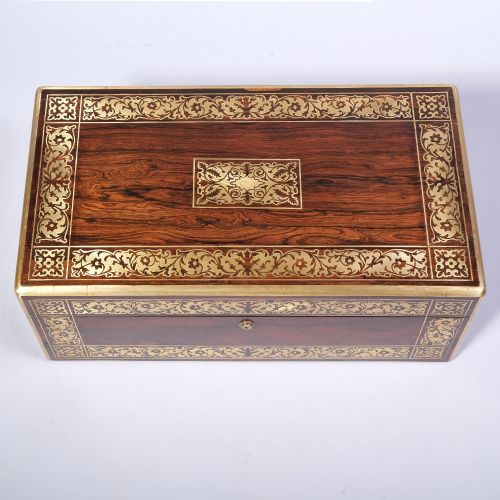
A victorian inlaid caddy is a lidded container designed originally to store loose tea leaves, constructed primarily during the nineteenth century in various timber and papier-mâché forms. The selection includes sarcophagus shapes, domed lids, and rectangular boxes featuring contrasting wood veneers or mosaic banding.
Most examples date from the Victorian period through to the Edwardian era, incorporating styles such as Tunbridge Ware and Sheraton Revival. Buyers also encounter related decorative boxes, sewing boxes, and teapoys sharing similar inlaid construction methods.
How they were made
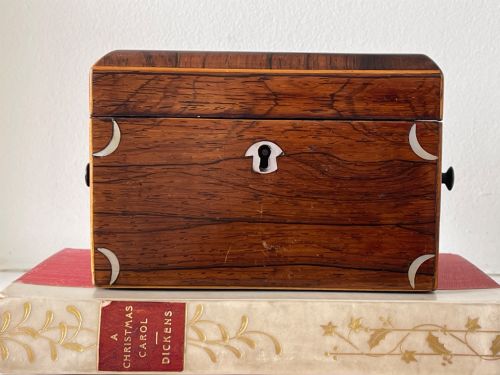
Workshops utilised dense timbers like rosewood, walnut, and mahogany for the main carcass, applying thin veneers of burr walnut, satinwood, and boxwood to exterior surfaces. Artisans embedded brass, mother of pearl, and tortoiseshell into the timber to create contrasting geometric patterns and pictorial scenes.
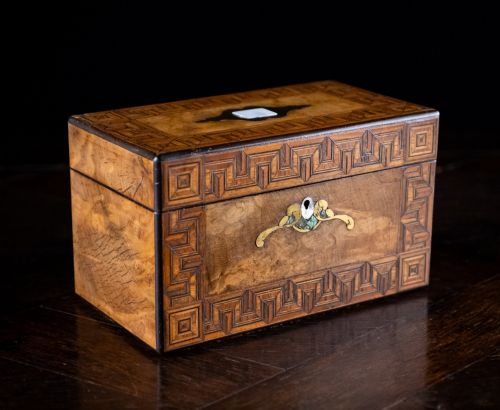
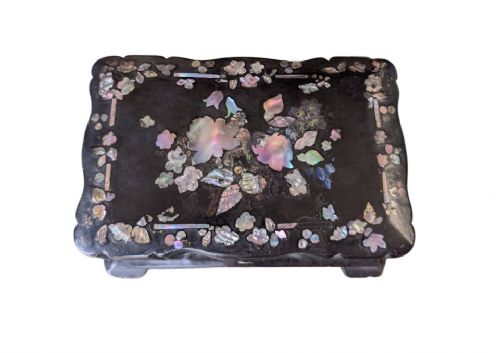
Tunbridge Ware examples required thousands of tiny wood blocks assembled into mosaic designs before application to the box surface. Papier-mâché pieces relied on layered paper pulp pressed into moulds and finished with lacquer and inlaid shell.
Victorian Inlaid Caddy Retail Price Guide 2026
Typical asking prices for victorian inlaid caddy among the pieces listed under this phrase on Sellingantiques today, from the lower quarter to the upper quarter. They describe what is for sale here now, not the wider market.
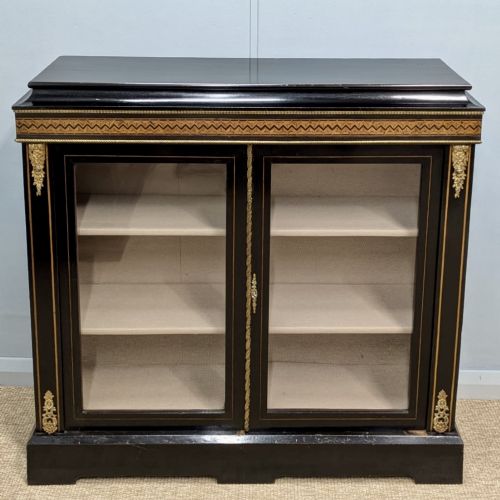
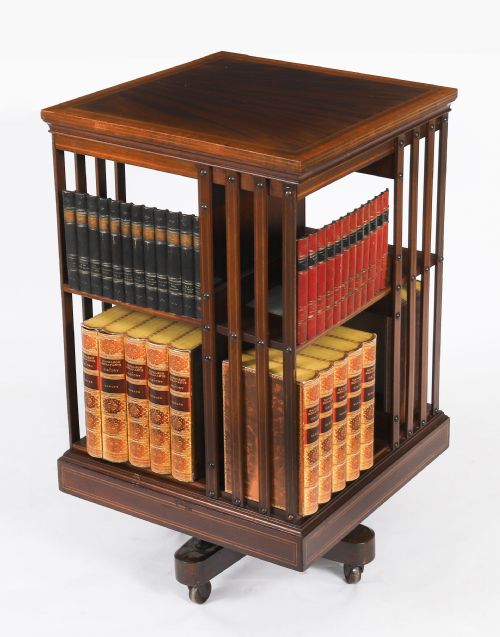
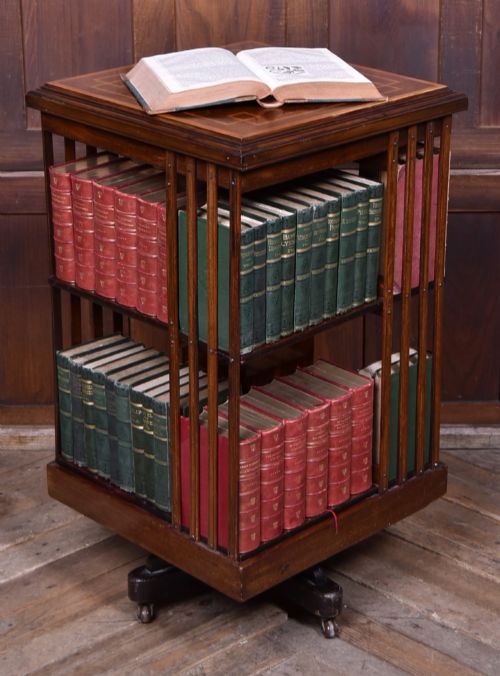
The documented objects span the nineteenth century, ranging from early Regency examples through to Edwardian revolving bookcases and cellarettes.
What varies in quality
The precision of the inlay work distinguishes finer pieces from simpler production items, particularly in the tightness of the joints between contrasting woods and metals. Grain selection in the primary timbers, such as heavily figured burr walnut or rich rosewood, indicates the standing of the original workshop.
Internal arrangements, including matching tea canisters, glass mixing bowls, and original fabric linings, elevate the completeness and historical integrity of the piece. The complexity of the box shape, ranging from standard rectangular forms to double-compartment sarcophagi, reflects the original cost of manufacture.
Henry Hollamby·Freemans of Norwich
The Victorian Inlaid Caddy Glossary
- Caddy
- A small box or chest designed for storing loose tea leaves. The term derives from catty, a traditional unit of weight used in the tea trade.
- Tunbridge Ware
- Woodware decorated with mosaic patterns formed from tiny wood prisms of various natural colours. Makers glued these blocks together to create detailed pictorial views and geometric borders.
- Sarcophagus
- A box shape featuring a sloped, pedestal-like base and a domed or pitched lid. This design mimics ancient stone coffins and proved popular for large tea containers during the nineteenth century.
- Parquetry
- A geometric mosaic of wood pieces used for covering floors or box surfaces. It creates repeating patterns using contrasting timbers.
- Boulle
- An marquetry technique utilising brass and tortoiseshell inlay developed in seventeenth-century France. Later nineteenth-century makers adapted this method for decorative boxes.
Victorian Inlaid Caddy: Frequently Asked Questions
What is a victorian inlaid caddy?
A victorian inlaid caddy is a wooden storage box made during the nineteenth century to hold expensive tea leaves. These containers feature decorative veneers and contrasting inlays such as brass, mother of pearl, and boxwood.
Craftsmen shaped these boxes into sarcophagus, domed, or rectangular formats, often dividing the interior into compartments for different tea varieties.
How were they used?
These boxes stored precious black and green tea leaves under lock and key in the formal rooms of nineteenth-century homes. Tea was an expensive commodity, so the mistress of the house kept the caddy locked to control distribution.
Inside, lidded canisters kept the leaves dry and preserved their aroma until blending or brewing took place.
How do I live with one?
Place a victorian inlaid caddy on a sideboard, side table, or desk where its timber grain and decorative banding remain visible. Direct sunlight can fade sensitive rosewood and walnut veneers over time.
Keep the timber conditioned with appropriate wax and avoid placing the box near active heat sources that might cause the wood or inlay to warp.
How do I tell periods apart?
Early nineteenth-century examples often display Regency styling with heavy rosewood carcasses and restrained brass inlay. Pieces from the later Victorian decades frequently employ burr walnut, elaborate Tunbridge mosaic work, or papier-mâché.
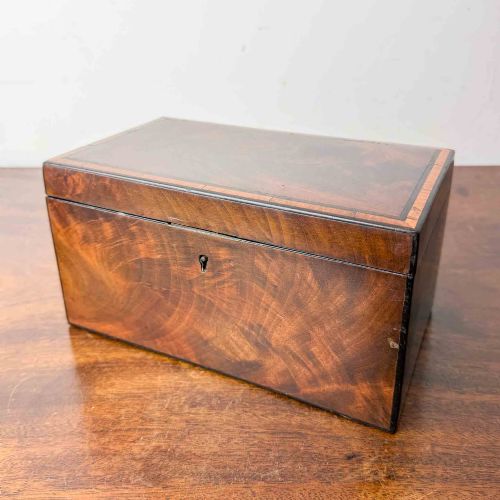
Edwardian items tend to feature lighter mahogany timbers and Sheraton Revival stringing, reflecting changing domestic tastes at the turn of the century.