



Victorian Inlaid Bedroom Drawers
Victorian inlaid bedroom drawers combine practical timber storage with delicate decorative banding, offering a functional centrepiece for traditional rooms.
Victorian Inlaid Bedroom Drawers
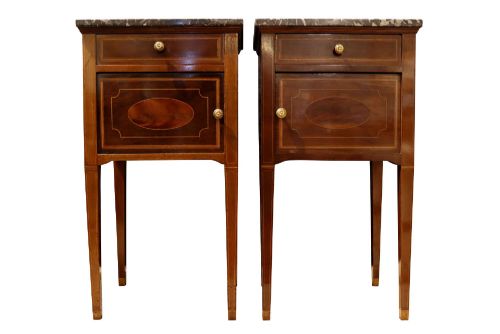
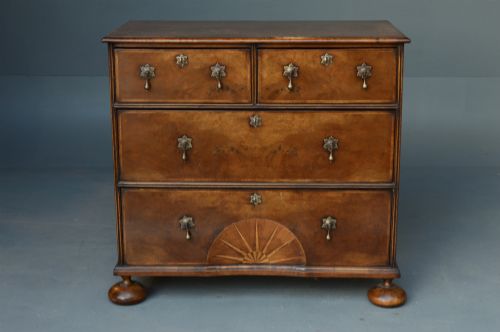
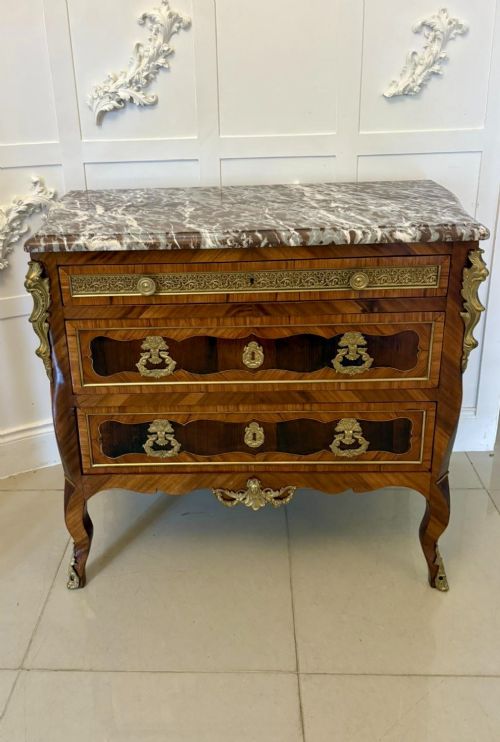
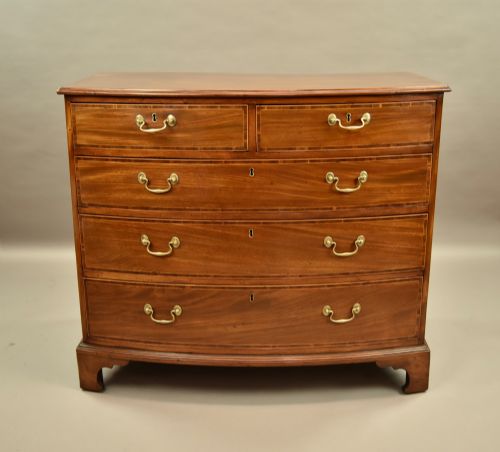
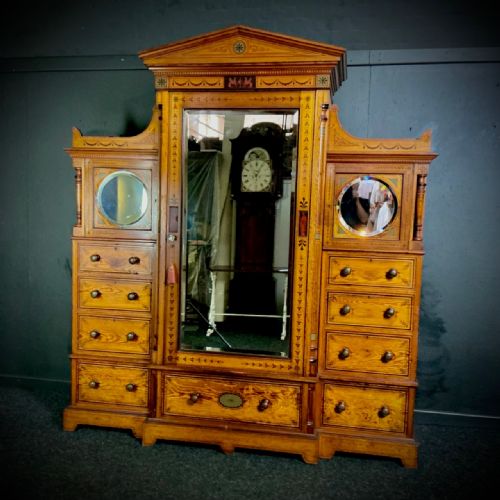
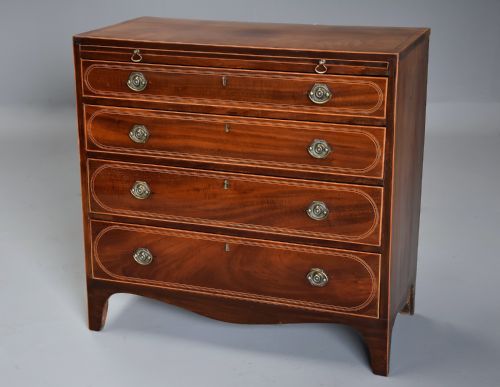
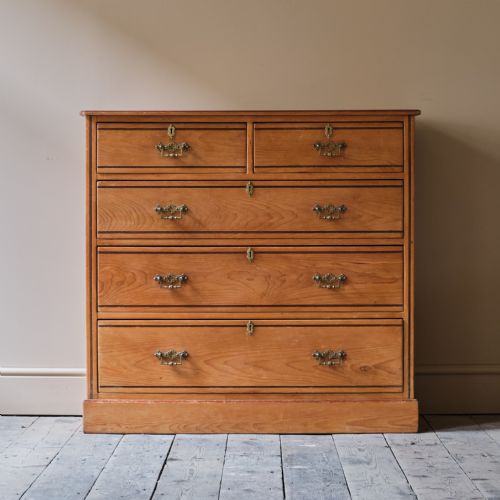
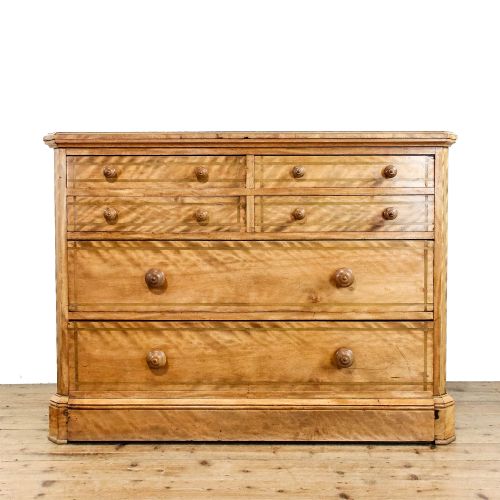
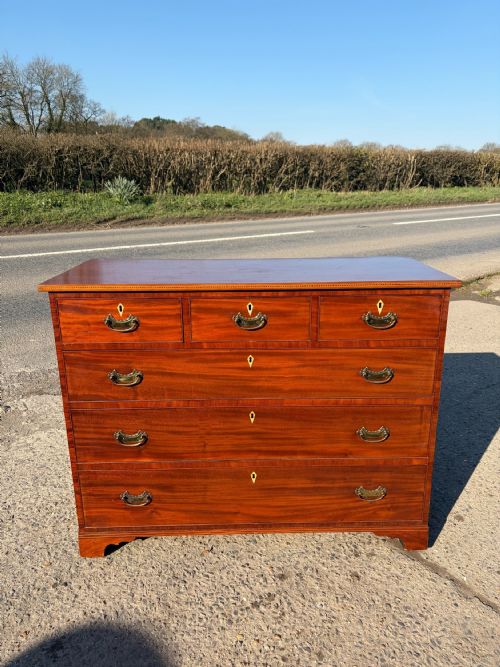
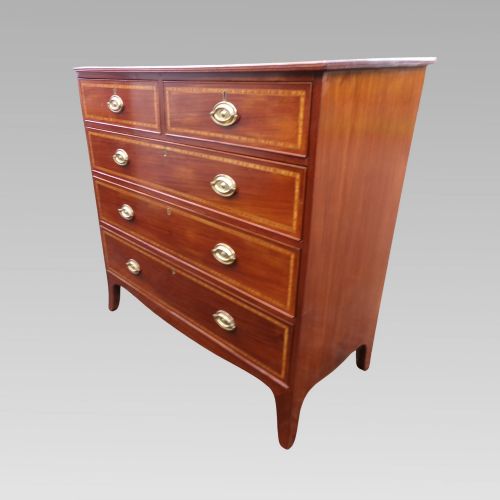
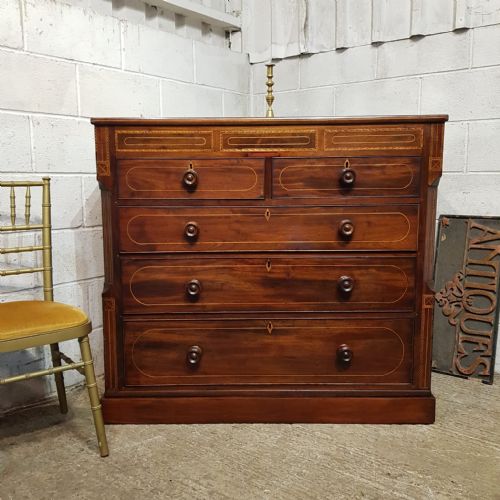
Victorian inlaid bedroom drawers encompass a variety of case furniture designed for sleeping quarters, predominantly appearing as chests of drawers, tallboys, and bedside tables. These pieces emerge from the nineteenth century, including specific periods like the Victorian and Edwardian eras, alongside related styles such as Sheraton Revival, Aesthetic Movement, and Arts and Crafts.
The primary forms found here are chests of drawers, often constructed in mahogany, satinwood, walnut, or pine, frequently complemented by secondary timbers like boxwood for contrast. Alongside standard drawer configurations, buyers encounter specialised storage solutions including Wellington chests, gentlemen's wardrobes, dressing tables, and compact bedside pairs.
Judgement of quality
The hierarchy of these items rests upon the choice of primary timber and the crispness of the contrasting wood inlay rather than mere age alone. Pieces featuring finely figured satinwood, flame mahogany, or burr walnut command greater attention than plain pine carcases.
Execution of the decorative banding and the retention of original brass hardware elevate an example. Furthermore, attribution to known cabinet makers adds distinction to the construction and overall proportion of the case.
Victorian Inlaid Bedroom Drawers Retail Price Guide 2026
Typical asking prices for victorian inlaid bedroom drawers among the pieces listed under this phrase on Sellingantiques today, from the lower quarter to the upper quarter. They describe what is for sale here now, not the wider market.
Listings feature nineteenth-century furniture built primarily from mahogany, satinwood, walnut, and pine.
Maples & Co·Druce & Co·Mawer & Stephenson·Holland & Sons·Wright & Hunter of Belfast
The Victorian Inlaid Bedroom Drawers Glossary
- Crossbanding
- A decorative border of veneer laid around the perimeter of a drawer front so that the grain runs at right angles to the central panel. This technique frames the wood effectively.
- Wellington chest
- A tall, narrow chest of drawers secured by a hinged vertical locking stile on one side that fastens with a key. It typically contains seven small drawers.
- Satinwood
- A lustrous, hard timber native to Ceylon and India with a yellowish sheen, frequently utilised for fine veneer work and inlay in late nineteenth-century furniture.
- Stringing
- Thin, narrow lines of contrasting light or dark wood inlaid into grooves on drawer fronts or table tops to form linear borders.
- Tallboy
- A tall chest of drawers consisting of one chest stacked directly on top of another, sometimes referred to as a chest on chest.
Victorian Inlaid Bedroom Drawers: Frequently Asked Questions
What is a Wellington chest?
A Wellington chest is a tall and slender set of drawers secured by a hinged vertical locking bar down one side.
This locking stile fastens with a single key to secure all the internal drawers simultaneously.
How do I spot satinwood?
Satinwood is a dense tropical hardwood distinguished by its pale golden-yellow colour and natural chatoyancy.
It catches the light with a shimmering appearance, making it popular for decorative veneers and stringing.
Where were bedside chests placed?
Bedside chests served as compact storage beside sleeping quarters for personal items and chamber accessories.
They appear as matched pairs or single tables within nineteenth-century bedroom layouts.
What is timber crossbanding?
Crossbanding involves applying a border of veneer around the outer edge of a drawer front.
The grain of this border runs perpendicular to the central wood panel to create a framed visual effect.