
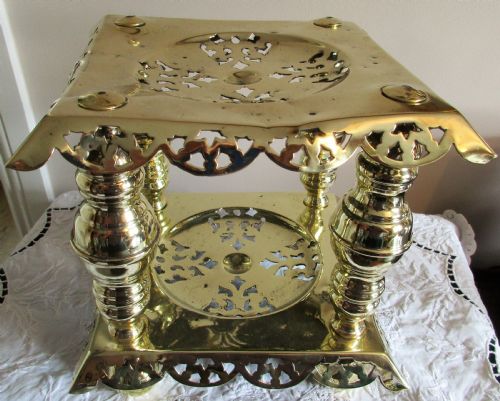
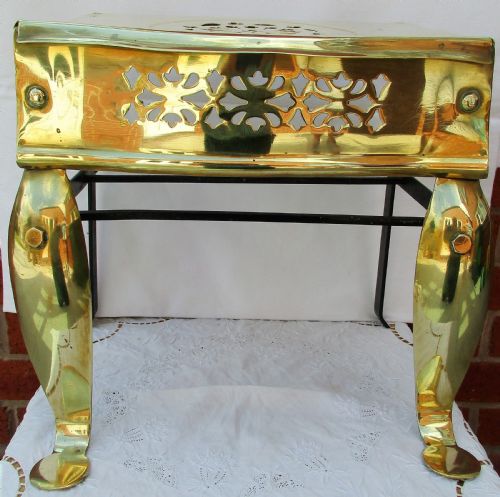
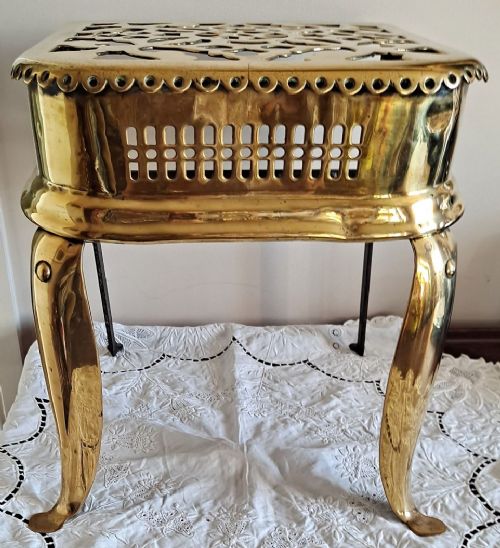


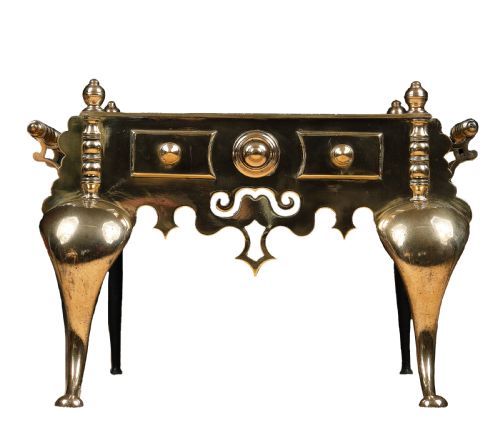


Victorian Hearth Trivet
These Victorian hearth trivet pieces are solid metal stands built to hold kettles and warm plates by the fire.
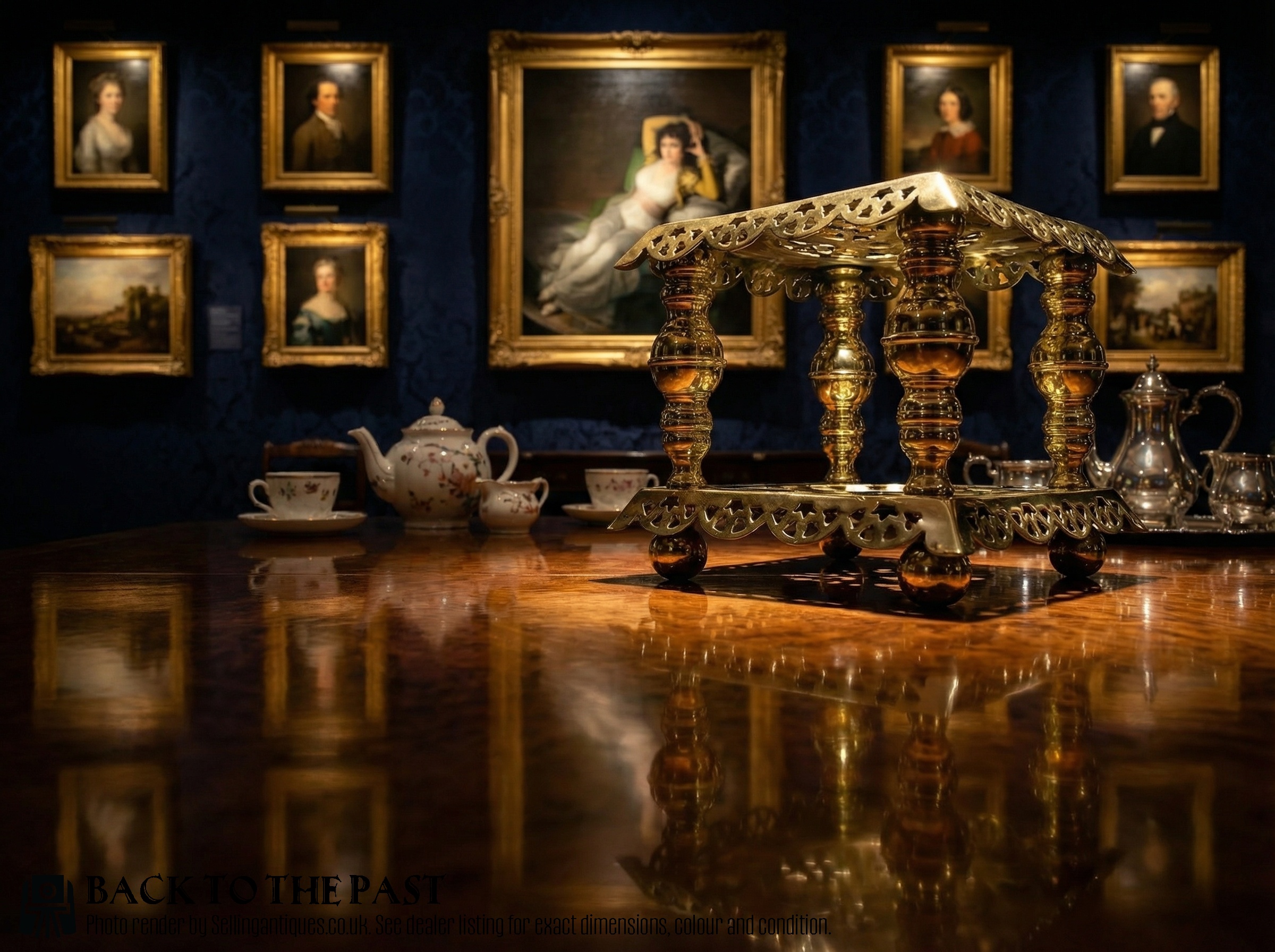
Victorian Hearth Trivet
When you search for a victorian hearth trivet, you enter a world of practical fireside metalwork designed to keep water hot and plates warm beside the coal or wood fire. The pieces here span the nineteenth century and the Edwardian era, taking the form of low stands, two-tier kettle stands, and larger footmen.
You are most likely to meet sturdy brass and steel items, often featuring cutout tops and carrying handles for moving around the hearth. Alongside standard trivets, the selection includes cat stands and Welsh footmen that served the same domestic purpose in British homes.
Materials and construction
Makers built these pieces using durable combinations of brass, iron, and steel, often pairing bright brass tops with iron or steel legs and frames to withstand intense fireplace heat. Some examples incorporate wooden elements like mahogany or hardwood for handles or specific stand components.
Construction relied on traditional metalworking techniques, joining cast or sheet brass tops to sturdy metal legs with riveted joints and shaped aprons.
Judging quality in hearth metalwork
The distinction between ordinary and superior pieces rests on the weight of the metal and the crispness of the pierced or cutout patterns on the top surface. Heavier brass plates and robust steel frames indicate better durability and more careful workshop production.
Detailing on the legs, handles, and aprons also separates basic utility items from finer examples designed for prominent display in the main rooms of a nineteenth-century house.
The Victorian Hearth Trivet Glossary
- Trivet
- A small metal stand with feet, placed by a hearth to support a kettle or cooking vessel. These items formed a standard part of nineteenth-century fireside equipment.
- Footman
- A large metal stand placed in front of the fireplace to keep plates warm. They usually feature pierced tops and side handles.
- Cat stand
- An alternative name for a small trivet or stand used beside the fire. The term derives from the three-legged design resembling a cat.
- Kettle stand
- A raised platform specifically proportioned to hold a water kettle close to the heat source. Two-tier versions allowed extra space for warming.
- Brass
- A yellow alloy of copper and zinc commonly used for the decorative tops of hearth stands. It provided a bright appearance and resisted corrosion from coal smoke.
Victorian Hearth Trivet: Frequently Asked Questions
What is a Victorian hearth trivet used for?
These metal stands sat near the fireplace to hold kettles, teapots, or dishes close to the coals for heating and warming.
In nineteenth-century homes, they served as portable surfaces that made the most of the fire's heat before the widespread use of kitchen ranges.
How do you tell a footman from a trivet?
A footman is typically larger and wider, designed to stand directly in front of the fireplace grate to warm multiple plates at once.
Trivets are usually smaller, often round or square, and built to support a single kettle or pan on or near the fire.
What metals are these pieces made from?
Most examples combine a brass top with iron or steel legs to handle the heavy weight of water-filled kettles and withstand high temperatures.
Some items also feature wooden handles or components made from mahogany or other hardwoods.
How should I clean an antique brass trivet?
Light dusting and occasional gentle cleaning preserve the aged surface and the dark patination accumulated over decades of use.
Avoid aggressive chemical polishing that strips away the historic character built up on the metal since the nineteenth century.
Are these pieces safe to use by a modern fire?
Solid brass and iron construction makes these stands durable enough for practical use near a hearth or wood burner today.
Their primary role now, however, is decorative, adding period character to a modern fireplace or living space.