
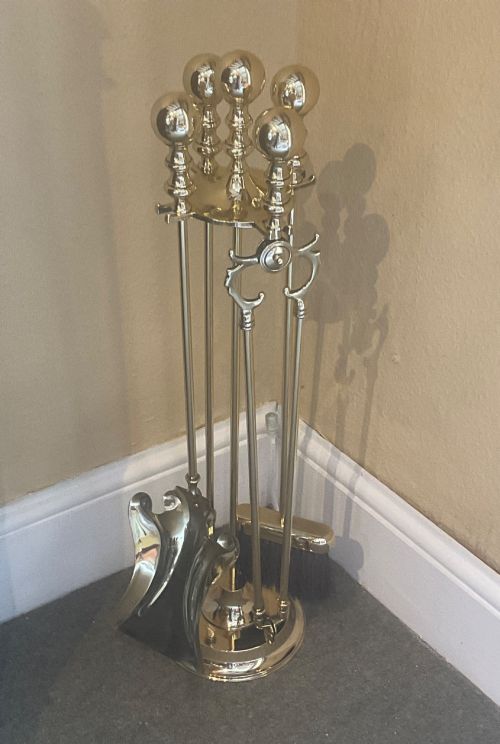
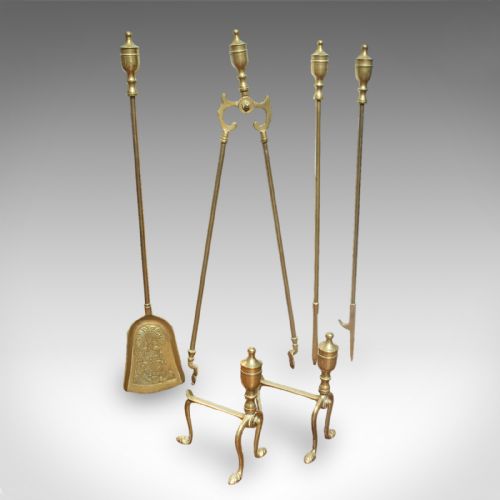


Victorian Hearth Companion Set
A victorian hearth companion set gathers the poker, tongs, and shovel needed to manage a coal fire, bringing period character to the grate.
Victorian Hearth Companion Set
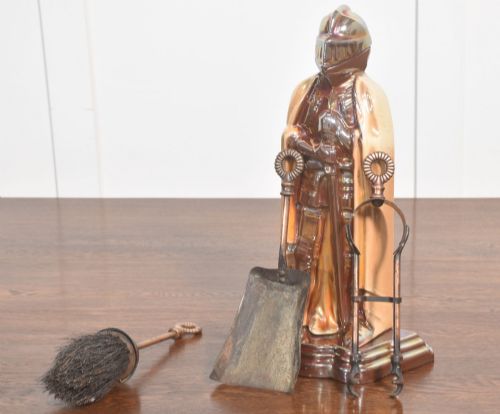
A victorian hearth companion set brings together the functional tools required to tend an open coal fire, typically comprising a shovel, poker, and tongs. These implements often rest alongside fire dogs, fenders, or within dedicated stands positioned directly on the hearth.
The most common examples on this page date from the nineteenth century, reflecting the heavy reliance on coal heating in period homes. English country house variants frequently appear alongside formal urban iterations displaying the decorative tastes of the era.
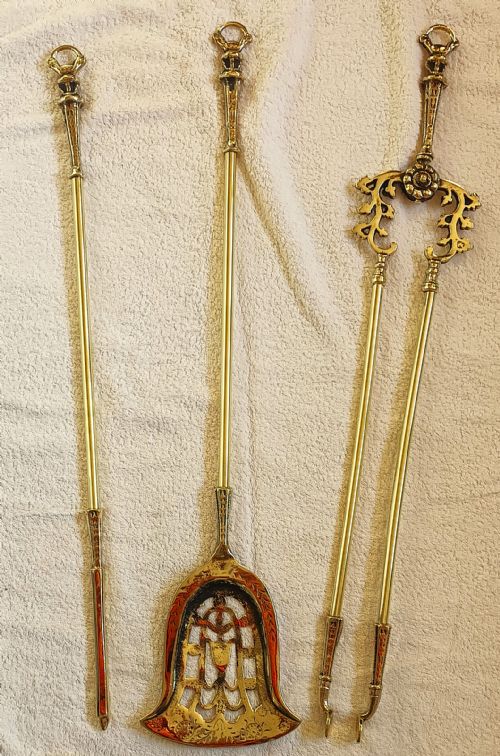
Makers produced these suites to serve both a domestic purpose and an aesthetic one, ensuring the metalwork complemented the surrounding chimneypiece. Sets range from straightforward three-piece iron configurations to ornate brass assemblies equipped with fire dogs.
Materials and Construction Methods
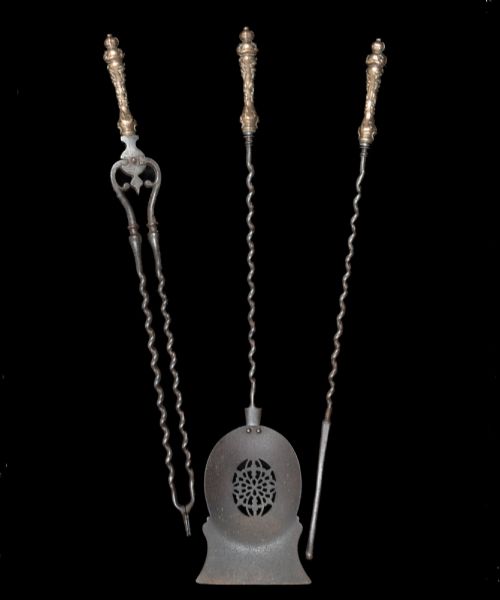
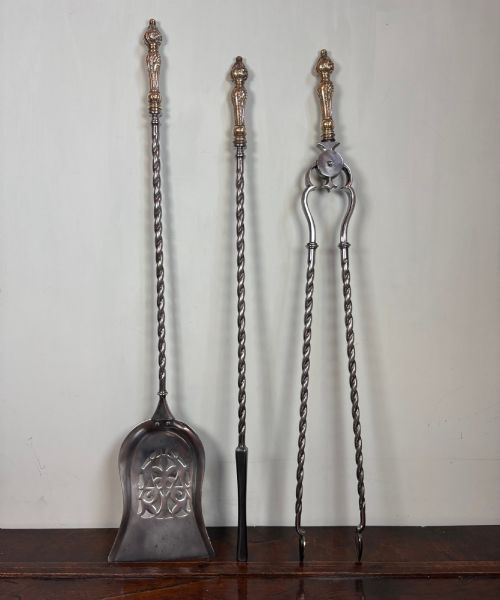
Blacksmiths and metalworkers utilised brass, cast iron, and wrought iron to construct these implements, frequently pairing steel rods with bright brass handles. Polished steel provided a brilliant, reflective surface for the working ends of pokers and tongs, while heavy brass castings formed decorative finials and rope twist shafts.
Techniques combined forging, casting, and hand-finishing, allowing artisans to shape rigid metals into slender, balanced tools. Brass components were often cast in sections and joined, while iron tools relied on traditional heating and beating methods to achieve durability under intense hearth heat.
Listings feature brass, steel, iron, and copper across Victorian, Edwardian, and Arts and Crafts styles.
Judging Quality in Period Fireware
The distinction between standard utility sets and superior examples rests in the weight of the metal and the crispness of the casting. Heavier gauge brass and solid steel shafts resist bending during daily use, whereas lighter pieces feel flimsy in the hand.
Detailing on handles and finials separates fine work from mass production, with superior sets displaying hand-finished chasing, secure joints, and decorative elements like rope twist grips that remain sharp and defined through decades of handling.
The Victorian Hearth Companion Set Glossary
- Companion set
- A matched collection of fireplace tools, usually including a shovel, poker, and tongs, designed to sit together near the grate.
- Fire dogs
- Supporting metal irons placed on either side of the hearth to hold logs or support a basket grate.
- Fender
- A low metal guard placed around the hearth opening to contain stray embers and protect the floor covering.
- Poker
- A rigid iron or steel rod used to stir and break up coal or wood burning in the fire.
- Rope twist
- A decorative spiral pattern chased or cast into metal handles to mimic twisted cord.
Victorian Hearth Companion Set: Frequently Asked Questions
What tools come in a standard set?
A traditional Victorian companion set typically includes three core implements: a shovel for clearing ash, a poker for adjusting fuel, and a pair of tongs for handling coal.
Some configurations also incorporate a hearth brush or arrive accompanied by matching fire dogs and fenders to complete the fireplace arrangement.
How were these sets used daily?
The tools served an entirely practical role in managing the coal or wood fires that heated nineteenth-century rooms. The poker encouraged airflow through the fuel, the tongs placed fresh coal onto the flames, and the shovel cleared the grate.
Positioned immediately beside the fireplace, the set kept these heavy-use implements within reach while presenting an orderly appearance when the hearth was cold.
How do I tell Victorian sets apart from Edwardian ones?
Victorian sets often lean towards heavier brass construction, Gothic Revival motifs, or ornate Rococo styling with elaborate cast handles. Edwardian examples tend to introduce cleaner lines influenced by Art Nouveau or Arts and Crafts ideals, though overlapping manufacturing traditions mean styles persisted across decades.
Examining the weight, handle profiling, and associated fender designs helps clarify the likely manufacturing period.
Can these tools still be used on an active fire?
Most antique brass and iron tools remain structurally robust enough for regular use on modern open fires or wood-burning stoves. Solid steel shafts and heavy brass castings withstand heat and leverage without difficulty.
Collectors nevertheless often choose to treat highly polished or delicate decorative sets as display pieces to preserve their original surface finishes.