



Traditional Hearth Tools
Traditional hearth tools bring warmth and utility to the fireplace, offering functional sets of irons and companion pieces shaped by centuries of metalwork.
Traditional Hearth Tools
Traditional hearth tools encompass essential fireplace accessories including fire irons, companion sets, and andirons designed for managing an open fire. These objects serve both practical and decorative functions within the domestic interior, originating from periods spanning the sixteenth through the early twentieth centuries.
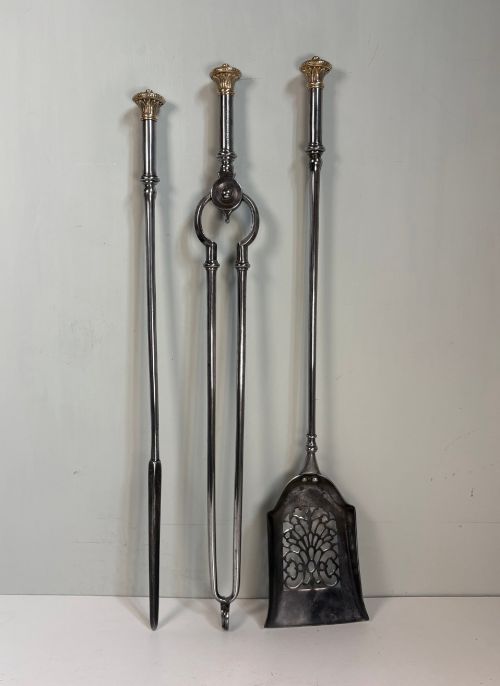
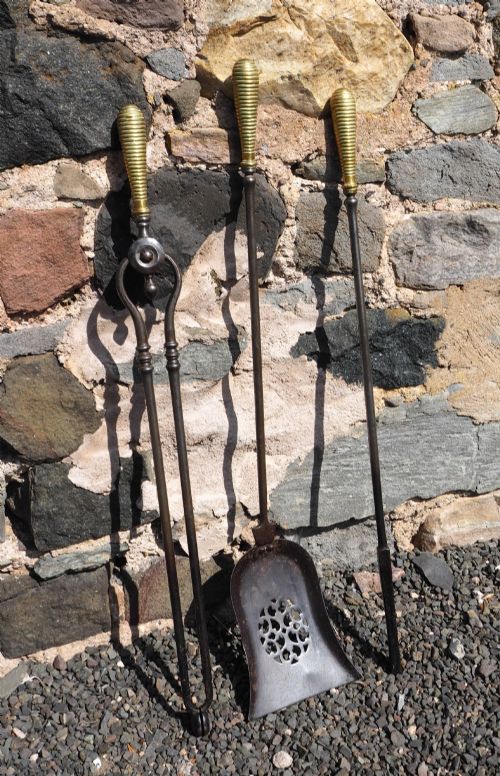
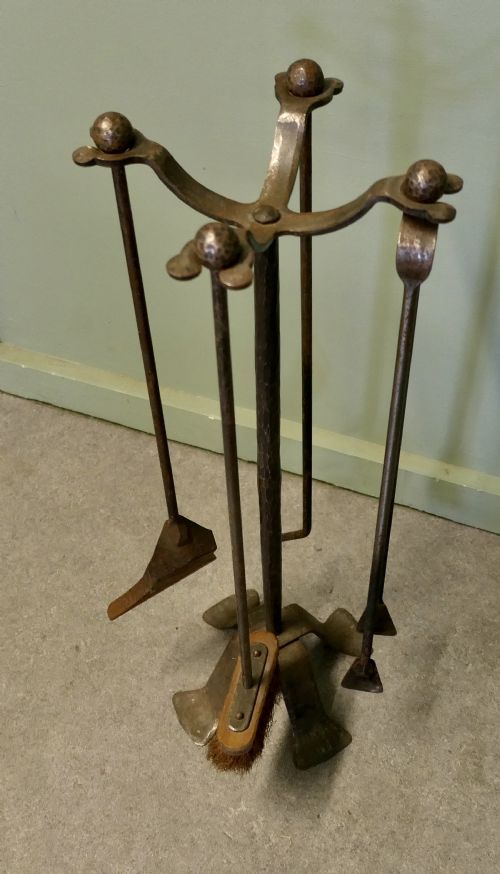
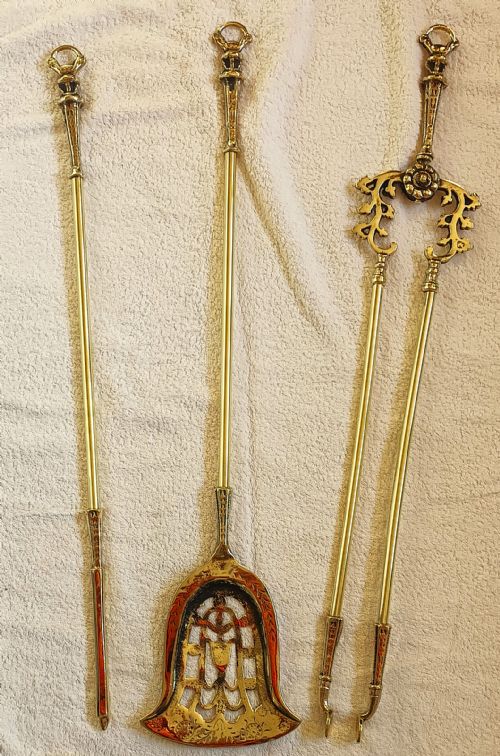
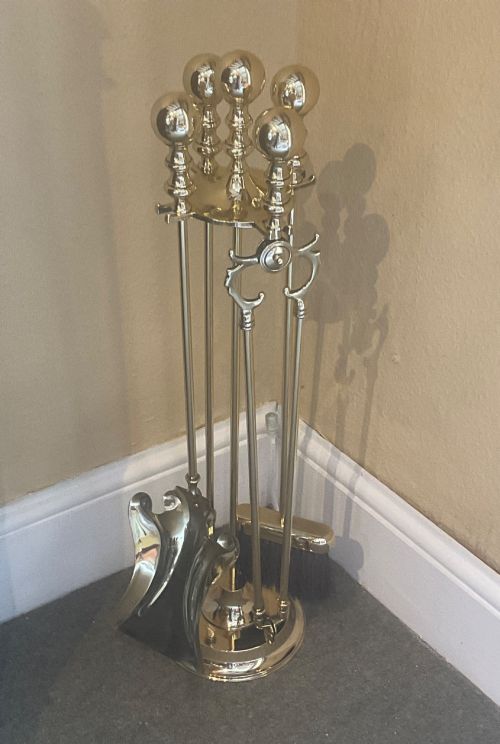
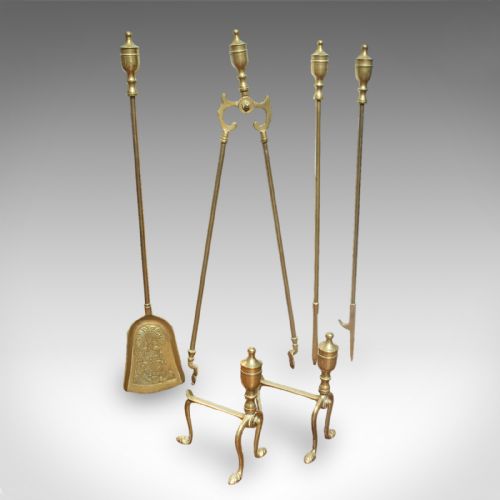
The most common pieces encountered here are Victorian brass and steel fire sets, often comprising a shovel, poker, and tongs arranged together. These sets frequently include matching fire dogs or companion stands to keep the implements organised beside the hearth.
Origins range widely from English country houses to French manors, reflecting various regional domestic habits. Pieces stretch from eighteenth-century ironwork to Edwardian brass suites, showing how fireplace furniture evolved in style while retaining its core utility.
How they were made
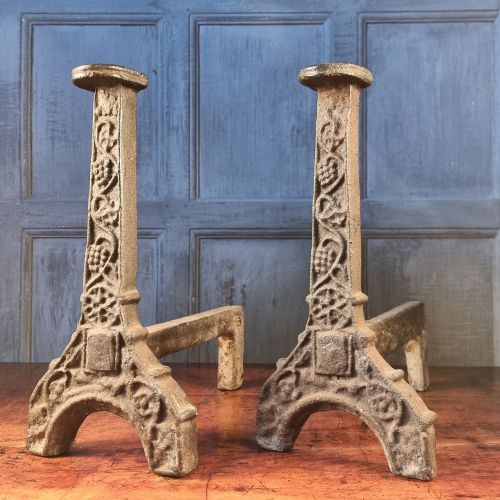
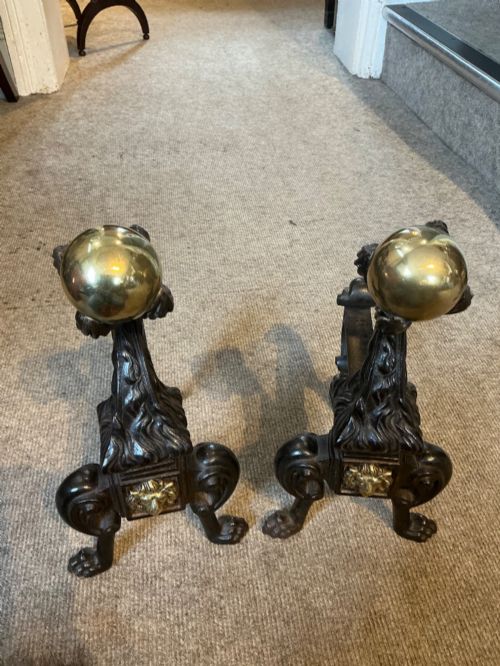
Metalworking techniques dictate the construction of these items, with iron, steel, and brass being the primary materials utilised. Blacksmiths shaped wrought and cast iron for heavy structural pieces like andirons and fire dogs, ensuring durability under high temperatures.
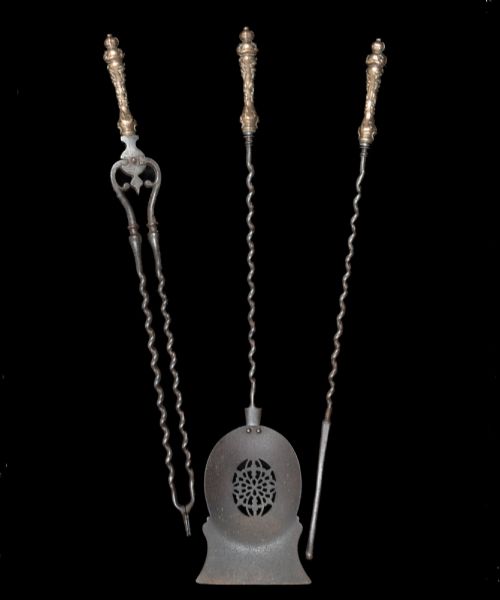
Brass and polished steel received finer decorative attention, often shaped into rope twist handles and rococo style mounts. Copper and wood also appear in specific accessory pieces such as chestnut roasters and bellows, combining different thermal properties and visual textures.
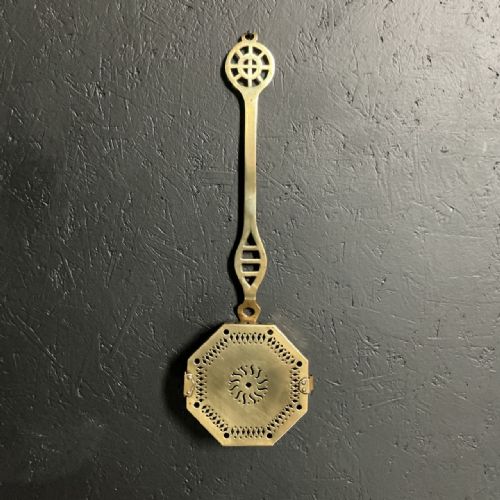
Victorian households relied on brass chestnut roasters to turn evening snacks over the open coals.
What varies in quality
Quality rests upon the weight of the metal and the integrity of the construction, distinguishing heavy companion sets from lighter production pieces. Substantial gauge brass and solid steel resist bending during daily use at the hearth.
Finishing detail separates standard items from superior examples, visible in crisp casting, hand-turned handles, and well-balanced proportions. The refinement of decorative motifs, such as rope twist shafts or classical brass mountings, indicates the standard of workmanship.
The Traditional Hearth Tools Glossary
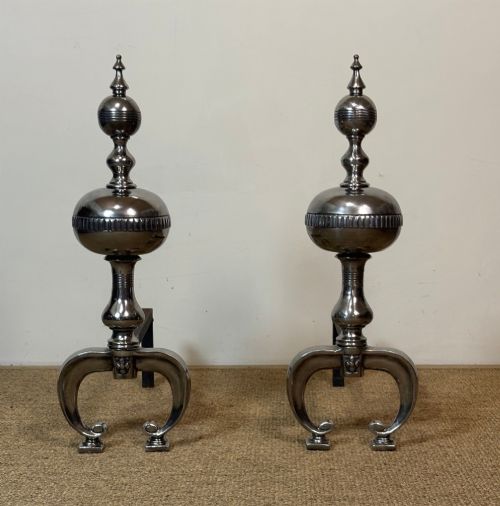
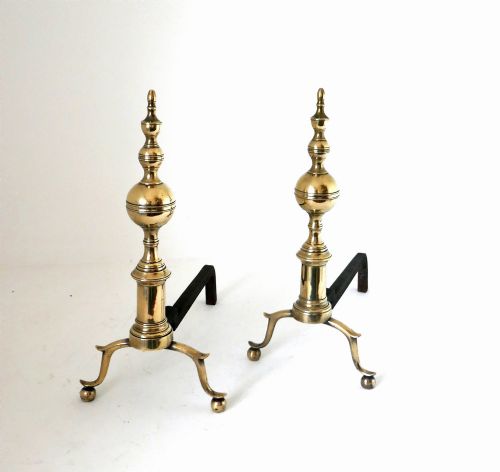
- Andirons
- Supports placed on hearths to hold logs above the floor for better air circulation. These are also known as firedogs.
- Companion set
- A matched group of fireplace tools held together on a stand or rack. This usually includes a shovel, poker, and tongs.
- Fire irons
- Long-handled metal implements used to tend an open fire. They typically consist of pokers, tongs, and shovels.
- Bellows
- A device constructed with flexible sides and wooden handles to pump air into a fire. They assist in stoking flames quickly.
Traditional Hearth Tools: Frequently Asked Questions
What tools come in a standard set?
Traditional fire iron sets typically include a shovel, a poker, and a pair of tongs. These three implements cover the basic tasks of moving fuel, arranging embers, and clearing ash.
Many sets also incorporate a hanging stand or matching andirons to complete the fireside arrangement. Together they form a unified suite designed for daily hearth management.
How do I date an iron set?
Dating relies upon the prevailing style of the metalwork, handles, and manufacturing techniques. Eighteenth-century examples often display hand-wrought iron and simpler forged elements, while Victorian and Edwardian pieces frequently utilise cast brass and polished steel.
Form and ornamentation provide further clues, moving from heavy Gothic elements to ornate Rococo or restrained classical lines in later periods.
Can I use antique tools daily?
Solid brass and steel sets from the nineteenth and early twentieth centuries are generally robust enough for regular use. Heavier wrought iron pieces handle high heat very well.
Care should be taken with delicate decorative mounts or hollow handles to preserve their condition. Regular gentle cleaning prevents ash corrosion on the metal surfaces.
What is the difference between andirons and fire dogs?
The terms are largely interchangeable, referring to the heavy metal supports placed inside the fireplace to hold logs. Historically, regional terminology varied between these two words.
Both serve the exact same mechanical purpose of elevating firewood to allow air underneath for a cleaner burn.