




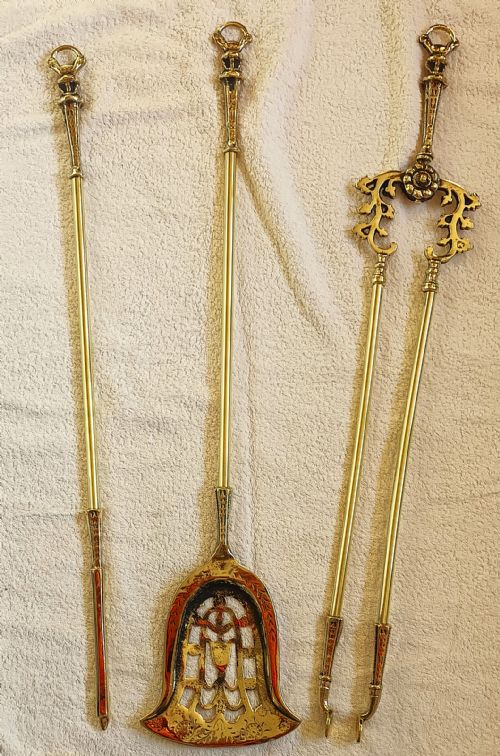


Antique Brass Shovel Poker
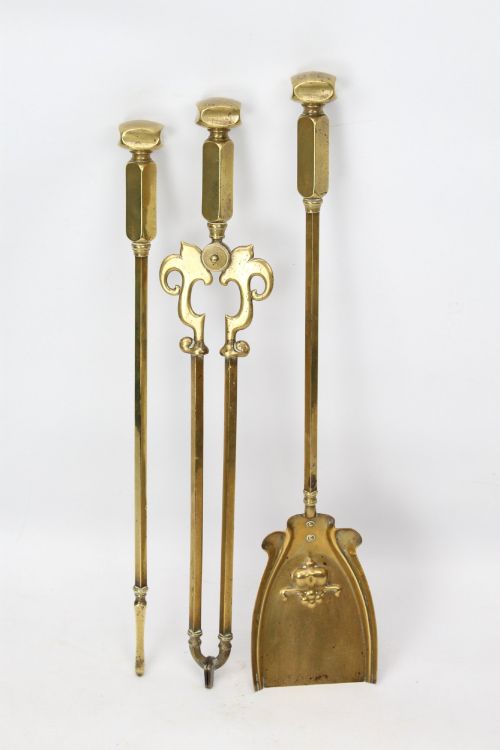
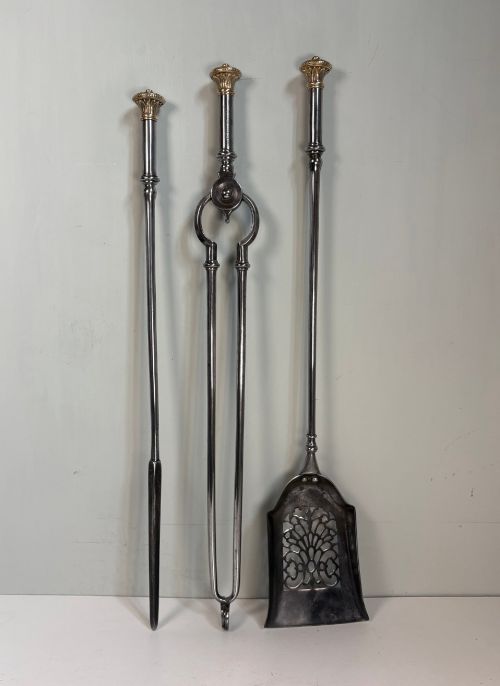
These antique brass shovel poker sets are hearth implements combining utility and display, forged to manage coal fires while brightening period chimney corners.
Antique Brass Shovel Poker
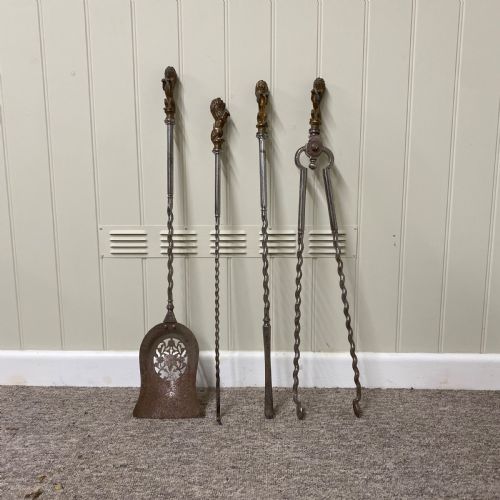
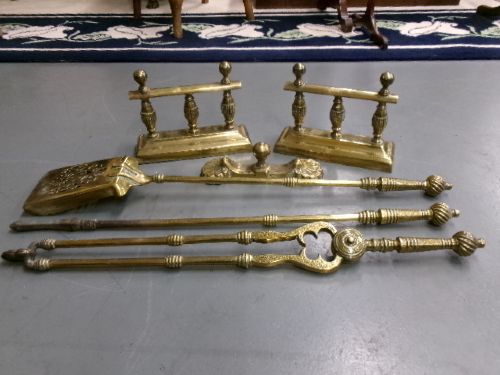
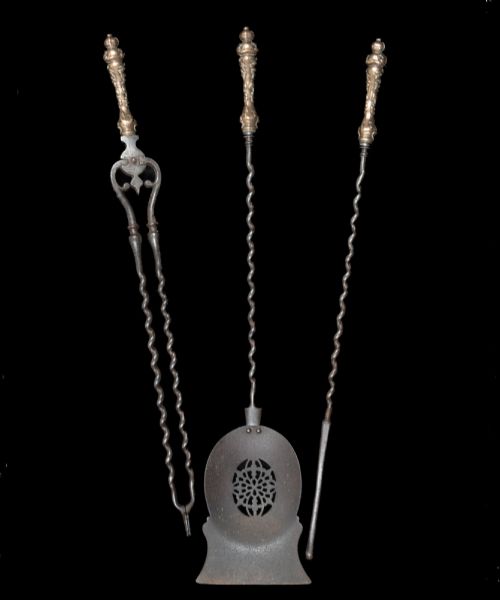
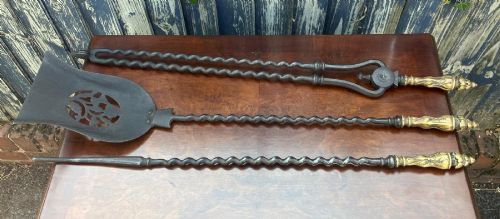
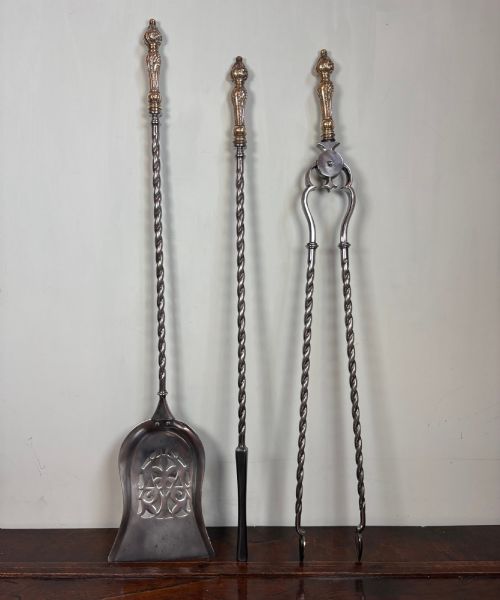
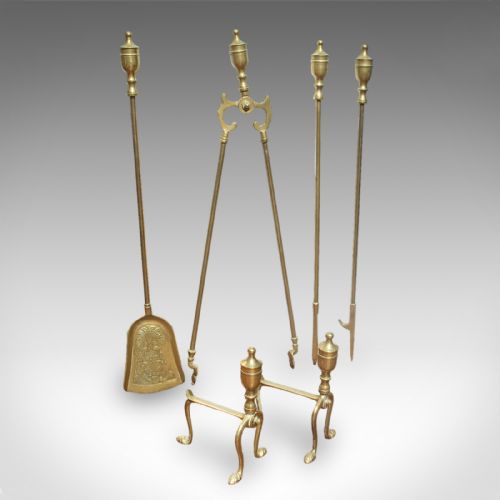
An antique brass shovel poker set comprises functional hearth instruments designed together as a matching group for tending domestic coal or wood fires. When searching for an antique brass shovel poker, collectors encounter complete fireside suites, companion sets, and triad groupings that incorporate shovels, pokers, and tongs.
The pieces originating from this selection span Georgian, Victorian, and Edwardian periods, stretching from the eighteenth century into the early twentieth century. Victorian examples appear most frequently on this page, often accompanied by matching fire dogs or fenders.
English workshops produced the majority of these fireplace suites, ranging from traditional designs to specific stylistic revivals including Rococo and Arts and Crafts aesthetics.
Metals and Construction Techniques
Makers combined brass with steel and iron, using steel shafts for strength during heavy coal tending while mounting bright brass handles and mounts for visual warmth. Certain items utilise gunmetal or gilt brass to achieve distinct surface finishes and tonal variety.
Craftsmen shaped handles through casting and turning, sometimes incorporating decorative details such as rope twist patterns into the metalwork. Shovel blades and poker shafts were joined securely to withstand the daily rigours of the hearth.
Antique Brass Shovel Poker Retail Price Guide 2026
Typical asking prices for brass shovel poker among the pieces listed under this phrase on Sellingantiques today, from the lower quarter to the upper quarter. They describe what is for sale here now, not the wider market.
Listings incorporate iron and steel alongside polished brass, reflecting the varied metallurgical combinations employed by period English workshops.
Distinctions in Execution and Rigidity
The standard of a set rests upon the substance of the metal and the integrity of the joins between handles and shafts. Superior examples exhibit substantial weight in the brass components and crisp detail in turned or cast decorative elements.
The balance of individual tools dictates their utility, where finer sets maintain a comfortable heft in the hand while retaining structural rigidity across the poker and shovel blade.
The Antique Brass Shovel Poker Glossary
- Companion set
- A coordinated group of fireplace tools, typically comprising a shovel, poker, and tongs, housed together on a stand or arranged beside the hearth.
- Fire irons
- A collective term for the metal implements used to manage a fireplace, most commonly including the poker, shovel, and tongs.
- Rope twist
- A decorative spiral pattern resembling twisted cord, often turned into the brass shafts or handles of fireside tools.
- Gunmetal
- An alloy of copper, tin, and zinc utilised in certain hearth tools for its dark, durable metallic finish.
- Fire dogs
- Metal supports placed horizontally on the hearth to hold logs, frequently found listed alongside matching sets of fire tools.
Antique Brass Shovel Poker: Frequently Asked Questions
What tools belong in a set?
Standard groupings typically include a shovel for clearing ash, a poker for adjusting fuel, and tongs for moving embers. Many period suites also incorporate a companion stand or matching fire dogs.
Complete sets were designed to sit visibly beside the hearth as coordinated room furnishings.
How do I date these tools?
Stylistic indicators such as Georgian restraint or Victorian elaboration help assign periods to specific fireplace implements. Material combinations, including early steel paired with brass, also offer clues to the decade of manufacture.
Comparing handle turnings and overall design motifs against documented examples clarifies the production era.
Were these tools meant for daily use?
Period fire irons were constructed from durable metals like steel and brass specifically for tending active coal or wood fires. Their robust shafts and solid blades allowed them to bear the physical demands of stoking daily hearths.
Today, many owners continue to utilise sturdy sets for traditional open fires while appreciating their decorative presence.
Why do some sets include fire dogs?
Fire dogs served the practical purpose of elevating fuel above the hearth floor to improve airflow beneath the fire. Makers produced matching companion sets and fire dogs so the entire fireplace arrangement presented a unified appearance.
Such coordinated suites brought visual symmetry to the chimney breast.