



Victorian Hearth Bench
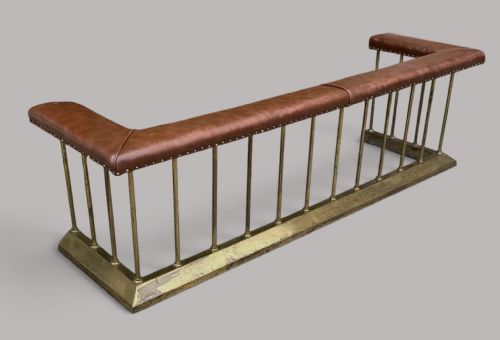
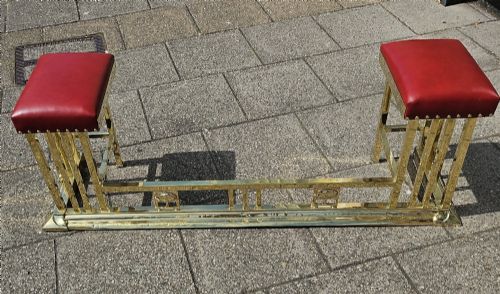
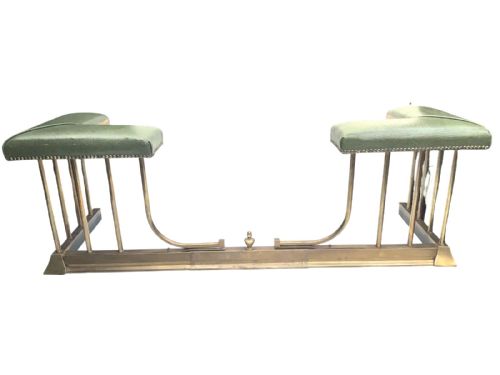
A victorian hearth bench provides low fireside seating, combining sturdy metal framework with upholstered leather or fabric tops for warmth near the grate.
Victorian Hearth Bench
When you search for a victorian hearth bench, you encounter sturdy club fenders and low stools designed to sit directly around the fireplace. These pieces emerge primarily from the nineteenth century, spanning Victorian and Edwardian periods.
The most common forms on this page include brass and steel club fenders fitted with cushioned seats alongside carved walnut, oak, and rosewood stools. They range from modest domestic examples to substantial pieces originating from notable locations like clubs.
How they were made
Makers constructed the structural frames of these pieces using durable metals such as brass, copper, cast steel, and wrought iron, frequently paired with dense hardwoods including walnut, oak, and mahogany. These materials provided the necessary weight and stability for daily fireside use.
Upholsterers finished the seating surfaces in mature tan or green leather, alongside various fabrics and textiles, securing the padding to support heavy everyday sitting close to the hearth.
Some steel club fenders originally warmed boots in exclusive gentlemen's clubs before retiring to domestic hearths.
What varies in quality
The degree of craftsmanship shows clearly in the timber carving and the solidity of the metal framework. Pieces featuring detailed woodwork and heavy-gauge brass or steel reflect superior construction standards.
Materials and upholstery choices also distinguish the range, as rich leather finishes and combinations of walnut or copper indicate higher production values than simpler domestic items.
The Victorian Hearth Bench Glossary
- Club Fender
- A low fireside seat built around an open hearth, typically featuring metal uprights and a padded leather top. These structures allowed people to sit close to the fire while containing stray ash.
- Fender Stool
- A low wooden bench designed to sit adjacent to a fireplace, often sharing the height and dimensions of metal hearth surrounds. They utilised dense timbers such as walnut and oak.
- Gothic Revival
- An architectural and decorative style drawing inspiration from medieval design elements. This aesthetic appears on stools featuring pointed arches and heavy carved ornamentation.
- Cabriole Leg
- A furniture leg that curves outward and then tapers inward, finishing in a pad or foot. This form is common on mid-nineteenth-century rosewood and walnut stools.
- Slipper Box
- A low storage container or stool used for holding footwear near a warm fire. They appear in solid oak constructions.
Victorian Hearth Bench: Frequently Asked Questions
What is a club fender?
A club fender is a low, U-shaped fireside seat built around an open hearth. It combines metal framing with upholstered leather cushions.
These pieces allowed Victorians to sit directly beside the fire for warmth. The structure also helped protect the room from stray sparks.
How do I use a hearth stool?
Hearth stools function as low seats positioned near a fireplace or stove. Their compact height keeps sitters beneath rising heat.
They also serve as footstools in front of larger armchairs. Many examples double as storage boxes or complement nearby fenders.
Which materials were used?
Makers relied on durable metals including brass, steel, copper, and wrought iron for structural frames. Hardwoods like walnut, oak, and mahogany provided the foundation for wooden stools.
Upholstery typically involved mature leather or heavy textiles. These substances withstood heavy daily use near active fires.
How do I identify a Victorian piece?
Victorian pieces display characteristic styles such as Gothic Revival, Rococo Revival, or traditional English country forms. Materials like cast brass and carved walnut frequently point to this era.
Dates generally centre around the nineteenth century. Construction details like hand-carved woodwork help confirm the period.