


Leather Top Club Fender
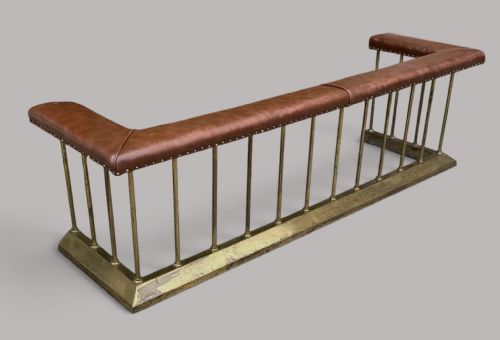
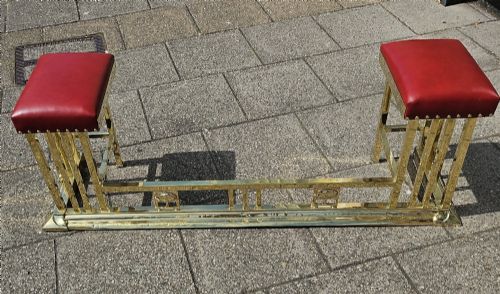
These leather top club fender examples provide sturdy fireside seating, combining metal framing with upholstered leather pads to anchor period hearths.
Leather Top Club Fender
A leather top club fender is a traditional fireside accessory that doubles as a low seat around the hearth. These pieces combine a metal or wooden frame with a padded leather top, creating a practical structure for warming rooms efficiently.
The versions most commonly found here date from the nineteenth century through the early twentieth century, spanning Victorian, Edwardian, and Art Deco periods. Buyers encounter forms constructed in brass, iron, wrought iron, and oak, often paired with tan, brown, or red leather upholstery.
Makers designed these items as functional furniture for large reception rooms and libraries, providing comfortable seating close to the fire. Surviving examples reflect the shifting aesthetic tastes of the Victorian and Edwardian eras alongside later twentieth-century styles.
How leather top club fenders were made
Craftsmen built the structural framework using sturdy metals such as brass, iron, and wrought iron, or occasionally solid oak. These durable materials ensured the fender could withstand the weight of sitters and the heat of an open fire.
Upholsterers fitted padded tops using leather in shades of tan, brown, or red, securing the hides over supportive stuffing. Metal components were cast or forged into decorative and structural shapes, combining heavy brass tubes with detailed ironwork.
Listings feature items spanning the nineteenth century, Victorian, Edwardian, and Art Deco periods, utilising brass, iron, oak, and copper.
What varies in quality
Quality rests in the substance of the metalwork and the integrity of the frame construction, distinguishing robust architectural builds from lighter decorative pieces. Substantial brass tubes and heavy iron or wrought iron frameworks demand greater skill in metalworking.
The grade and condition of the leather upholstery also separate examples, where mature hides with original patination indicate careful preservation. Artisanal joinery in timber frames, such as those associated with specific makers, adds distinction to the design.
William Birch
The Leather Top Club Fender Glossary
- Club fender
- A low fireside seat built around an open hearth, featuring upholstered top rails above a metal or wooden base. This configuration allows people to sit directly beside the fire.
- Wrought iron
- Iron beaten or bent into shape by hand while hot, creating durable structural and decorative components. This material appears frequently in traditional hearth furniture.
- Arts and Crafts
- A design movement emphasising handcraftsmanship, simple forms, and honest materials. Pieces from this tradition often utilise solid oak alongside traditional metalwork.
- Art Deco
- A style characterised by sleek lines and geometric forms prevalent during the early decades of the twentieth century. Fenders from this period reflect modernizing aesthetic influences.
Leather Top Club Fender: Frequently Asked Questions
What is a leather top club fender?
A leather top club fender is a rigid fireside surround featuring cushioned seats along the top rails. It serves both as a barrier to keep stray embers within the hearth and as low seating.
Originating in large reception rooms, these items allowed people to sit close to the warmth of an open fire. They combine metal or wooden frames with durable leather upholstery designed for frequent use.
How do I date a club fender?
Dating relies on observing the combination of materials, construction methods, and stylistic cues present in the piece. Victorian and Edwardian examples often feature heavy brass or cast-iron framing.
Later pieces from the 1920s and 1930s incorporate Art Deco design elements or lighter ironwork. Comparing the specific metal alloys and leather treatments helps narrow the period of origin.
Where should I place a club fender?
These pieces fit directly around the hearth in front of an open fireplace or wood-burning stove. They function best in rooms with generous proportions where the fireplace serves as a central focus.
Ensure adequate clearance between the fender and the fire source to protect both the metal framework and the leather upholstery from excessive heat.
How do I care for the leather top?
Maintaining the leather top involves gentle cleaning and regular conditioning to keep the hide supple. Avoid placing the fender too close to direct flames or intense heat sources that might dry out the material.
Protecting the leather from sharp objects preserves the original surface texture and maintains the appearance of the upholstery over time.