

Victorian Hall Stick Stand
A victorian hall stick stand organises wet weather gear and walking canes in an entrance hall.
Victorian Hall Stick Stand
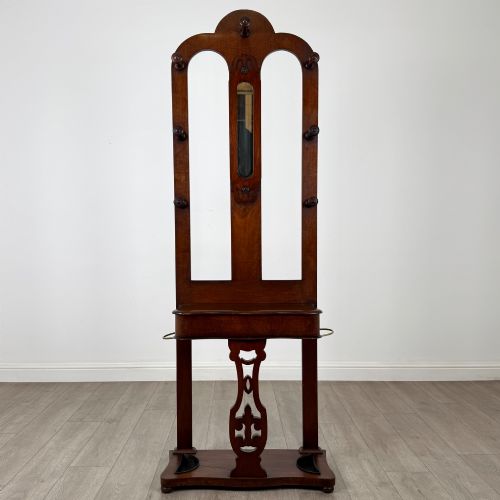
A buyer seeking a victorian hall stick stand encounters umbrella racks, combined coat and hat units, and dedicated umbrella and stick holders placed in hallways.
The selections span standard Victorian pieces alongside Edwardian, Arts and Crafts, and Aesthetic Movement variations.
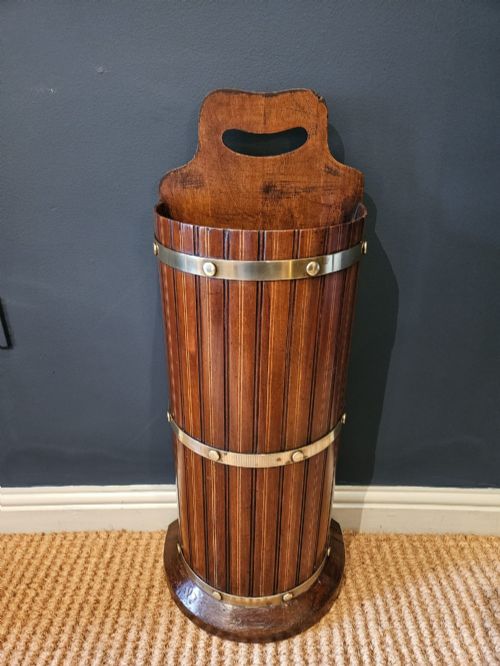
Common iterations utilise robust timbers like oak and mahogany alongside cast iron frames and coopered barrel constructions.
Materials and Construction
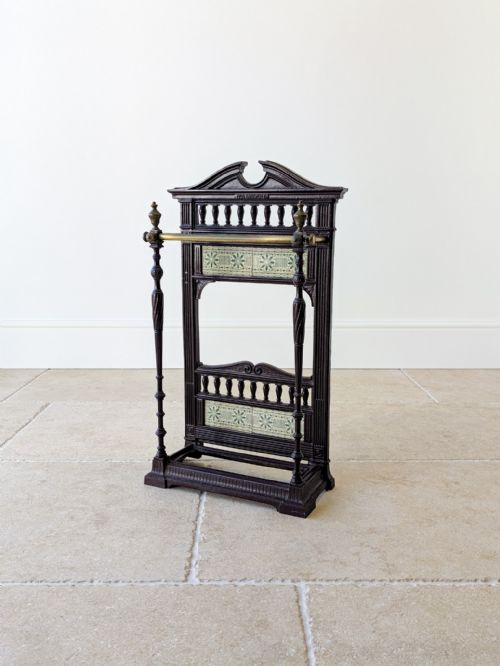
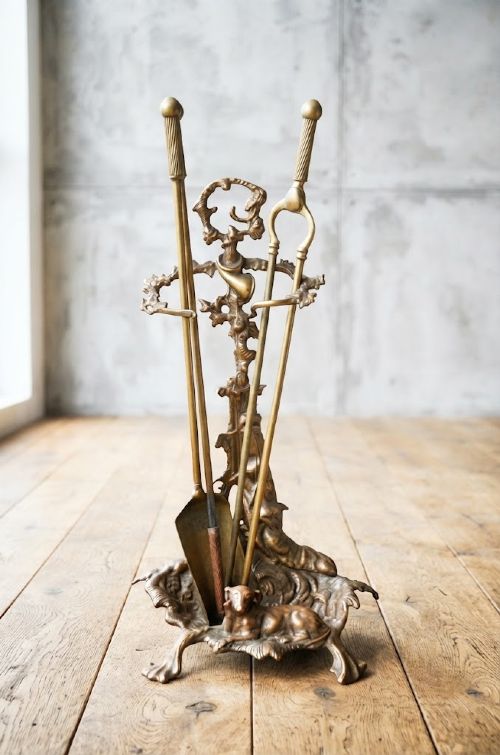
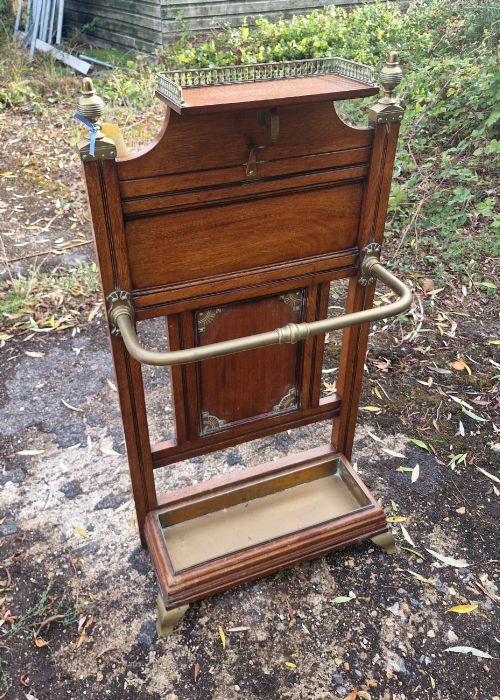
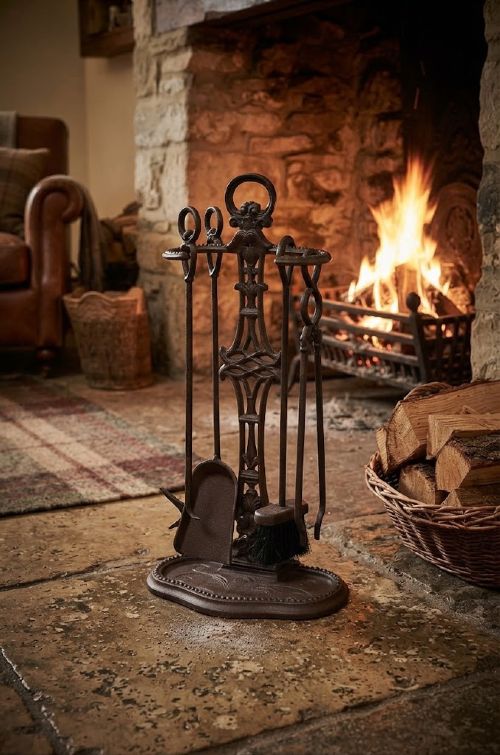
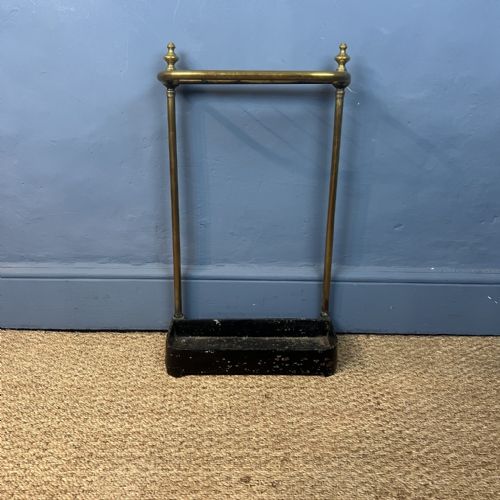
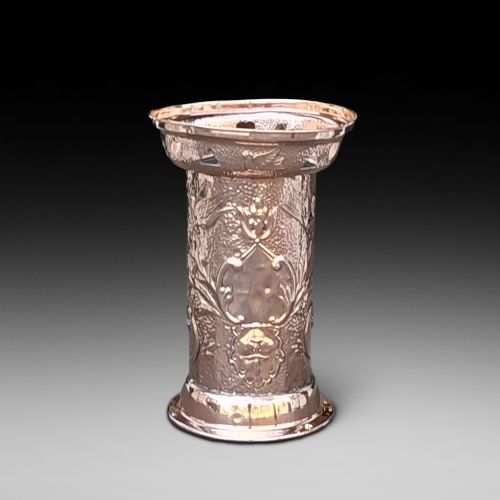
Foundry work produced heavy cast iron and brass frames, often incorporating drip trays and pierced panels.
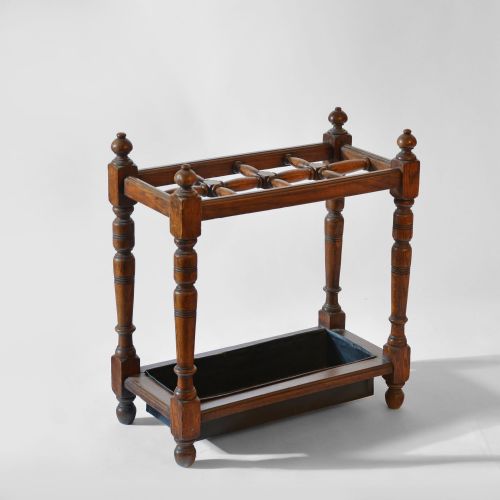
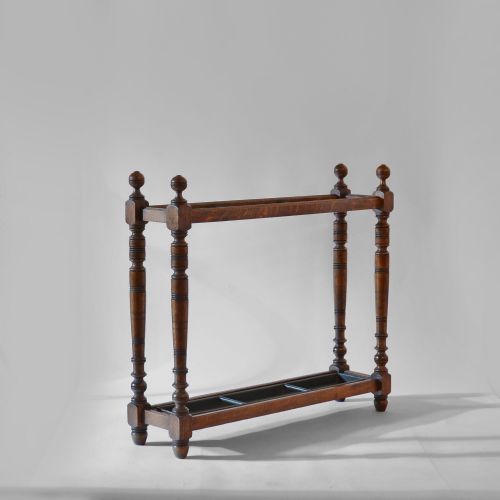
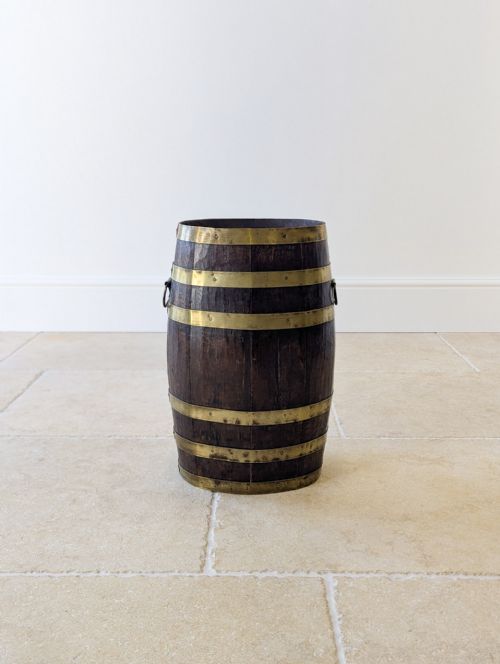
Joinery methods shaped solid oak, mahogany, and pine into panelled racks, corner units, and coopered barrels bound with brass hoops.
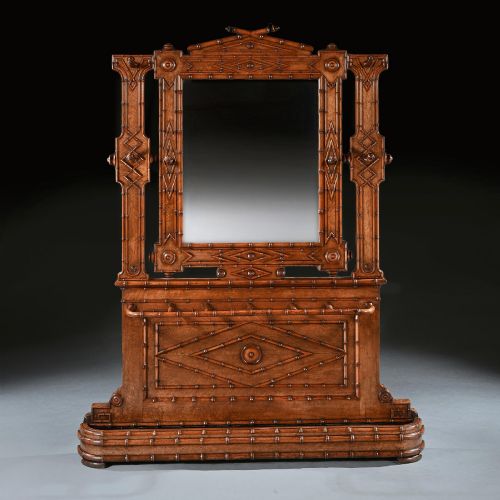
Alternative materials such as bamboo, rattan, and carved fruitwood appeared in Aesthetic Movement and Black Forest designs.
Several Victorian hall stands take the sculptural form of carved wooden bears holding card trays.
Evaluating the Pieces
Assessment relies on the integrity of the original construction, whether coopered staves, cast metal scrolls, or carved wooden panels.
Original drip pans, secure mounts, and uncompromised structural joints distinguish superior examples from heavily altered pieces.
Coalbrookdale·Thomas Jeckyll·Shoolbred and Co·Liberty and Co·J Parker of Woodstock·Théodore Deck
The Victorian Hall Stick Stand Glossary
- Coopered
- Construction method using wooden staves bound with metal hoops, typical of barrel-style umbrella holders.
- Aesthetic Movement
- Design style emphasising visual beauty over narrative subject matter, frequently seen in bamboo and ebonised pieces.
- Demi Lune
- Half-moon shape designed to sit flush against a hallway wall.
- Japonisme
- Influence of Japanese art on Western design, evident in faux bamboo and botanical motifs.
Victorian Hall Stick Stand: Frequently Asked Questions
Where did these stands sit?
These pieces stood immediately inside the front door of a home, hotel, or club reception.
Their primary purpose was receiving wet umbrellas, walking canes, and heavy outerwear before guests entered the main rooms.
How do I protect my floors?
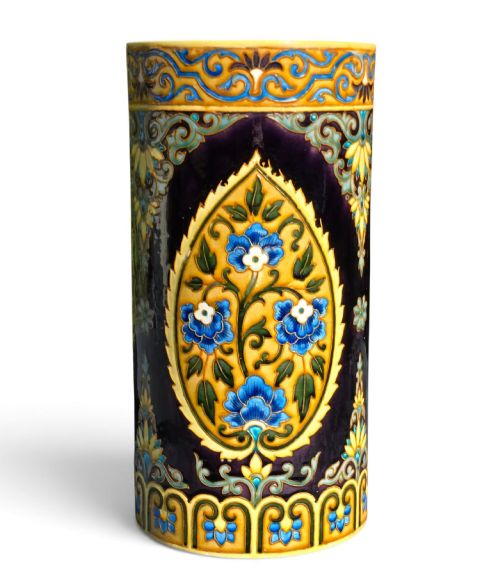
Most examples retain their original metal or ceramic drip trays positioned at the base to catch rainwater.
Checking for a watertight liner ensures moisture does not reach wooden floorboards beneath the stand.
Are combined stands common?
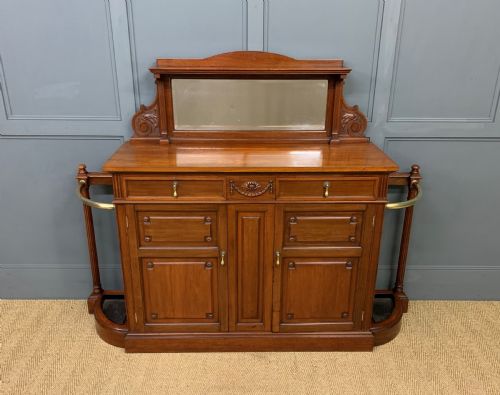
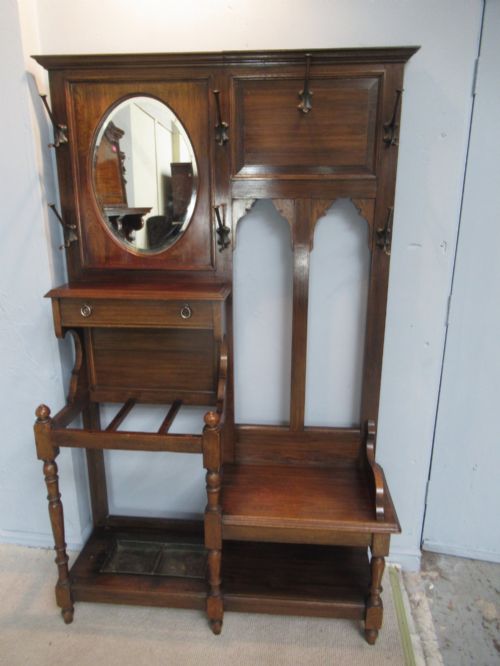
Many hallway pieces integrate umbrella racks with central mirrors, coat hooks, and glove boxes.
Dedicated single-purpose stick stands also appear frequently in compact hallways and corners.
How do I identify a period piece?
Dating relies on timber patination, construction marks, and stylistic indicators such as Gothic carvings or Aesthetic Movement bamboo.
Registration marks and foundry stamps occasionally provide exact manufacturing dates.