
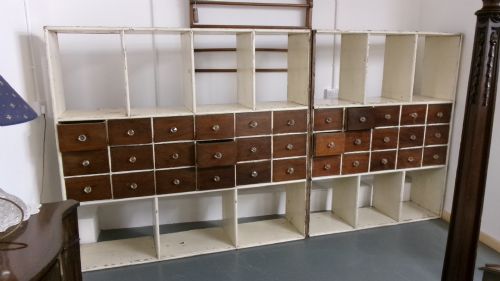


Victorian Haberdashery Display
When you search for a victorian haberdashery display, you are looking at functional trade furniture built to sell textiles, threads and millinery.
Victorian Haberdashery Display
A victorian haberdashery display encompasses practical retail fittings designed for nineteenth-century shops, including multi-drawer cabinets, glass counters and specialised millinery equipment. You will frequently encounter mahogany and pine countertop showcases alongside banks of drawers made to organise cotton reels, buttons and linens.
The selection ranges from tall upright display cases with glazed doors to compact cotton tree stands and hat stretchers carved from wood. Many pieces survive from commercial hubs, reflecting the specific storage needs of drapers, haberdashers and milliners operating during the nineteenth and early twentieth centuries.
Beyond standard drawer units, the category includes specialised items such as wig display stands, carved wooden millinery heads and brass hat stands. These functional commercial pieces transitioned from active shop floors into domestic interiors where their utilitarian design provides practical storage.
Materials and Construction
Cabinet makers utilised dense hardwoods such as mahogany, oak and walnut for prominent shop counters and display cabinets, ensuring the furniture withstood heavy daily retail use. Secondary timbers like pine appeared in drawer construction and internal framing where visibility mattered less.
Glass panels were integrated into door frames and countertops to showcase goods while protecting textiles from dust and handling. Brass and iron hardware, including handles, hinges and specialised display stands, provided robust mechanical support for frequently opened drawers and adjustable shelving.
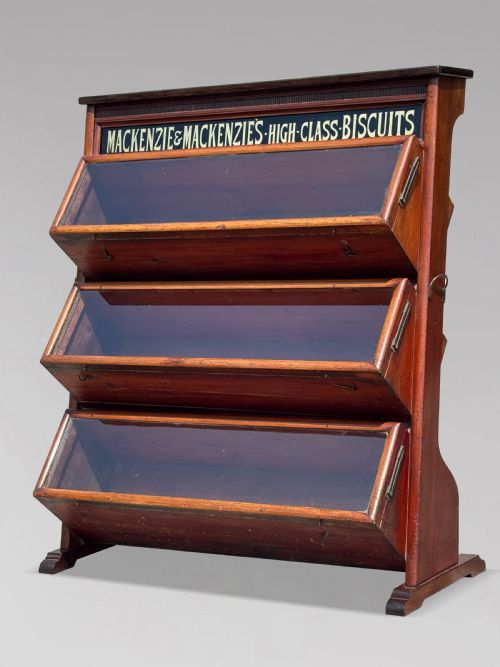
Some nineteenth-century counter cabinets retain surviving paint for cocoa, biscuits and gunsmiths long after the original sweets and firearms vanished.
Assessing Quality
Quality in these commercial fittings rests upon the selection of timber and the precision of the joinery used in heavy-use drawers and frames. Finer examples display solid mahogany or figured walnut construction with dovetail joints built to endure constant opening in busy retail environments.
The integration of original glass, robust brass fittings and intact manufacturer or brand sign-writing distinguishes superior pieces from standard utility items. Alterations to the original painted finishes or replacement hardware shift a piece away from its primary commercial state.
Philip Joseph and Sons London·John Stow Ltd of Bradford·J S Fry and sons·Chadwick’s Sewing Cottons·Ermen and Roby
The Victorian Haberdashery Display Glossary
- Haberdashery cabinet
- A multi-drawer storage unit originally designed for selling small articles of sewing and dressmaking, such as threads, buttons and ribbons. These pieces often feature numerous shallow drawers to keep small goods organised.
- Hat stretcher
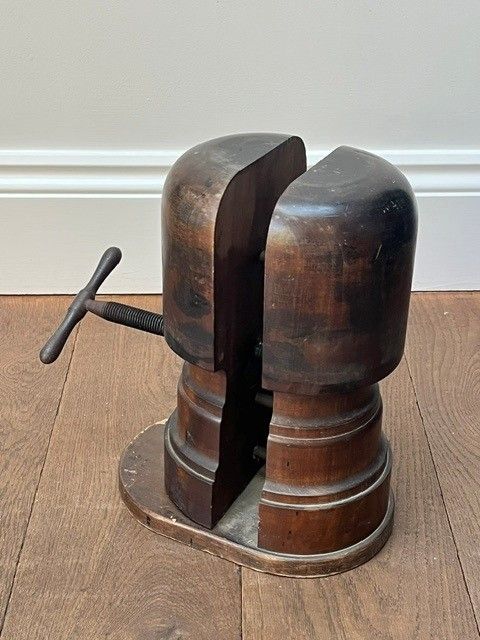
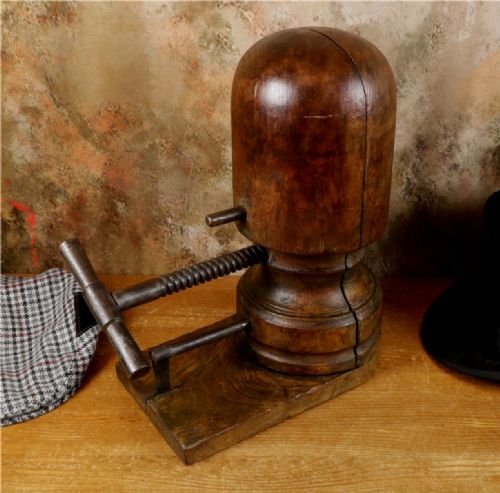
- A mechanical wooden tool used by milliners to expand and adjust the size of hats. They frequently feature segmented wooden blocks operated by an internal screw mechanism.
- Vitrine
- A glass-sided display cabinet designed for presenting delicate items or retail stock. The glass allows maximum visibility from multiple angles while keeping contents secure.
- Cotton reel tree
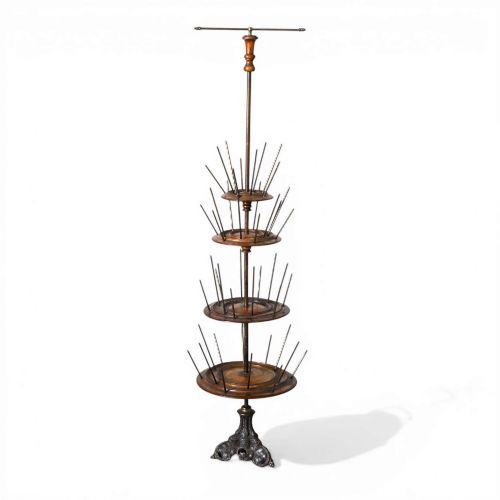
- A tiered vertical display stand holding multiple spools of sewing thread for customer selection. These shop fittings allowed merchants to display a broad colour range efficiently on a counter.
- Bank of drawers
- A large assembly of numerous small drawers sharing a single housing. They provided dense storage for retail inventory before modern packaging.
Victorian Haberdashery Display: Frequently Asked Questions
What were haberdashery cabinets used for?
Merchants used these multi-drawer cabinets to sort and display small sewing items like threads, ribbons, buttons and pins. The shallow drawers kept diverse inventory visible and accessible behind the shop counter.
Over time, these units transitioned from commercial stores into domestic settings where their compartmentalized design suits the storage of modern collections and small items.
How do I date a shop display cabinet?
Dating relies on examining the timber species, construction methods like dovetailing, and the type of glass used in the doors or panels. Nineteenth-century examples often feature solid mahogany or pine with hand-finished elements.
Commercial pieces sometimes carry original maker plaques, retailer stamps, or sign-written advertising that anchor them to specific decades and trading locations.
Are millinery heads and hat stretchers functional?
These carved wooden items were originally tools for shaping, sizing and displaying hats and caps in hatters' shops. Hat stretchers use internal mechanisms to expand, while display heads hold millinery in the proper form.
Today, collectors use them primarily as decorative sculptural objects or specialised stands for hats and wigs in domestic interiors.
How do I care for antique shop furniture?
Maintenance involves keeping wooden surfaces clean with a soft dry cloth and avoiding harsh chemical polishes that can damage original wax or polished finishes. Keeping pieces away from direct heat sources prevents timber splitting and glass stress.
Brass hardware benefits from gentle cleaning only when necessary to preserve the natural aged patina developed through decades of commercial use.