


Victorian Haberdashery Chest
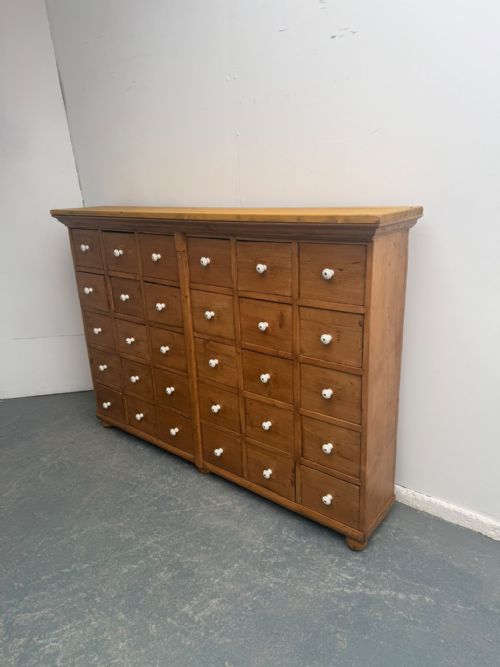
A victorian haberdashery chest brings purposeful retail storage into the home, offering countless small drawers designed originally to organise dry goods, threads and shop stock.
Victorian Haberdashery Chest
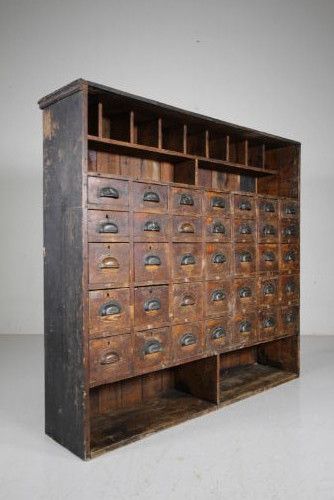
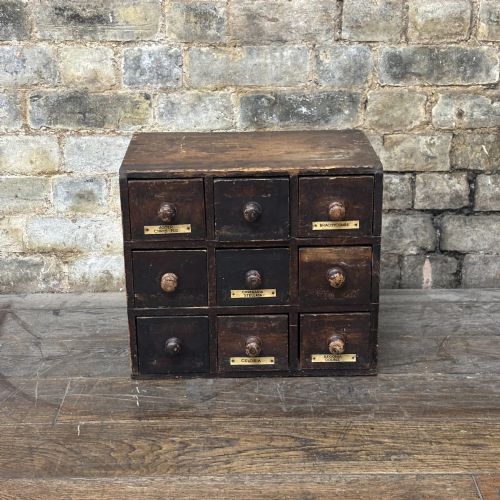
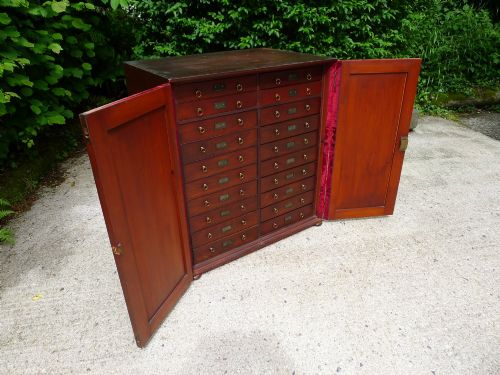
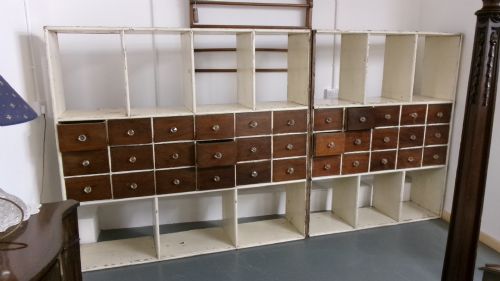
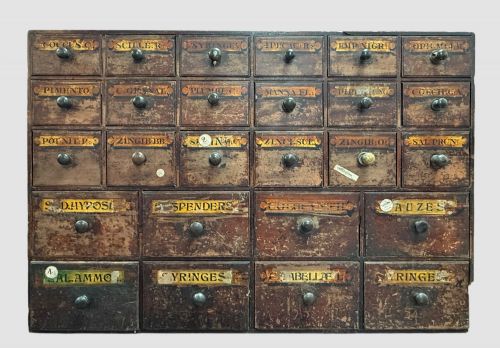
A victorian haberdashery chest is fundamentally a bank of drawers or shop fitting conceived for commercial utility rather than domestic display. The listings here encompass large multi-drawer banks, chemist shop fittings, florist seed chests, and drapers cabinets originating from the nineteenth century into the early twentieth century.
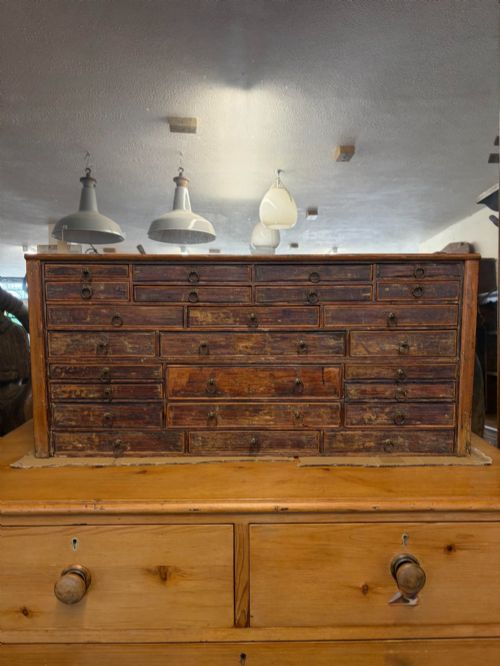
Buyers encounter pieces ranging from substantial pine units housing fifty drawers to compact walnut table cabinets and apothecary storage. These items served trades as varied as watch repairing, pharmacy, and drapery before finding new life in modern interiors.
Origins span English workshops and Hungarian painted shop fittings, uniting utilitarian design with honest craftsmanship. The overriding characteristic remains the repetition of small, uniform compartments built for inventory control.
Materials and Construction Methods
Construction relies predominantly on timbers chosen for durability and availability, principally pine, mahogany, and walnut, alongside occasional fruitwood, teak, and deal. Pine often carries historic painted finishes in white, cream, green, or black, reflecting its working life in provincial shops.
Hardware consists of functional brass and metal pulls, sometimes scalloped or paired with glass viewing panels intended for rapid stock identification. Drawer joints and carcase frames are built to withstand heavy daily use in busy commercial environments.
Some fifty-drawer pine fittings still smell faintly of the nineteenth-century drapery goods they once stored.
Determining Quality in Trade Furniture
Quality rests upon the integrity of the original carcase, the smooth operation of numerous drawers, and the preservation of authentic surface finishes. Units retaining their historic paint or polished hardwood patination stand apart from those stripped or overly restored.
Proportion and scale dictate desirability, where exceptional examples offer uncommon drawer configurations, such as twenty-five or fifty compartments, paired with robust structural joinery. Maker attestation or original shop provenance further elevates the standing of a piece.
Luxmore's of Ilfracombe·Ermen & Roby
The Victorian Haberdashery Chest Glossary
- Haberdashery cabinet
- A multi-drawer retail cabinet originally utilised in drapers and sewing shops to store small items like buttons, ribbons, and threads. These pieces are defined by numerous shallow drawers.
- Bank of drawers
- A large chest comprising a high volume of small drawers arranged in a grid. They were standard fixtures in nineteenth-century commercial premises.
- Shop fitting
- Furniture built specifically for the interior of a retail establishment rather than a domestic residence. They are characterised by heavy-duty construction and functional layouts.
- Apothecary chest
- A specialised storage cabinet with small drawers designed to hold medical ingredients, herbs, or chemicals. These often feature distinctive labelling or compartments.
Victorian Haberdashery Chest: Frequently Asked Questions
What were these chests originally used for?
These units served as commercial storage in nineteenth-century shops, pharmacies, and workshops. Merchants used the multitude of small drawers to keep small goods, sewing supplies, and medicines sorted.
Over time, these trade fixtures transitioned into domestic settings because their compartmented storage suits modern organising needs.
How do I tell a shop fitting from a domestic chest?
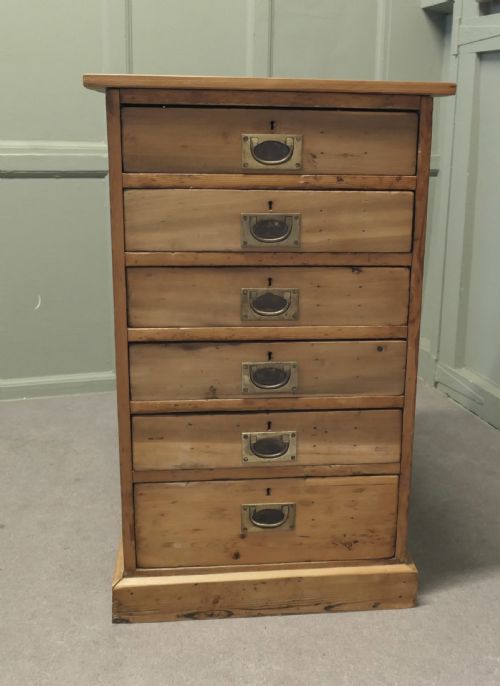
Shop fittings usually feature a much higher density of shallow drawers built to house small retail stock. They prioritize robust utility over decorative veneers and complex carving.
Domestic chests generally offer fewer, deeper drawers designed for folded garments or household linens rather than inventory display.
Are painted finishes on these cabinets original?
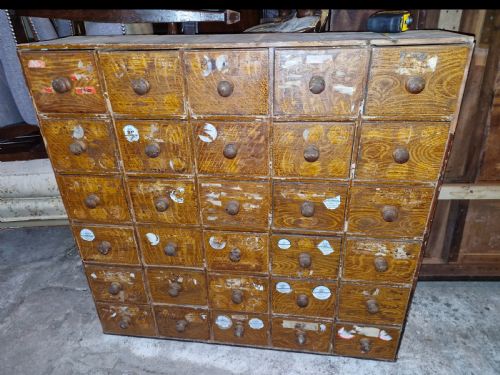
Many pine pieces carry historic painted surfaces applied during their working life in provincial shops. Layers of white, cream, green, or black paint often show genuine wear from decades of trade use.
Inspect the paint layers closely to distinguish authentic commercial coatings from later decorative treatments applied to bare wood.
Where do I place a large bank of drawers at home?
A substantial multi-drawer unit works well as a kitchen island base, a hallway console, or a statement storage piece in a living room. The numerous compartments provide practical organisation for stationery, cutlery, or collections.
Ensure the floor space and wall clearance accommodate the considerable depth and width typical of nineteenth-century commercial chests.