




Lion Head Handles
Lion head handles appear on furniture and metalware from the Georgian period to the twentieth century, bringing formal classical dignity to sideboards, chests and vessels.

Lion Head Handles
When you search for lion head handles, you encounter a distinct group of functional objects and furniture designed with cast metal mounts shaped as feline visages. These mountings serve as lifting grips or decorative pulls on substantial items intended for domestic service and display.
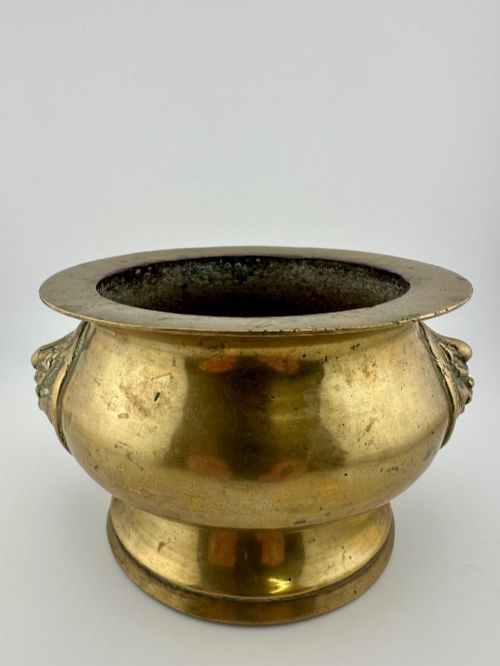
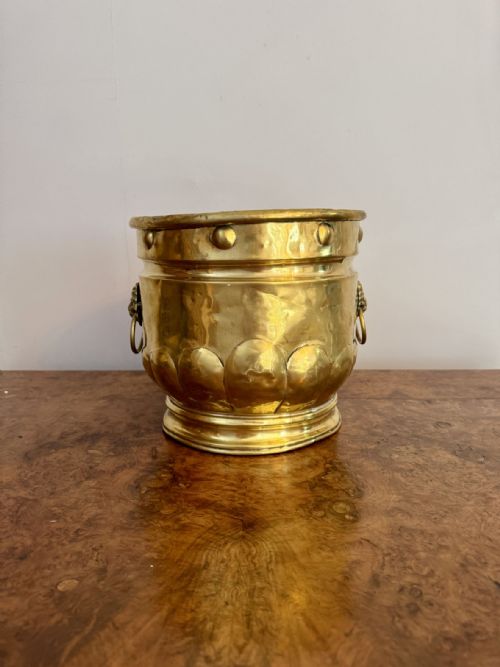
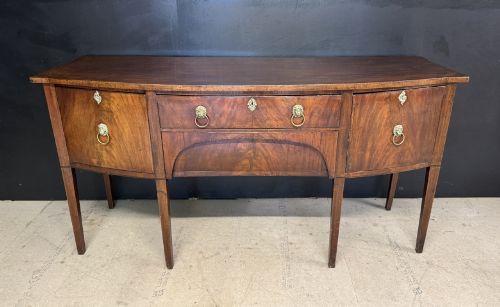
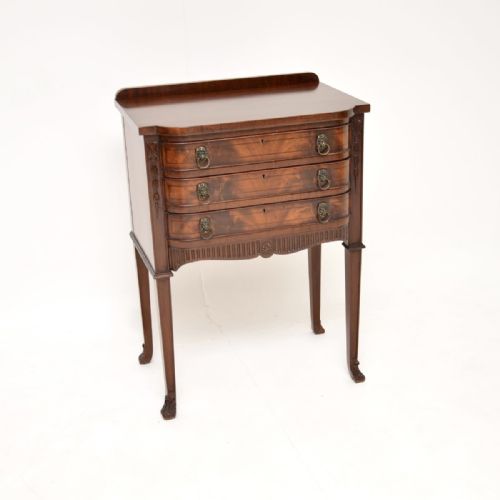
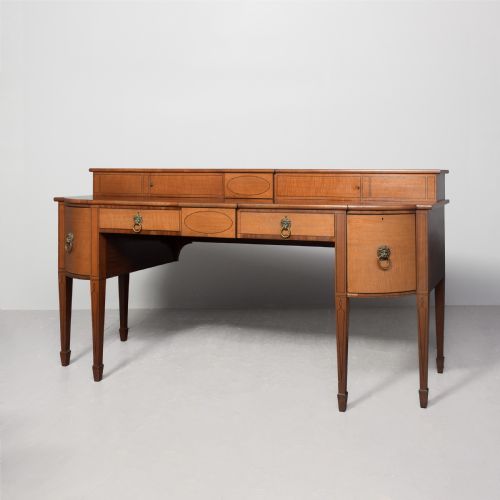
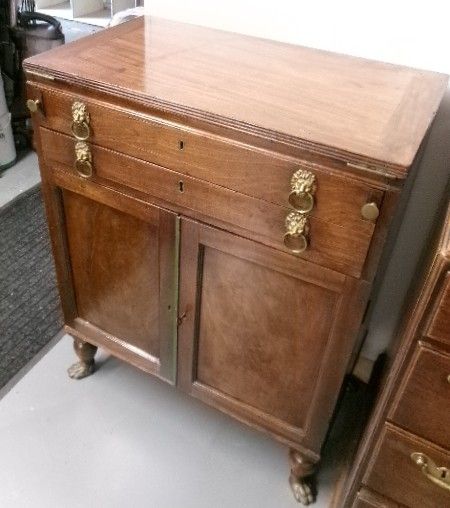
The version you are most likely to meet on this page is a mahogany chest of drawers or sideboard from the Georgian, Regency or Victorian eras, where brass ring handles hang from the mouths of cast brass lions. Beyond cabinetry, the selection includes copper and brass log bins, jardiniere planters, silver presentation bowls and bronze incense burners.
Originating across British and European workshops alongside specific Chinese export pieces, these items bridge utilitarian storage and decorative metal casting. The presence of the mask motif turns a simple drawer pull or vessel mount into a classical architectural accent.
How they were made
Cabinetmakers constructed the main bodies from dense hardwoods like mahogany and satinwood, often incorporating oak drawer linings and delicate ebony line inlay. Metal components such as handles, feet and gallery rails started as brass or bronze castings produced through sand moulding.
Coppersmiths hammered sheet metal into seamless cauldrons and coal buckets, attaching cast brass lion masks with heavy rivets or bolts. Silversmiths raised sterling silver presentation bowls and wine coolers by hand before soldering cast embellishments onto the rims and flanks.
Object forms range widely from dining room cellarettes and presentation bowls to shop display cabinets and incense burners.
What varies in quality
The distinction between ordinary production and finer execution lies in the crispness of the metal casting and the depth of the chisel work on the lion masks. Superior examples display sharp fur details, well-defined teeth and strong architectural proportions in the surrounding furniture or vessel.
Timber selection and secondary wood usage also separate workshops, as seen in figured flame mahogany veneers matched symmetrically across drawer fronts compared to plain secondary pine. Originality of the mounting hardware relative to the timber body dictates the historical integrity of the piece.
Gillingtons·Elkington·Mappin & Webb
The Lion Head Handles Glossary
- Cellarette
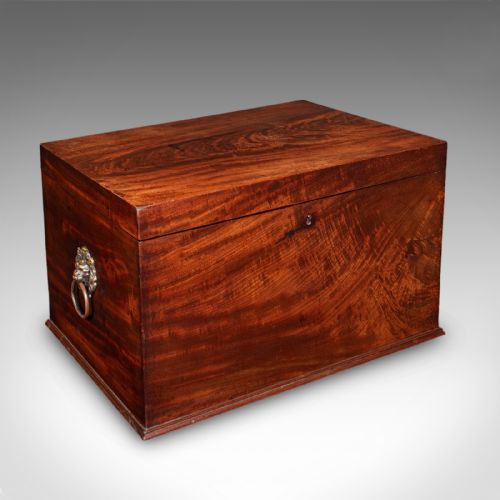
- A lockable container used for storing wine bottles in the dining room during the Georgian and Regency periods. These boxes often feature heavy metal carrying handles on the sides.
- Jardiniere
- An ornamental receptacle designed to hold potted plants or flowers, frequently rendered in brass or copper with decorative side mounts. Many examples incorporate liner trays to protect the metal from moisture.
- Serpentine
- A furniture front configuration curved in a concave-convex-concave wave shape. This demanding joinery technique appears on select sideboards and chests.
- Incense Burner
- A vessel intended for burning aromatic materials, commonly cast in bronze or brass with traditional mask motifs. These items reflect international trade and ritual forms.
- Line Inlay
- A narrow strip of contrasting wood or dark material embedded flush into the primary timber surface to create decorative borders. This technique highlights the geometric edges of tabletops and drawer fronts.
Lion Head Handles: Frequently Asked Questions
What furniture features lion head handles?
Sideboards, chests of drawers and cellarettes most commonly carry these metal mounts on their primary drawers and sides. Cabinetmakers applied them to add classical weight and formal symmetry to case pieces.
Smaller serving tables and occasional desks occasionally incorporate these pulls, particularly in Regency and revival designs where classical motifs dominated interior decoration.
How were copper log bins used?
Copper and brass log bins served beside domestic fireplaces to store firewood, coal and peat ready for burning. Their sturdy metal construction and waterproof linings contained ash and debris while remaining decorative.
Many featured drop rings suspended from cast lion masks to allow house servants to lift and transport the heavy fuel containers around the room.
How do I date a chest of drawers?
Dating relies on examining the timber species, drawer construction techniques and secondary woods like oak or pine used in the linings. Hand-cut dovetails, original backboards and the style of the brass hardware provide key chronological markers.
Georgian and Regency pieces exhibit different proportions and foot styles compared to later Victorian iterations, helping establish the manufacturing era.
Are the handles original to the furniture?
Determining originality involves checking the interior of the drawer wood for filled screw holes or shadow marks left by earlier hardware. Period replacements match the footprint and backplate impression of the original mounts.
Matching patina between the brass handles and the surrounding lock escutcheons often indicates whether the hardware has remained together since manufacture.