





Victorian Grand Tour Mosaic
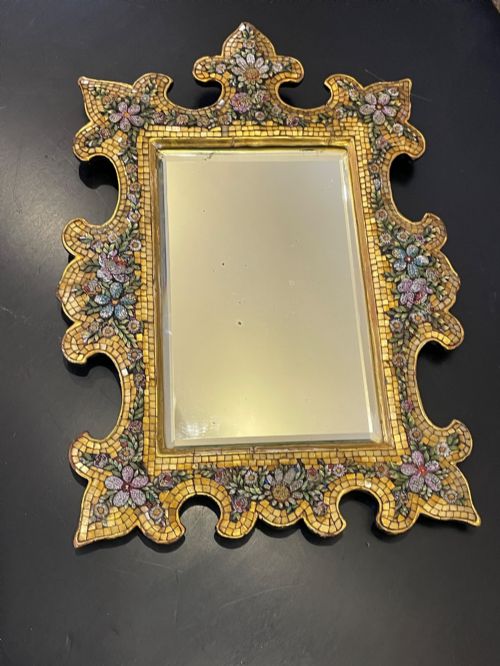
These Victorian grand tour mosaic pieces bring home the artistic sights of Italy, prized for intricate coloured glass tesserae and stone work.
Victorian Grand Tour Mosaic
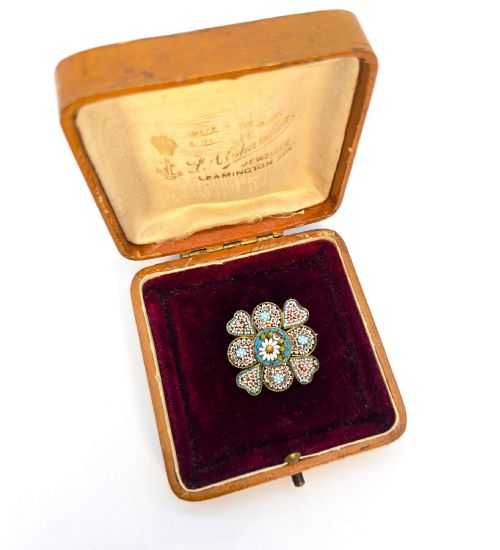
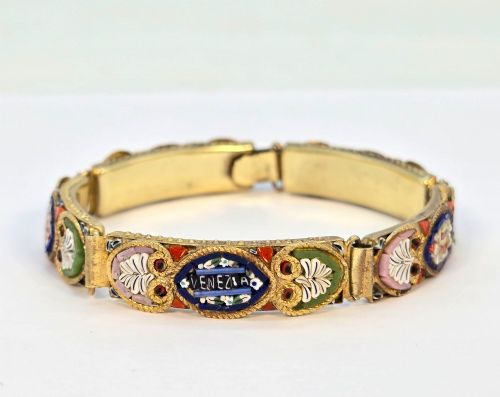
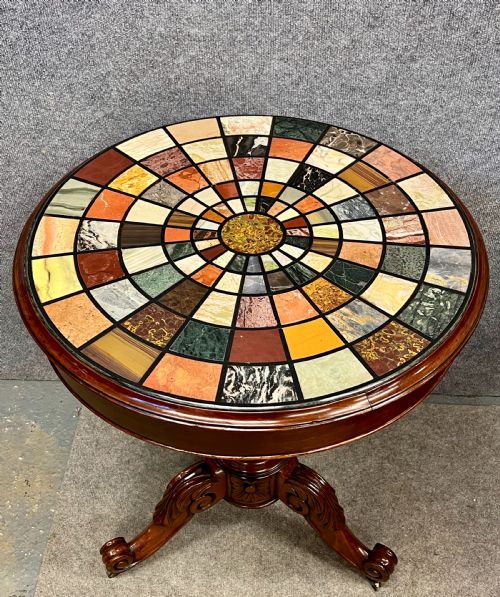
Victorian grand tour mosaic items are souvenir pieces collected during continental travels across Italy during the nineteenth century. Buyers searching this phrase encounter wearable items like brooches, earrings, and bracelets alongside decorative objects including paperweights, boxes, and occasional tables.
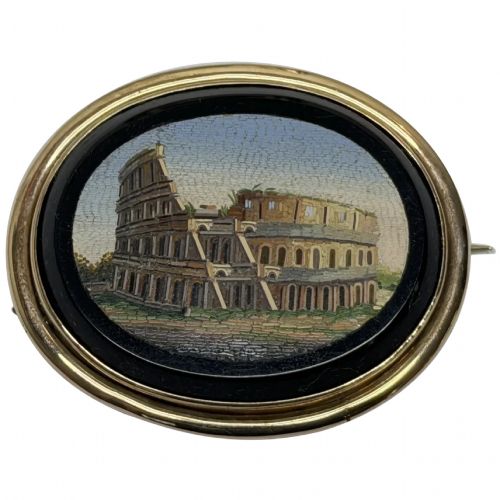
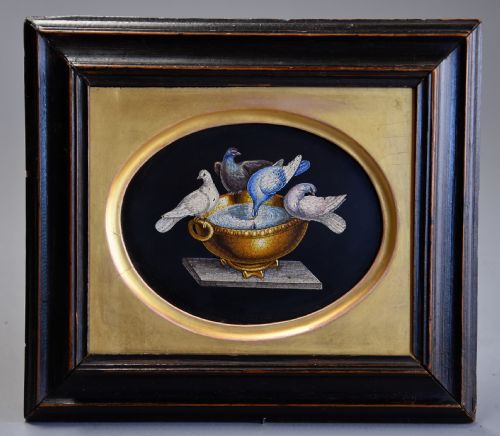
The objects most frequently met on this page include brooches and paperweights featuring miniature architectural or avian motifs. These items capture foreign memories through enduring Italian craft traditions tailored for British travellers.
Materials and construction
Craftsmen set microscopic glass tesserae into a cement base to form detailed pictorial scenes, often mounted within yellow gold or ormolu frames. Other pieces utilise hardstones such as marble, slate, and Ashford marble inlaid via pietra dura techniques.
Support structures involve ebonised wood or gilt metal, combining durable substrates with delicate surface ornament. These varied materials reflect traditional Italian workshops adapting local mineral resources for foreign patrons.
Victorian Grand Tour Mosaic Retail Price Guide 2026
Typical asking prices for victorian grand tour mosaic among the pieces listed under this phrase on Sellingantiques today, from the lower quarter to the upper quarter. They describe what is for sale here now, not the wider market.
Listings feature nineteenth-century items incorporating glass tesserae, marble, slate, brass, and ebonised wood.
Assessing quality
Quality rests upon the density and fineness of the glass tesserae placement, where smaller individual elements create smoother, more painterly pictorial definition. Superior examples display precise alignment without large gaps of visible cement between individual pieces.
The surrounding mount adds another measure, distinguishing simple brass settings from substantial yellow gold work or finely cast ormolu. The weight and selection of support materials like marble or ebonised wood further separate standard souvenirs from exceptional works.
The Victorian Grand Tour Mosaic Glossary
- Tessera
- Small individual blocks of coloured glass or stone used to form a mosaic picture. These tiny units require immense patience to shape and position.
- Pietra dura
- An Italian mosaic technique using cut and fitted polished coloured stones to create geometric or pictorial designs. Hardstones such as marble and jasper form smooth, flush surfaces.
- Micro mosaic
- A specialised form using microscopic glass threads fused and sliced to create highly detailed miniature images. These tiny pieces allow makers to depict complex subjects like ancient ruins.
- Grand Tour
- A traditional trip through Europe, particularly Italy, undertaken by upper-class young men and Victorian tourists. Travellers collected local art and souvenirs to prove their cultural education.
- Ormolu
- Gilded bronze or brass used for mounts and decorative frames. This metalwork provides a bright, protective finish that complements stone and mosaic panels.
Victorian Grand Tour Mosaic: Frequently Asked Questions
What is a micro mosaic?
A micro mosaic is a picture formed from hundreds of microscopic glass pieces fused together. Craftsmen arranged these tiny threads to depict famous Italian sights.
These pieces were mounted into jewellery and decorative boxes as lasting souvenirs of foreign travel.
How were grand tour mosaics used?
Travellers used these items both as personal adornment and as parlour ornaments. Jewellery pieces like brooches and earrings were worn during social occasions.
Larger objects such as paperweights, boxes, and occasional tables decorated domestic interiors and demonstrated the owner's cultural travels.
What is pietra dura?
Pietra dura is an inlay technique where cut and polished hardstones are fitted closely together. The stones form pictorial scenes or geometric patterns on a dark stone background.
This method differs from glass mosaic by relying on natural mineral colours rather than manufactured glass.
How do I care for a mosaic piece?
Protect these items from sharp impacts and moisture to keep the tiny tesserae secure within their cement beds. Gentle dusting with a soft brush preserves the delicate surface.
Store jewellery in dedicated boxes away from other metal items to prevent accidental scratching of the glass or stone.