







Victorian Gothic Small Cabinet
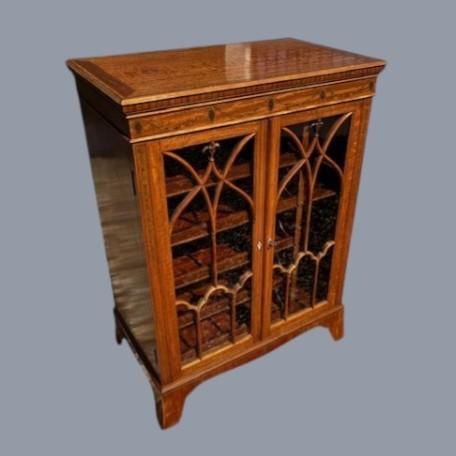
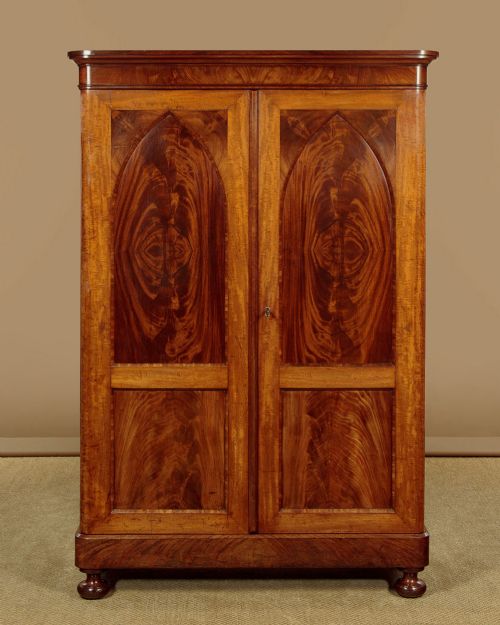
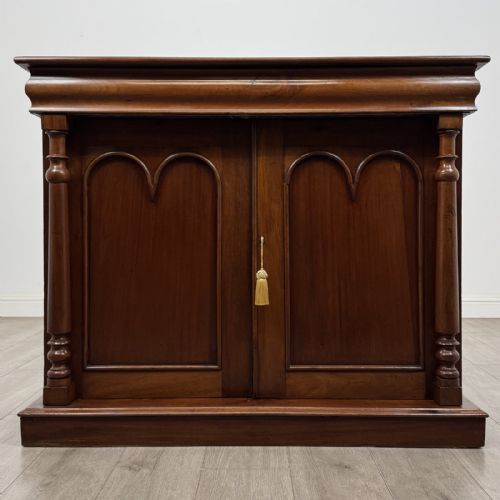
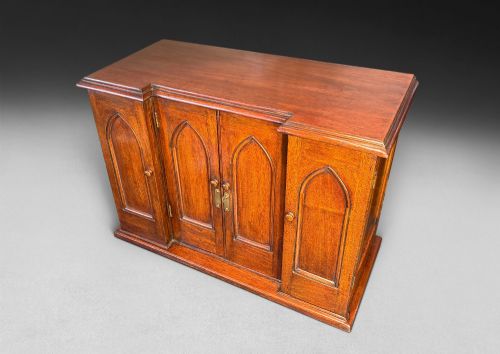
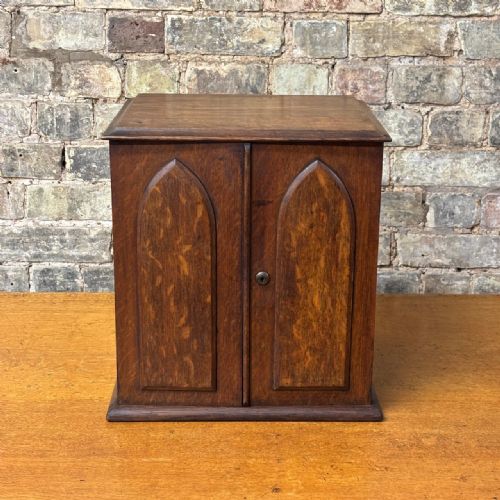
These Victorian gothic small cabinet pieces combine dark timber and pointed arches to provide compact storage with serious architectural presence.
Victorian Gothic Small Cabinet
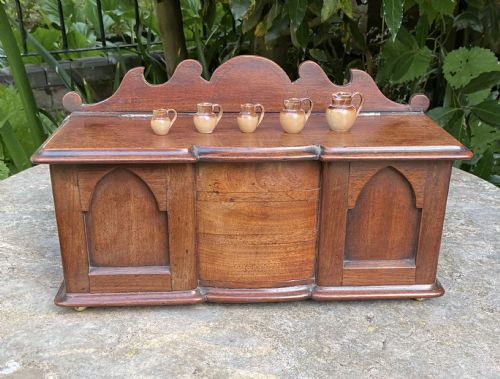
A victorian gothic small cabinet brings medieval architectural forms into domestic spaces through compact cupboards, table-top chests, and wall-mounted shelves. The items seen on this page span the nineteenth century, including specific dates from the 1860s through the 1910s alongside Edwardian examples.
Most pieces favour robust construction in oak, often accompanied by variations such as mahogany, walnut, limewood, and ebonised wood. Forms range from table cabinets and bedside chests of drawers to secretaire bookcases and hanging wall shelves.
Makers drew on Gothic Revival, Aesthetic Movement, and Arts and Crafts styles to shape these smaller domestic articles. Architectural details like panel doors and carved facades define the visual character of the group.
Materials and construction methods
Solid timber forms the foundation of these works, with oak dominating alongside mahogany and walnut. Artisans employed dense hardwoods to support deep carving and structural panel work.
Surface decoration relies on heavy hand carving, drop fronts, and sign-written details. Joinery techniques secure the smaller proportions of table cabinets and wall-mounted cupboards.
Victorian Gothic Small Cabinet Retail Price Guide 2026
Typical asking prices for victorian gothic small cabinet among the pieces listed under this phrase on Sellingantiques today, from the lower quarter to the upper quarter. They describe what is for sale here now, not the wider market.
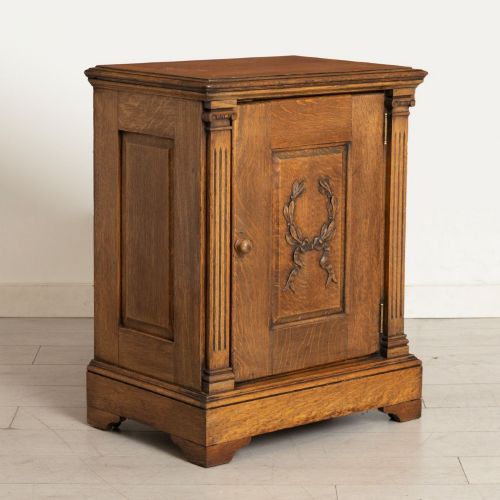
One heavily carved solid oak side cabinet arrives complete with historic sign-writing for the Steinkeller Beer Keller.
Distinctions in quality
The degree of hand carving and the selection of timber dictate the standing of individual items. Finely figured grain in satinwood or walnut separates standard utility cupboards from more ambitious decorative examples.
Integration of specialised hardware, such as patterned brass panels and precise marquetry inlay, elevates the construction standard. The crispness of architectural mouldings and the depth of relief carving show the maker's hand.
The Victorian Gothic Small Cabinet Glossary
- Gothic Revival
- An architectural and decorative style drawing inspiration from medieval buildings. This aesthetic introduces pointed arches, tracery, and heavy vertical lines to nineteenth-century furniture.
- Table Cabinet
- A miniature case piece designed to sit upon a desk or surface. These portable receptacles secure small collections or documents.
- Marquetry
- The art of applying pieces of veneer to a structure to form decorative patterns. Craftsmen use varied timber tones to create pictorial or geometric designs.
- Ebonised Wood
- Timber treated with a chemical or stain to resemble ebony. This process gives a dense, matte black finish popular in nineteenth-century design.
- Secretaire Bookcase
- A dual-purpose piece combining a writing drawer with upper shelving. The drop-front drawer reveals a fitted interior for correspondence.
Victorian Gothic Small Cabinet: Frequently Asked Questions
Where were these small cabinets placed?
These compact cupboards and table cabinets sat upon desks, sideboards, or floors within Victorian rooms. Their reduced scale allowed them to fit into tighter domestic spaces like reception halls or bedrooms.
Wall-mounted versions utilised vertical space for display and storage. Bedside chests and small bookcases served specific daily functions in private quarters.
How do I date a Victorian gothic piece?
Dating relies on stylistic shifts across the nineteenth century, moving from heavy mid-century proportions toward later Aesthetic and Arts and Crafts influences. Specific dated examples help anchor the timeline between the 1860s and the Edwardian era.
Construction traits and timber choices also assist in placing a piece within its proper decade. Ebonised finishes and specific revival movements point toward precise periods of manufacture.
What woods were commonly used?
Oak is the primary timber found across these listings, valued for its strength and suitability for Gothic carving. Mahogany and walnut appear alongside lighter satinwood and limewood.
Ebonised wood provides a dark, formal surface finish on select cabinets. Brass and iron hardware frequently accompany these primary timbers.
Are these pieces purely decorative?
While the architectural tracery and carving provide strong visual impact, these items served practical storage roles. Cupboards, drawers, and shelving held books, collectors' items, or household goods.
Table cabinets and secretaire variants added writing and organisational utility to domestic interiors. They bridge the gap between ornamental woodwork and functional furniture.