

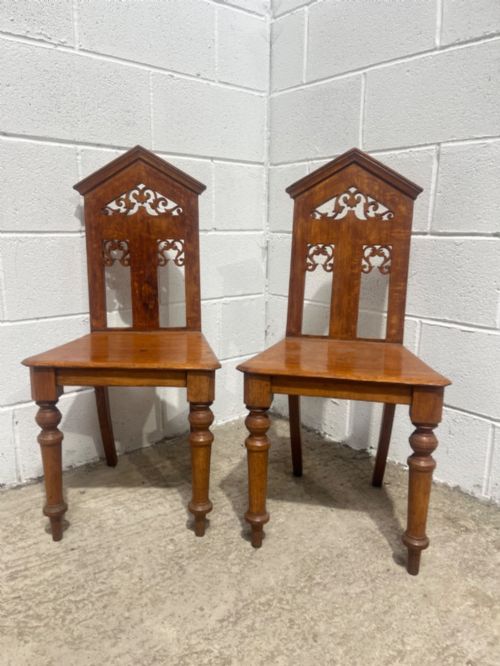
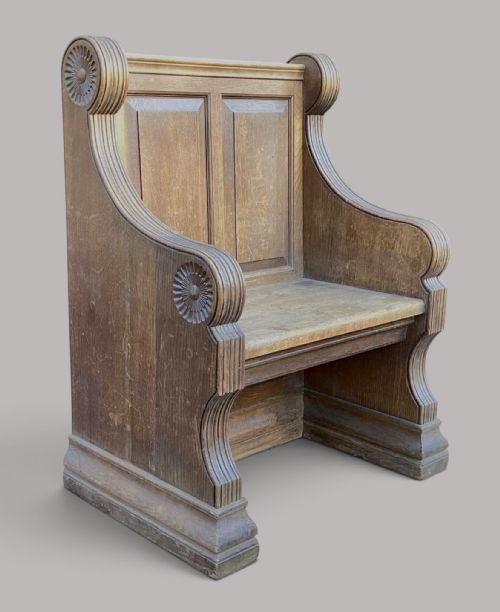
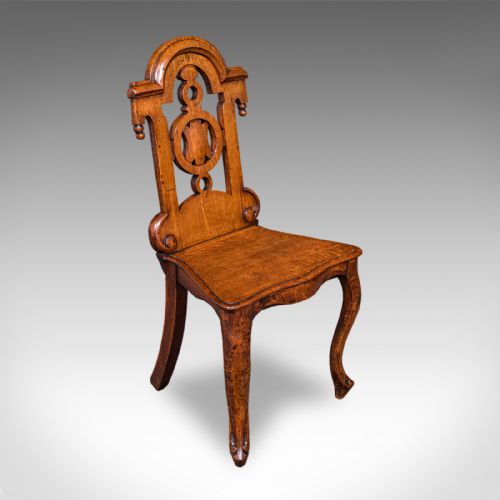
Victorian Gothic Oak Chairs
Victorian gothic oak chairs combine architectural mass with medieval revival detail, offering sturdy seating suited to period interiors.
Victorian Gothic Oak Chairs
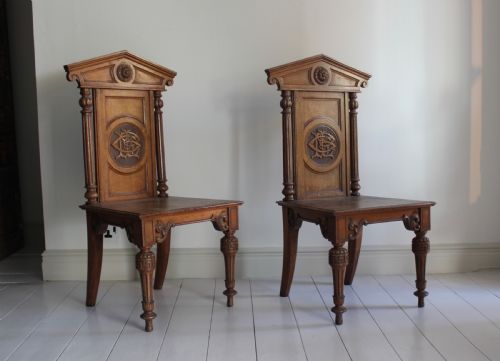
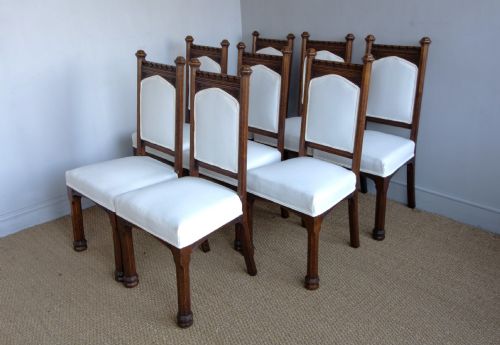
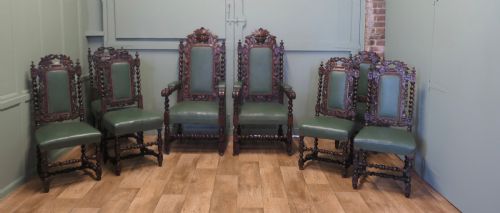
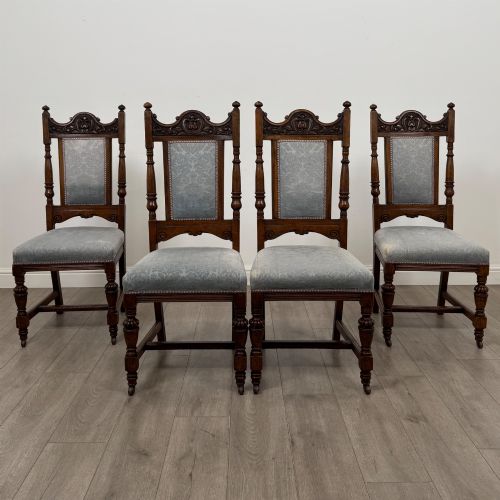
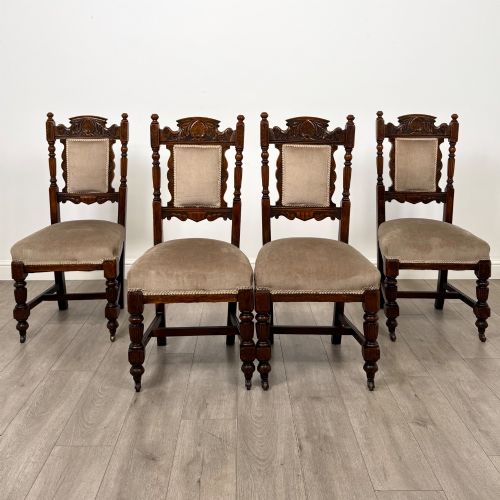
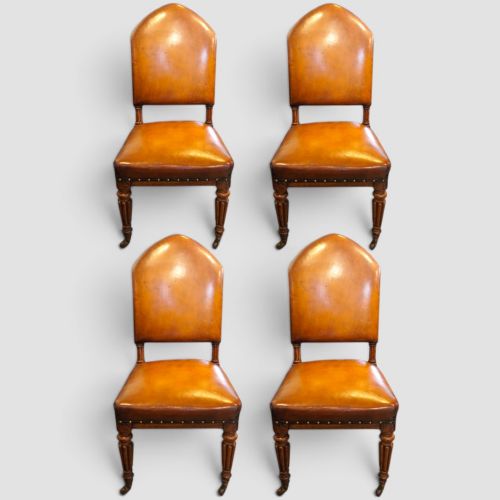
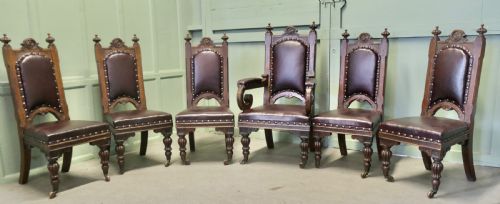
When you search for victorian gothic oak chairs, you encounter seating built during the nineteenth century under the influence of the Gothic Revival, Jacobean Revival, and Arts and Crafts movements. These pieces appear primarily as dining sets, tall-backed hall chairs, library armchairs, and occasional seating intended to project solemnity and history.
The forms range from simple side chairs with heraldic shield backs to substantial throne chairs, swivel desk models, and metamorphic library steps. Most examples stem from the Victorian period, though stylistic overlaps stretch from the middle of the nineteenth century into the early decades of the twentieth.
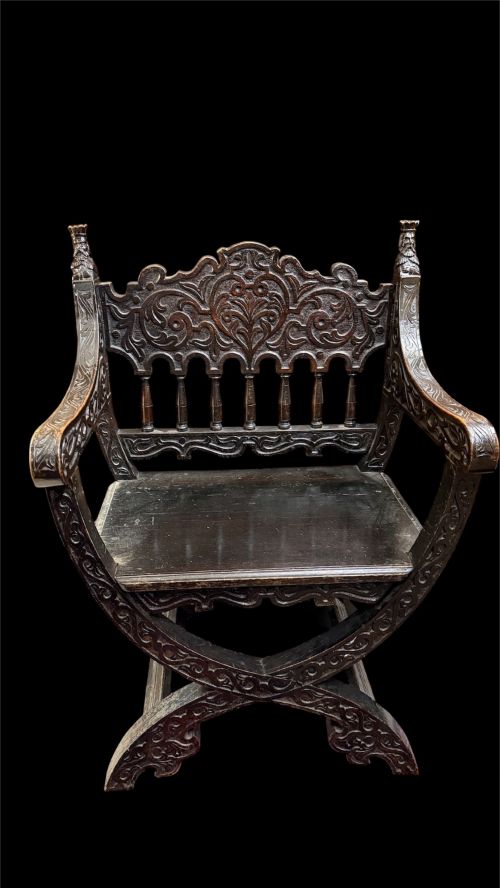
Makers adapted medieval ecclesiastical architecture into domestic furniture, incorporating pointed arches, tracery, and carved panels into everyday seating. Buyers select these chairs to anchor a room with heavy timber, dark finishes, and unapologetically geometric silhouettes.
How they were made
Carpenters built these chairs primarily from solid oak, sometimes utilising iron, brass, or painted elements for structural reinforcement and decorative contrast. Timber selection emphasised dense grain, which supported deep relief carving, barley twist turnings, and architectural mouldings.
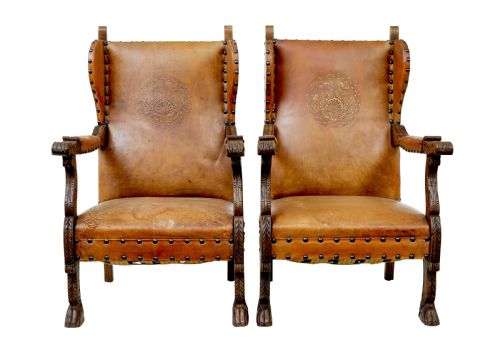
Upholstery materials included embossed leather, tapestry, and heavy woven fabric, often secured with brass studs along the borders. Joinery relied on traditional mortise and tenon construction, allowing heavy high-back chairs and cross-frame armchairs to endure decades of rigorous daily use.
Listings feature oak, brass, leather, and tapestry across Victorian, Jacobean Revival, and Arts and Crafts styles.
What varies in quality
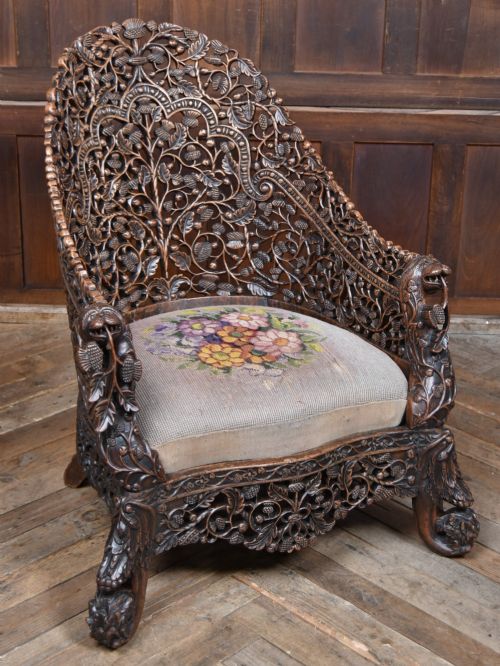
Quality rests in the ambition of the carving and the integrity of the timber selection rather than standard production metrics. Chairs fashioned by notable workshops display crisp tracery, deep undercutting on lion heads or thistle motifs, and well-balanced proportions that maintain stability despite tall backs.
Subordinate pieces rely on shallower machine or hurried hand stamping, utilising thinner stock that leads to wobble in high-stress joints. The differentiation lies in whether the maker treated the chair as a piece of functional architecture or merely a utilitarian seat.
Norwich Maker·Bruce Talbert·Gillows·S&H Jewell
The Victorian Gothic Oak Chairs Glossary
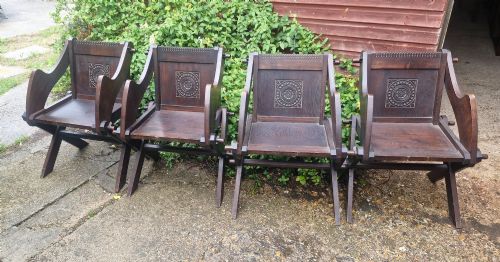
- Glastonbury chair
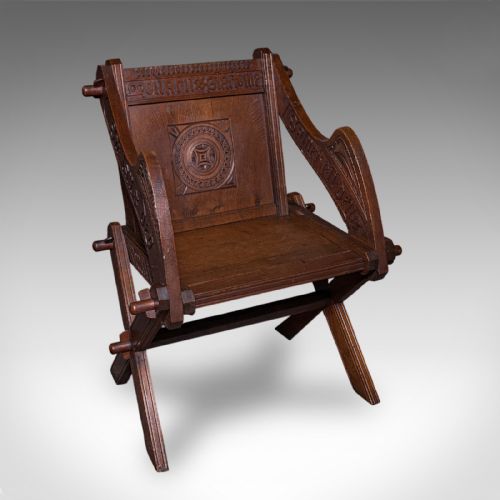
- A type of low-backed medieval revival armchair constructed from intersecting wooden boards with a sloping panel back. This form relies on a tight interlocking cross-frame design without traditional legs.
- Turners chair
- A heavy round armchair constructed entirely from turned wooden spindles and members. Such designs date back centuries before being revived by Victorian makers.
- Metamorphic chair
- A dual-purpose piece of furniture that transforms from a library chair into a set of steps. This ingenious mechanism allows readers to reach high shelves.
- Tracery
- Openwork ornamentation resembling stone window patterns found in Gothic architecture. Carpenters translated this stonemasonry technique directly into oak chair backs.
- X-frame chair
- A seating form supported by intersecting diagonal stretchers forming an X shape beneath the seat. This ancient curule-inspired structure offers high load-bearing capacity.
Victorian Gothic Oak Chairs: Frequently Asked Questions
Where were these chairs used?
Victorian gothic oak chairs populated ecclesiastical settings, grand entrance halls, libraries, and formal dining rooms. Tall throne chairs and high-back hall seats established a formal tone in public spaces.
Smaller side chairs and dining sets served domestic households where homeowners sought to project an educated, antiquarian aesthetic.
How do I care for oak furniture?
Maintain the timber by avoiding direct sunlight and extreme temperature fluctuations that cause wood to dry and split. Apply microcrystalline wax sparingly to nourish the grain without building up a sticky residue.
Protect upholstered leather and tapestry inserts with appropriate specialist conditioners designed for historic textiles.
Are these chairs comfortable for daily dining?
Many examples feature rigid high backs and upright seating angles designed for formal posture rather than lounging. Dining chairs with upholstered leather or padded seats offer reasonable support for meals.
Armchairs and swivel desk variants provide wider proportions and softer surfaces suited to longer periods of sitting.
How do I identify the period?
Examine the joinery, hardware, and specific revival style to narrow down the decade of production. Mid-century examples around eighteen fifty often feature crisp hand-carving, while late-century pieces incorporate machine assistance or lighter Arts and Crafts influences.
Maker stamps, stamps from institutions like St Paul's Cathedral, and retailer labels provide definitive chronological anchors.