
Carved Gothic Back Chair
A carved gothic back chair brings centuries of architectural drama and sturdy craftsmanship into a modern interior.
Carved Gothic Back Chair
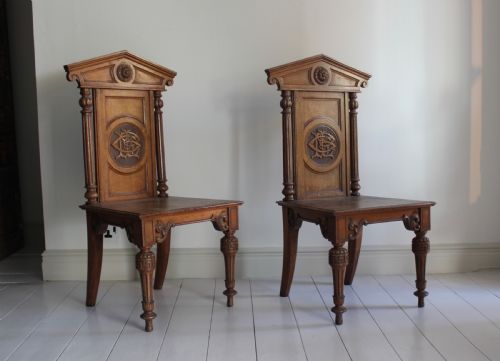
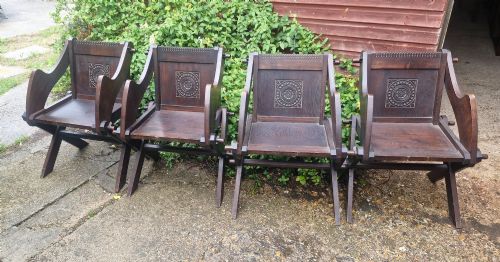
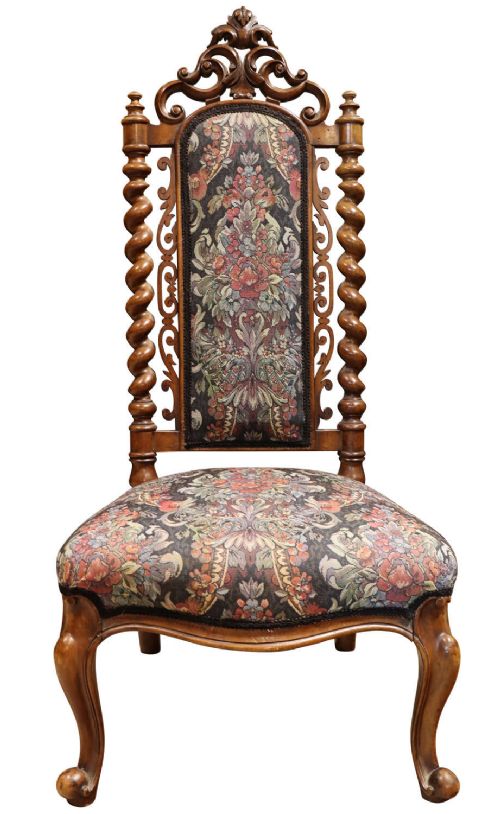
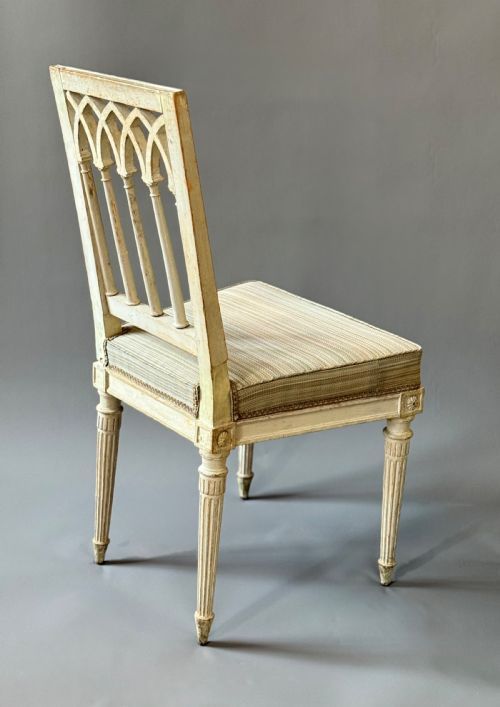
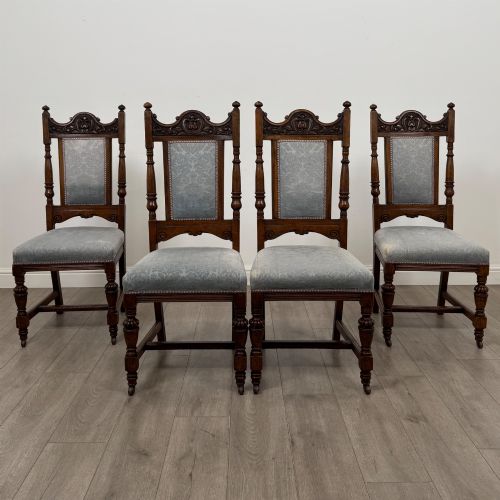
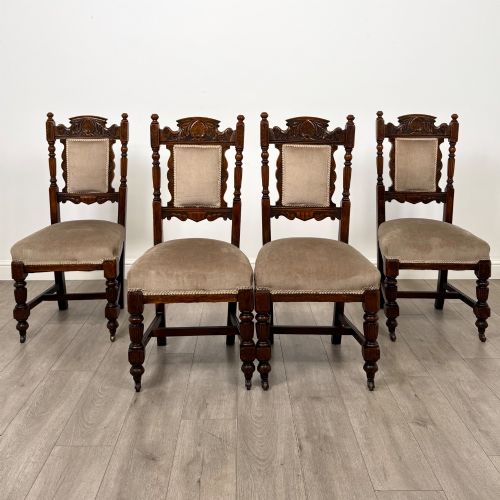
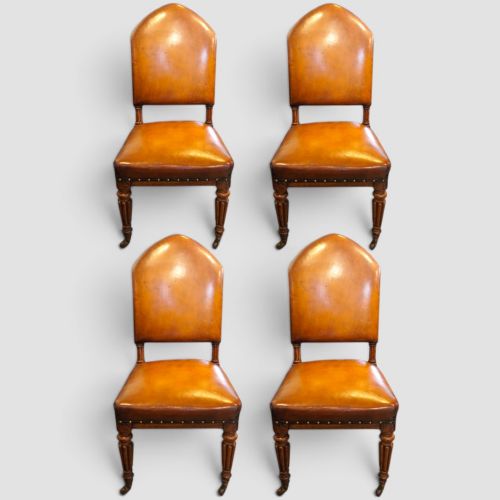
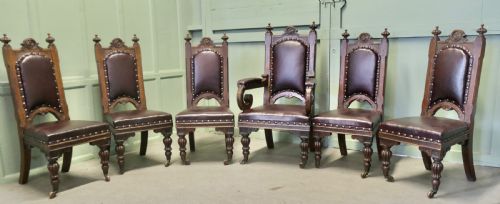
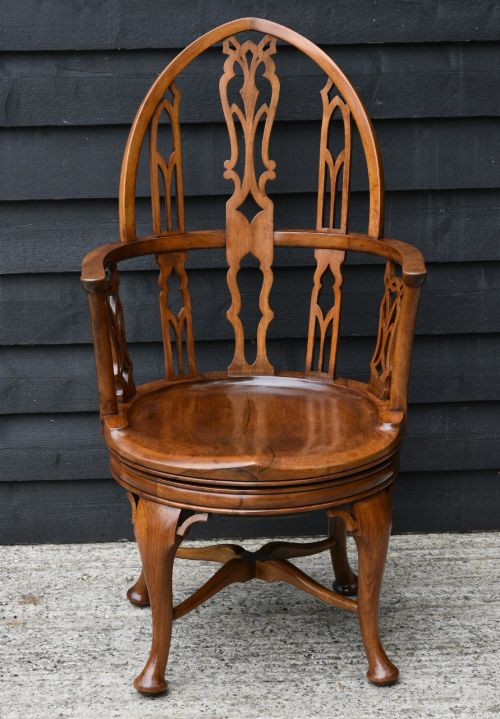
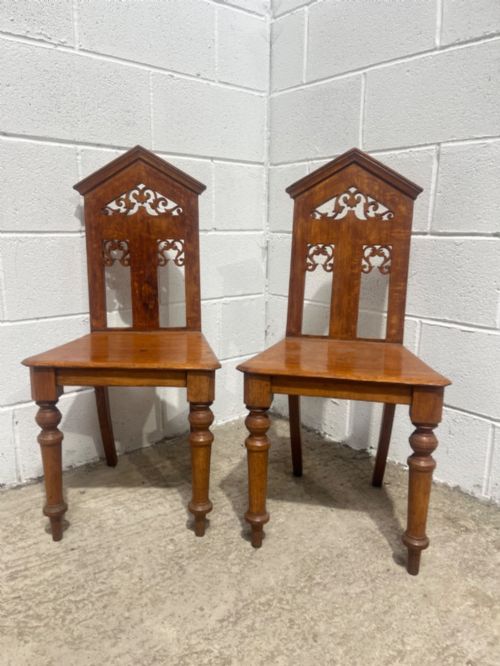
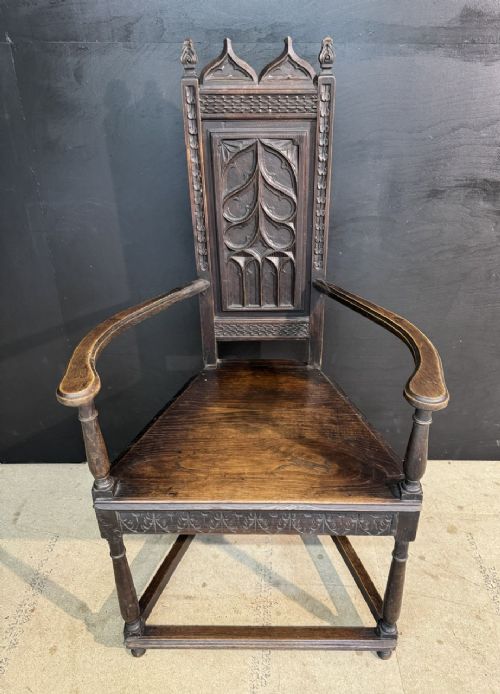
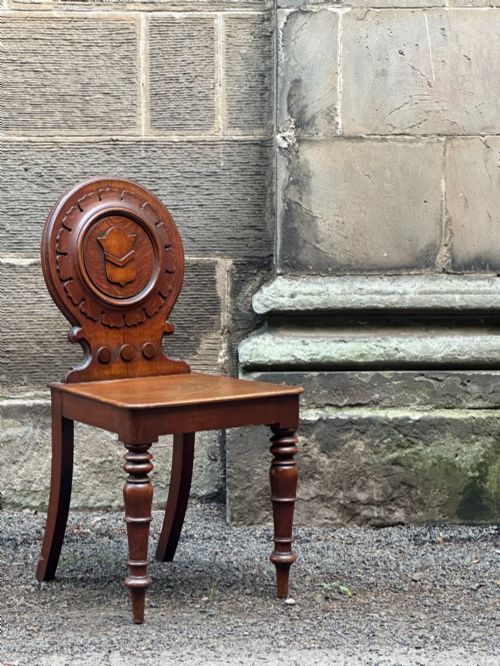
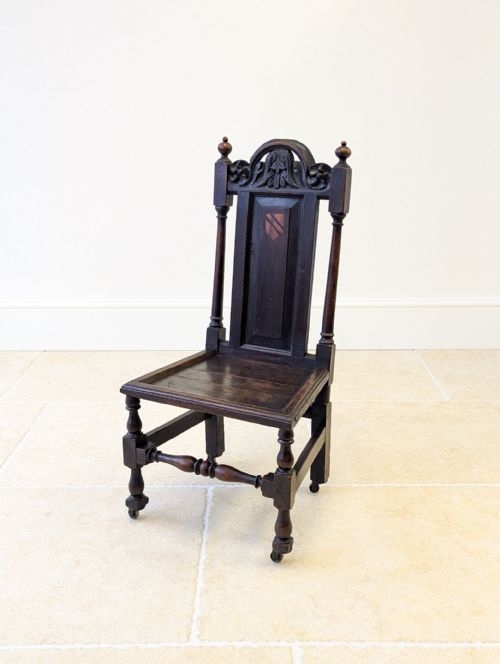
A carved gothic back chair draws on medieval ecclesiastical and architectural forms, translated primarily through nineteenth-century revivals. Buyers seeking this aesthetic will encounter sturdy oak dining seats, hall chairs with heraldic shield backs, and imposing throne chairs bearing pointed arches and tracery.
Most examples found here date from the Victorian era and the broader nineteenth century, executed in regional British workshops and continental centres. Forms range from practical side chairs and elbow chairs to revolving desk chairs and tall chapel seating.
Makers of the period reinterpreted historic precedents with varying degrees of literalness, producing everything from simple vernacular seating to heavily ornamented revival showpieces. The enduring appeal lies in the dramatic silhouette of the pierced backrest and the rich texture of carved timber.
Materials and construction
Oak dominates the selection, valued for its strength and its traditional association with medieval joinery, complemented by darker woods such as walnut and mahogany. Craftsmen utilised solid timber frames joined by mortise and tenon construction, allowing the material to support deep relief carving along the crest rails and splats.
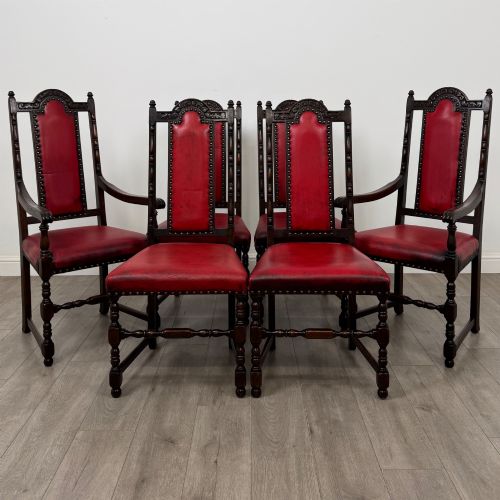
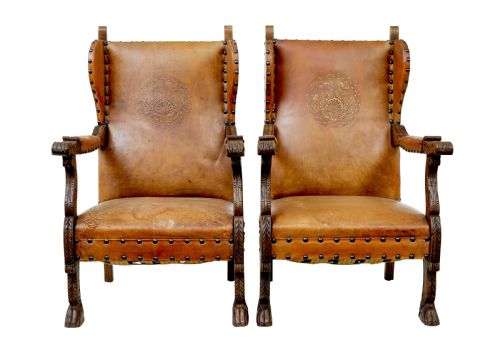
Upholstery materials appear frequently where comfort is required, including embossed leather, tapestry, velvet, and woven textiles. These elements are secured with brass tacks or applied trim, contrasting with the hard linear grain of the surrounding woodwork.
Burgermeister chairs bring municipal German authority directly into the nineteenth-century parlour.
Markers of quality
Quality rests primarily in the depth, crispness, and hand-executed precision of the carved ornament on the backrest. Superior pieces display undercut details and confident symmetry, whereas lesser examples rely on shallow stamping or mechanical routing.
The choice of timber grain and the structural integrity of the frame dictate long-term durability. Chairs that retain their original joins without excessive movement demonstrate superior initial workshop standards.
S&H Jewell·Liberty & Co
The Carved Gothic Back Chair Glossary
- Gothic Revival
- An artistic and architectural movement popular in the nineteenth century that revived medieval forms, pointed arches, and structural motifs. This style heavily influenced domestic furniture design.
- Wainscot chair
- An early form of wooden armchair with a solid panelled back, typically constructed from oak. These pieces often feature heavy framework and carved decoration.
- Tracery
- Architectural ornamentation resembling openwork stone patterns, frequently translated into the wooden splats of chair backs. It defines much of the visual rhythm in gothic seating.
- Splat
- The vertical central strip of wood in the back of a chair. In gothic designs, this component carries the pierced arches and heraldic motifs.
Carved Gothic Back Chair: Frequently Asked Questions
How do I spot a Victorian copy?
Nineteenth-century revival pieces often display machine-cut elements alongside hand carving, whereas medieval originals show the irregularities of pit-sawn timber and hand-pegged joints.
Examining the underside and hidden framing reveals tool marks and timber seasoning consistent with Victorian industrial workshops rather than medieval joinery.
Were these chairs used at dining tables?
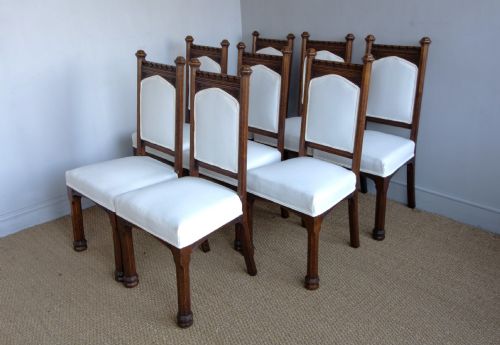
Many examples on this page formed parts of larger dining sets commissioned for substantial country houses and vicarages during the nineteenth century. Sets of four to twelve chairs frequently survive together.
Single pieces were more often utilised as hall chairs or occasional seating in libraries and reception rooms rather than daily dining furniture.
How should I care for old oak?
Solid oak requires stable indoor humidity levels to prevent the timber from splitting or joints from loosening over decades of use. Natural beeswaxes help nourish the surface without building up synthetic residues.
Avoid placing these heavy wooden seats near direct heat sources or in strong sunlight that can fade leather inserts and dry out historic finishes.