






Victorian Gothic Hall Table
When you search for a victorian gothic hall table, you are looking for sturdy, architectural furniture rooted in nineteenth-century design.
Victorian Gothic Hall Table
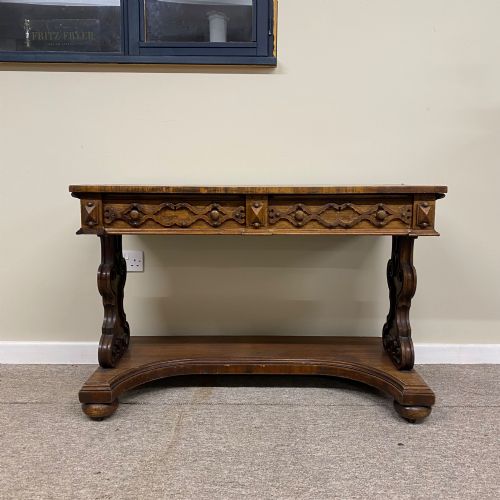
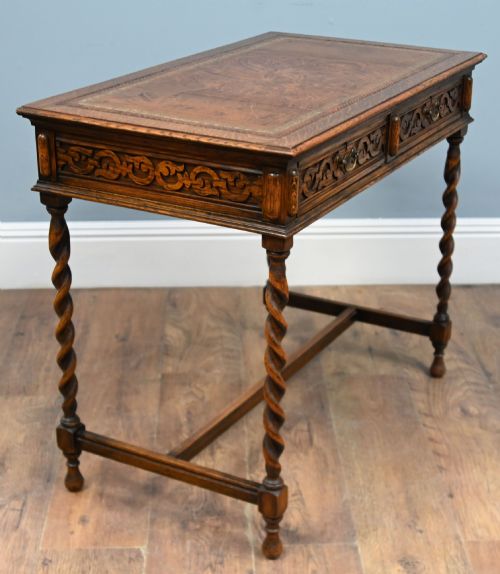
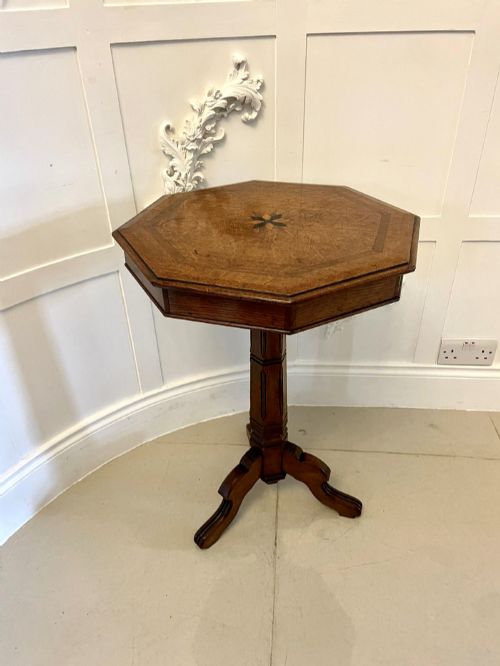
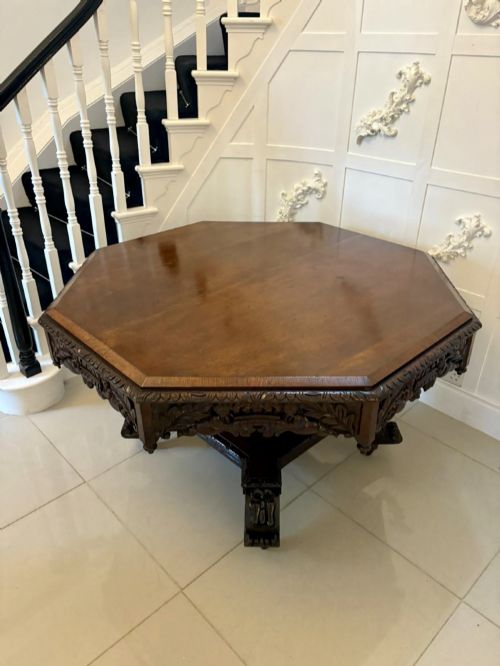
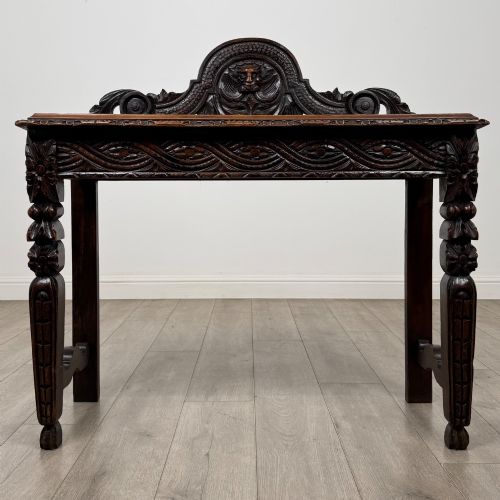
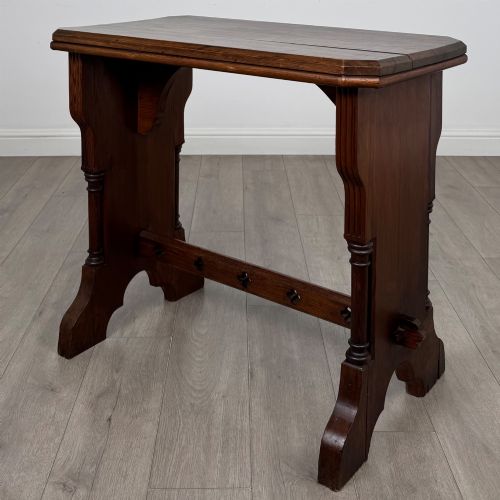
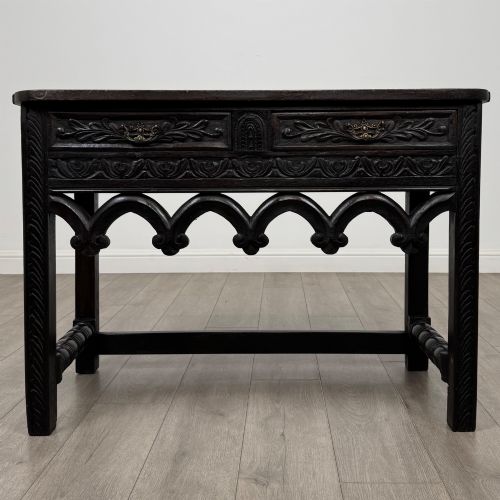
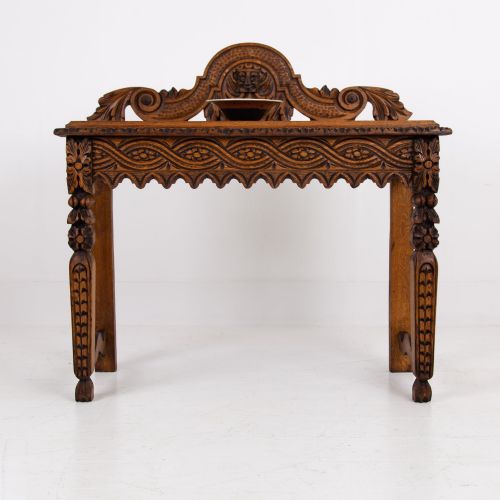
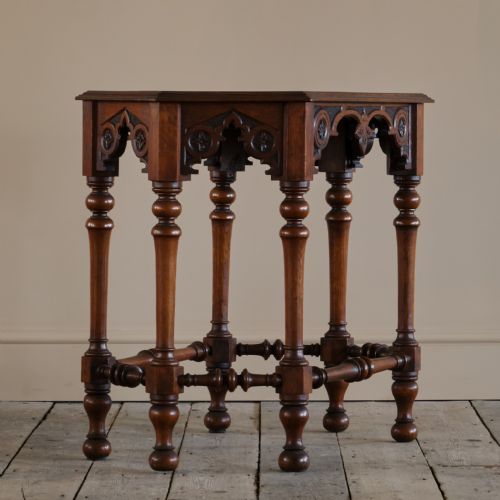
A victorian gothic hall table embodies the heavy timber construction, pointed arches, and deep relief carving popular during the nineteenth century. These furnishings range from narrow console tables designed for tight entryways to heavier centre tables with octagonal tops.
Most examples found in current and archived records date from the Victorian period, frequently showing Gothic Revival or Reformed Gothic styling. They serve practical functions in modern entryways as display surfaces or slim writing desks.
How they were made
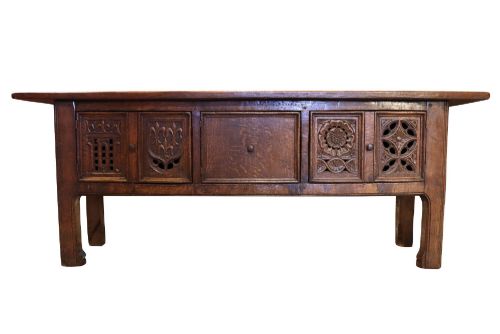
Carpenters relied principally on solid oak, pitch pine, and walnut, often shaping the dense timber with hand tools to achieve sharp chamfers and deep mortise and tenon joints. Oak pieces regularly display intricate linenfold panels, Greenman motifs, or applied geometric mouldings.
Secondary materials like brass hardware, ebonised hardwoods, and tooled leather inserts appear on library and writing variations. Painted and blackened finishes also occur, altering the natural grain of the wood to suit sombre ecclesiastical aesthetics.
Victorian Gothic Hall Table Retail Price Guide 2026
Typical asking prices for victorian gothic hall table among the pieces listed under this phrase on Sellingantiques today, from the lower quarter to the upper quarter. They describe what is for sale here now, not the wider market.
Listings demonstrate that oak dominates the material record for these tables, followed closely by pitch pine and walnut.
What varies in quality
The crispness of the hand-carved ornamentation distinguishes standard production from exceptional examples, particularly where foliate scrolls and figural carvings meet. Timber selection also dictates grade, with quarter-sawn oak and figured pitch pine showing superior grain movement.
Structural integrity relies on original joinery remaining tight despite seasonal humidity shifts. Pieces retaining untouched surfaces, original tooled leather tops, and period brass work hold greater authenticity.
The Victorian Gothic Hall Table Glossary
- Gothic Revival
- An architectural and decorative movement drawing inspiration from medieval forms, featuring pointed arches and heavy massing. It dominated much of nineteenth-century British design.
- Pitch Pine
- A resinous softwood utilised for robust nineteenth-century furniture, prized for its pronounced grain pattern and durability. It withstands heavy daily usage in domestic hallways.
- Refectory
- A long, narrow table style originally intended for communal dining halls, often adapted into sturdy side and serving formats. These tables utilise thick stretcher rails for rigidity.
- Greenman
- A sculptural architectural ornament depicting a human face disgorged from foliage, symbolising rebirth. This motif frequently decorates nineteenth-century carved woodwork.
Victorian Gothic Hall Table: Frequently Asked Questions
What rooms suit a victorian gothic hall table?
These narrow tables function effectively in entrance halls and corridors where floor space is limited. Their architectural woodwork also complements living rooms and studies as display surfaces.
Larger octagonal versions serve well as centre tables in open reception areas. Their heavy timber presence grounds lighter modern interior schemes.
How do I identify a reformed gothic piece?
Reformed Gothic designs emerged in the mid-nineteenth century, favouring geometric incised lines over heavy medieval tracery. These pieces often exhibit structural honesty with visible joinery.
Walnut and oak woods are common in this style, frequently paired with contrasting ebonised highlights. Their silhouettes tend to be cleaner and more restrained than earlier ecclesiastical interpretations.
Were these tables used in churches?
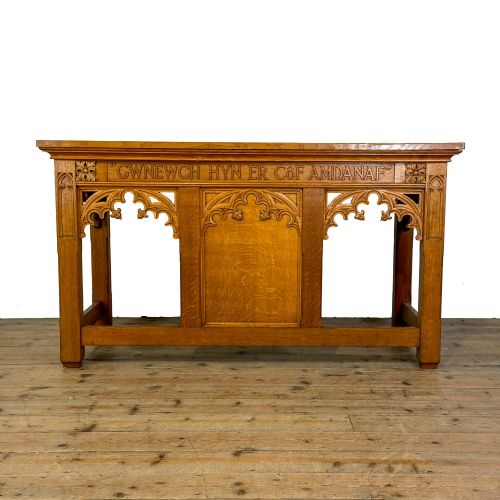
Certain examples originate from ecclesiastical settings, functioning as altar tables, vestry desks, or lecterns. Their design directly mirrors nineteenth-century church architecture.
Domestic variants share the same stylistic vocabulary but adjust proportions for residential hallways. Ecclesiastical forms often feature deeper relief carvings and more severe massing.
How should I care for pitch pine furniture?
Pitch pine requires regular dusting with a dry, soft cloth to prevent grime accumulation in the deep grain. Avoid placing the timber near direct heat sources to prevent shrinkage.
Applying a traditional beeswax polish maintains the sheen of the wood without sealing the pores. Natural oils in the pine will darken gracefully over decades of exposure to light.