
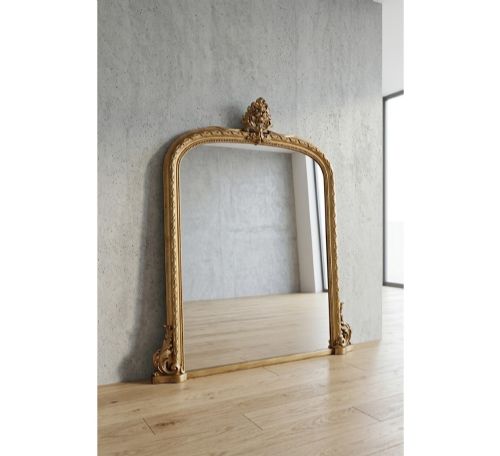
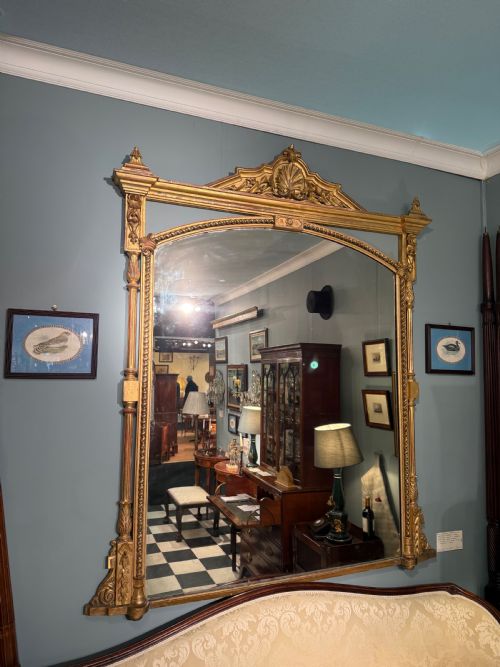
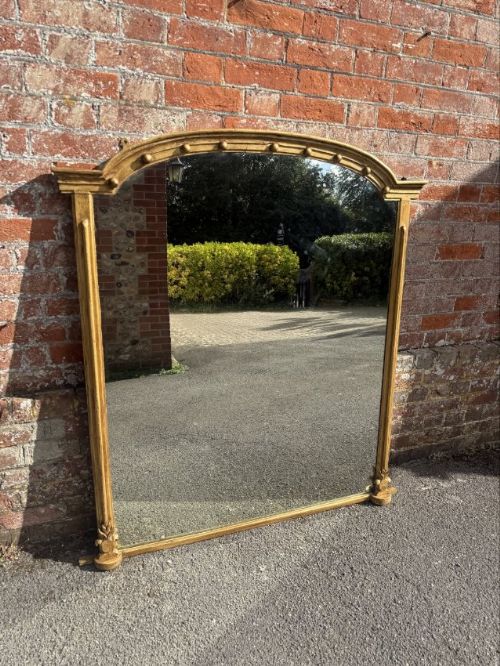
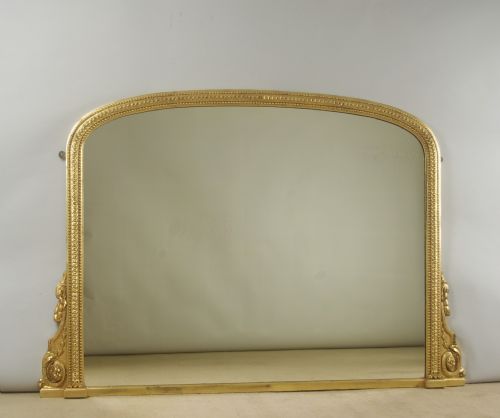
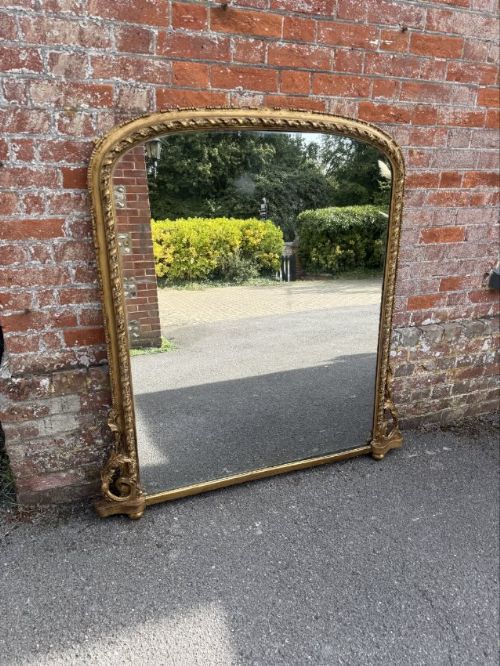
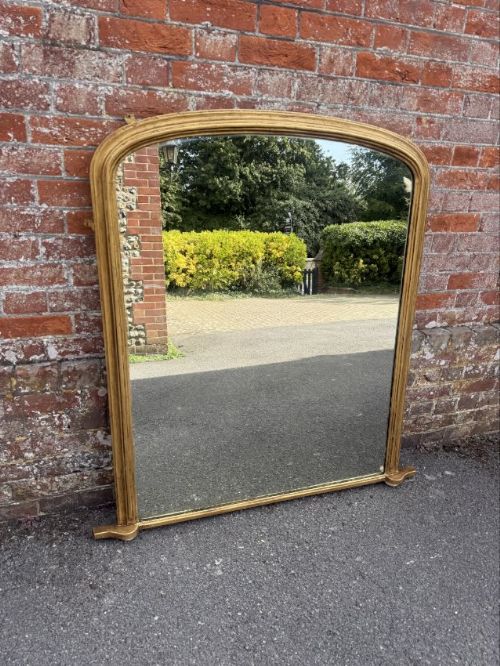
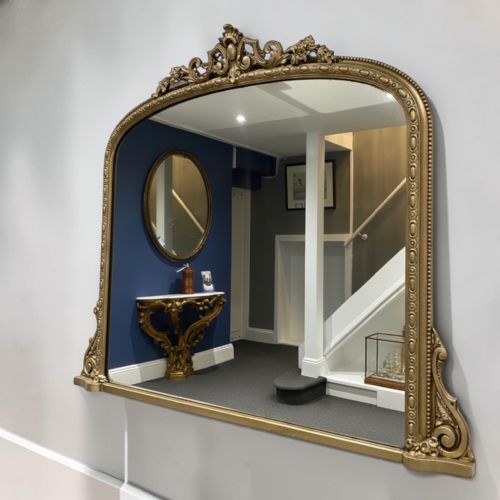
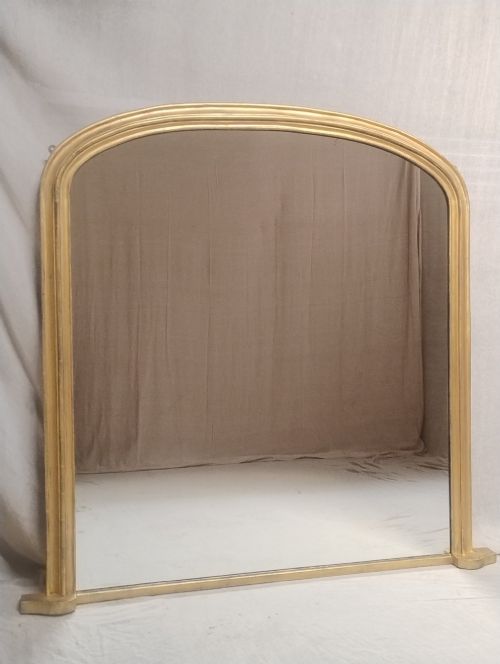
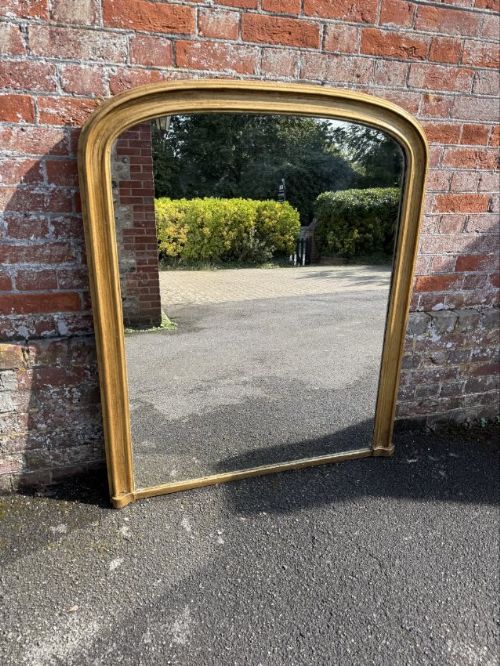


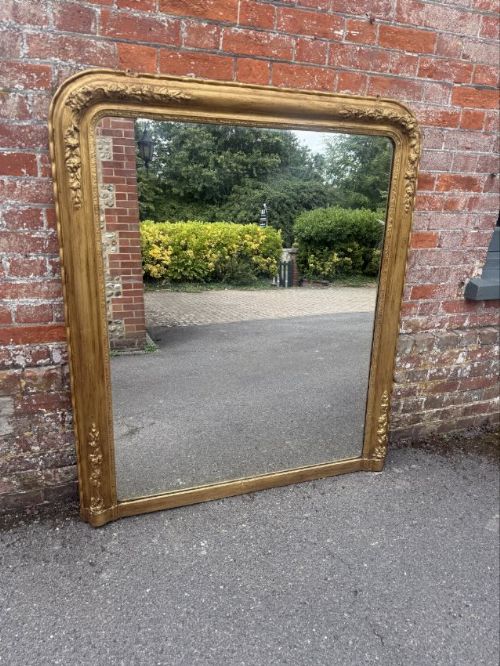
Victorian Gold Arched Mirror
A victorian gold arched mirror brings height and a warm metallic gleam to a room, offering grand proportions designed to reflect light across period interiors.
Victorian Gold Arched Mirror
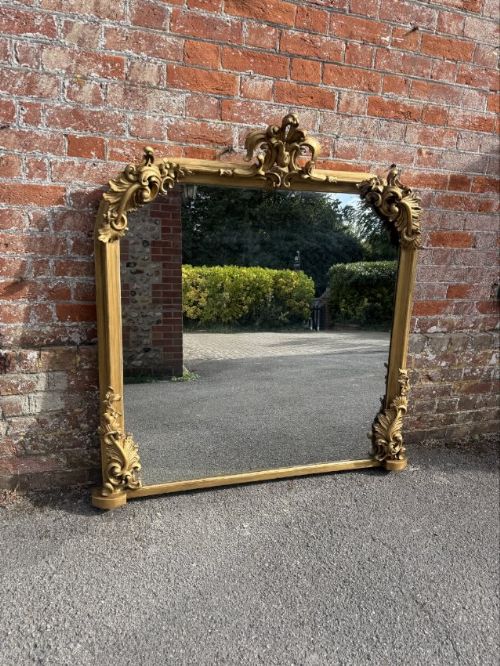
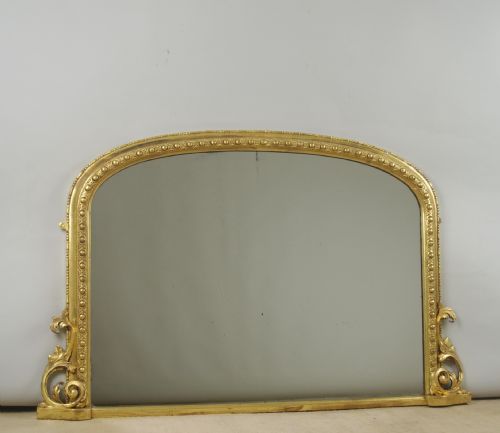
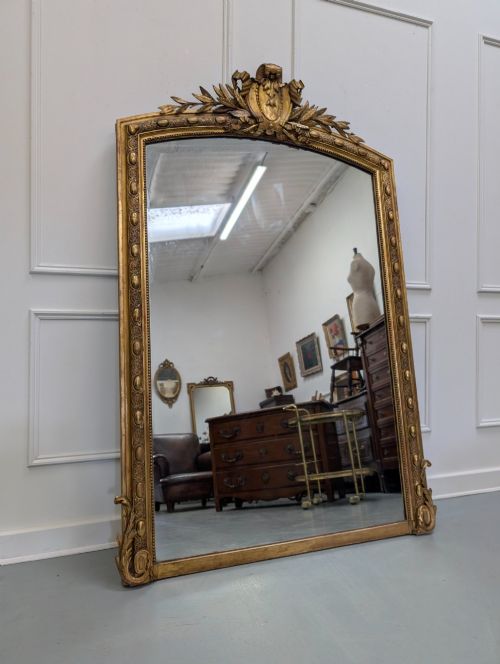
A victorian gold arched mirror typically takes the form of a large overmantel or wall mirror designed to command a chimney breast or principal wall. These pieces date predominantly from the nineteenth century, spanning periods from the early nineteenth century through to eighteen-hundred and ninety, with French and English origins well represented.
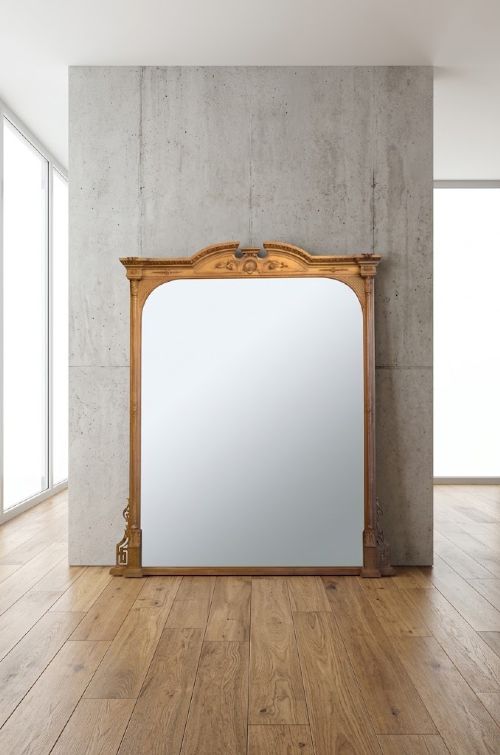
The form is characterised by an arched or shaped top, frequently framed in substantial wood and finished with gilded surfaces. Surviving examples encompass overmantel mirrors and wall mirrors, often built in generous proportions reaching significant heights for domestic reception rooms.
Materials and construction methods
Carved wood and gesso form the structural base for the gilded decoration, providing a receptive surface for intricate mouldings and applied ornamentation. Artisans applied layers of composition and gesso over wood before gilding with gold leaf or applying gold paint.
Surfaces feature decorative details such as ribbed framing, tulip motifs, and rope twist carvings executed by hand. The glass plate is set within the substantial arched frame, occasionally accompanied by original backing boards and traditional fixings.
Some nineteenth-century makers snuck nautical rope twists into drawing-room mirrors, letting sailors bring a touch of the rigging indoors.
Distinctions in quality and execution
The crispness of the carved wood and gesso ornamentation dictates the visual impact of the piece, with sharper, deeply modelled details separating superior examples from simpler ones. The depth and integrity of the original gilding, whether gold leaf or early gesso work, mark the standard of the original workshop.
Proportion and scale play a crucial role, where monumental height and balanced arched lines distinguish statement mirrors from standard domestic furnishings. The condition of the glass and the retention of original framing elements further establish the standing of an individual mirror.
The Victorian Gold Arched Mirror Glossary
- Gesso
- A plaster-like mixture applied to wood frames to create a smooth surface for gilding and relief carving. It is built up in layers before being shaped and painted or gilded.
- Overmantel mirror
- A large mirror specifically designed to hang on the wall directly above a fireplace mantelpiece. These pieces often feature wide horizontal proportions or considerable height to fill the chimney breast space.
- Giltwood
- Timber that has been coated with gold leaf or gold paint to give the appearance of solid gold. It provides a reflective, warm metallic finish characteristic of nineteenth-century decorative arts.
- Composition
- A moulded material made from whiting, linseed oil, resin, and glue, pressed into moulds to create decorative ornaments on frames. It allowed makers to produce intricate relief work more efficiently than carving directly into wood.
- Pier mirror
- A tall mirror designed to hang on the wall space between two windows, known as the pier. These mirrors often share stylistic elements with large overmantels of the same era.
Victorian Gold Arched Mirror: Frequently Asked Questions
Where should an overmantel mirror be hung?
These large mirrors are traditionally placed on the chimney breast directly above a fireplace mantelpiece, where their arched shape draws the eye upward and anchors the room's proportions.
They also function effectively as floor-standing leaner mirrors against principal walls in high-ceilinged reception rooms.
Were these mirrors made in France or England?
Both origins appear frequently among nineteenth-century examples, with distinct regional stylistic traits such as French Rococo Revival curves or more restrained English architectural lines.
French pieces often display exuberant scrolling gesso work, whilst English versions frequently utilise robust ribbed or rope-twist wooden frames.
How can I tell the period of a mirror?
Dating relies on examining the construction of the wooden frame, the composition of the gesso, and the backboards used to secure the glass plate.
Nineteenth-century pieces exhibit characteristic hand-applied gilding techniques and structural joinery consistent with workshops from eighteen-fifty to nineteen-hundred.