
Victorian Gold Albert Chain
A victorian gold albert chain brings the weight and craftsmanship of nineteenth-century pocket watch wear into daily jewellery use.
Victorian Gold Albert Chain
When a collector searches for a victorian gold albert chain, they encounter functional nineteenth-century watch security that now serves as substantial neckwear or wrist adornment. These pieces originate primarily from the Victorian and Edwardian periods, stretching into the early decades of the twentieth century.
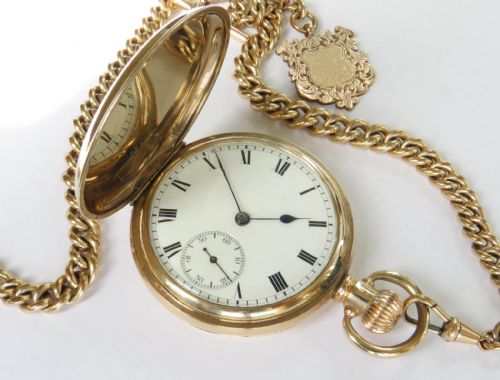
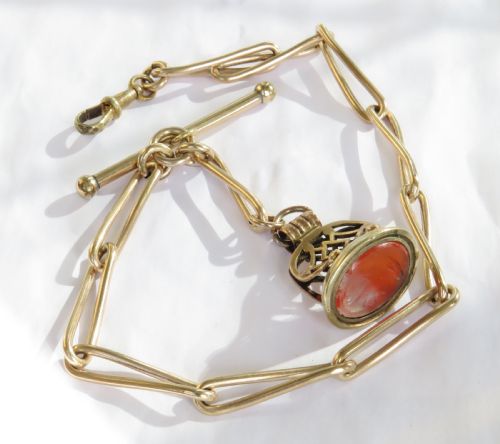
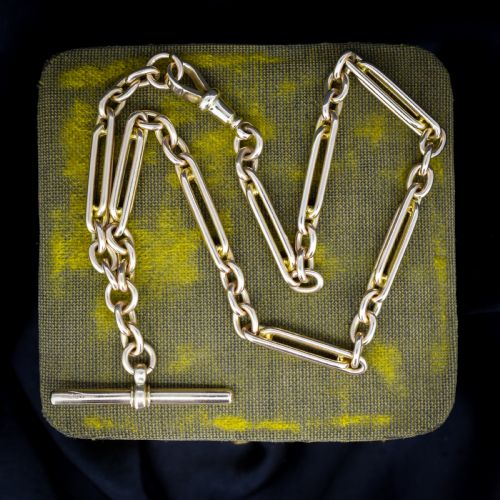
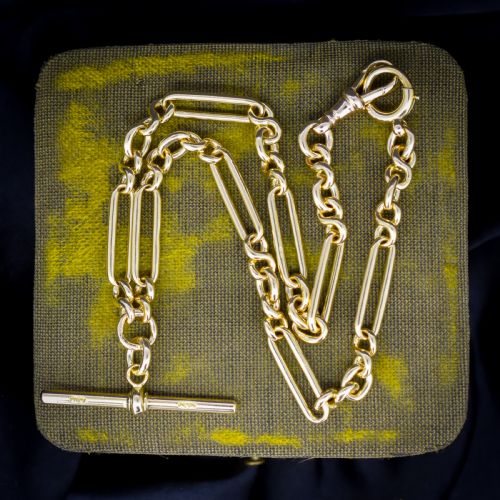
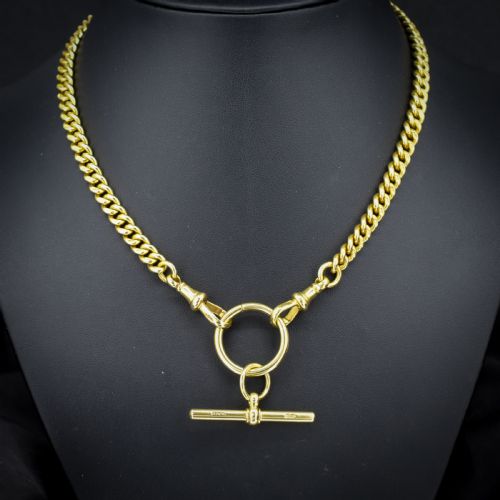
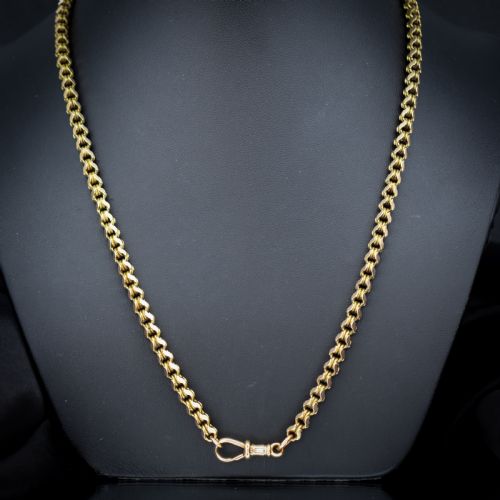
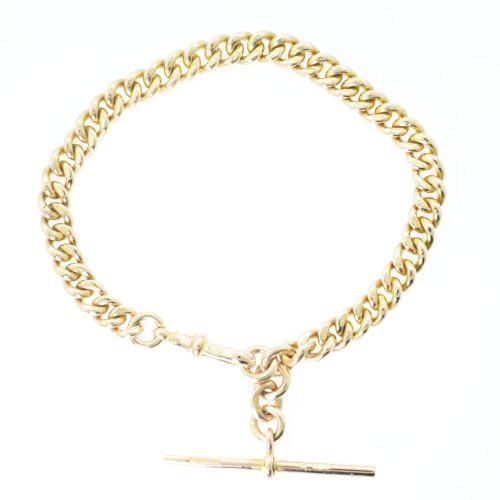
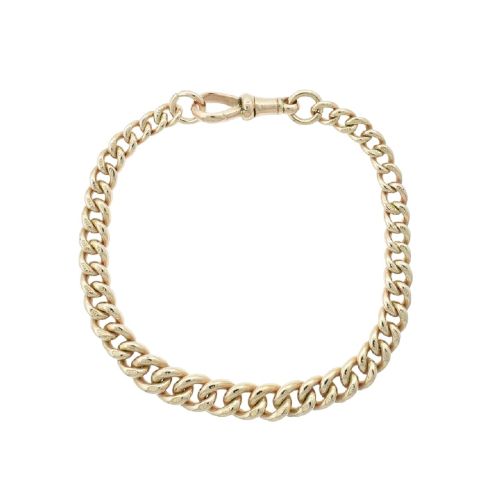
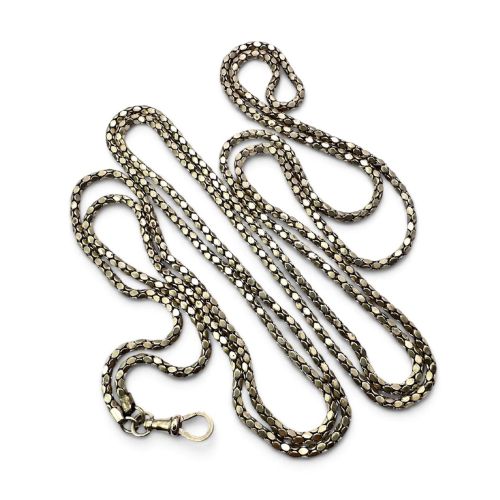
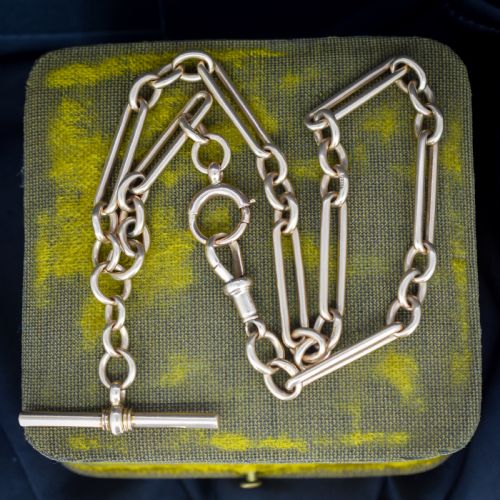
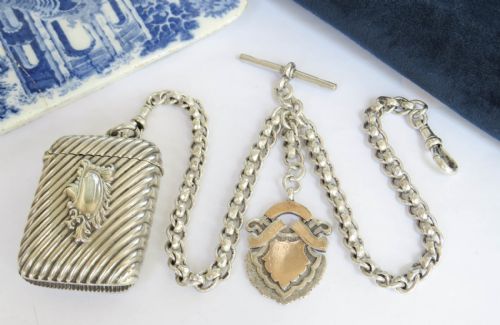
The most common form on this page is the solid or rolled gold link chain, frequently equipped with an original swivel dog clip at one end and a transverse T-bar at the other. Makers constructed these items in single and double configurations designed to span a waistcoat buttonhole or wrap multiple times around the wrist.
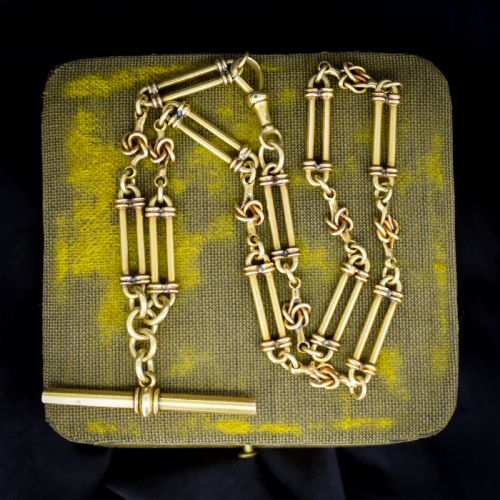
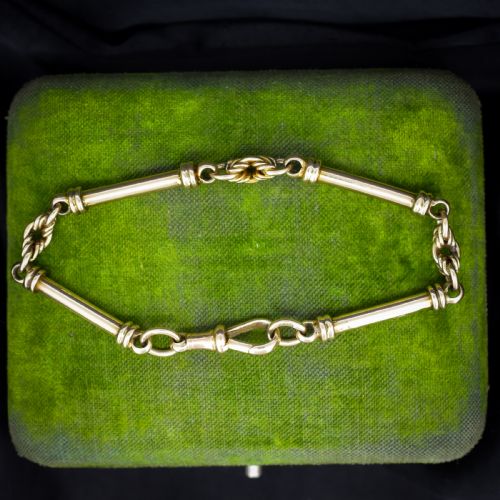
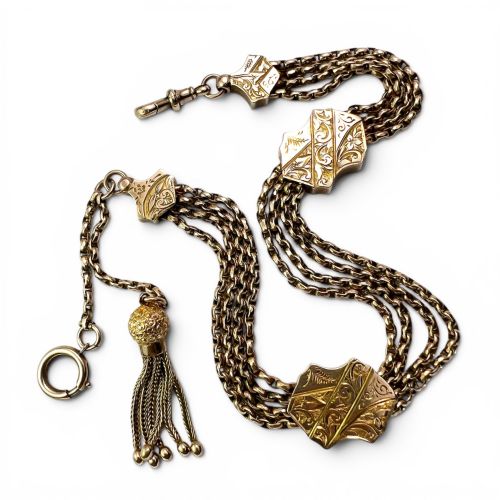
Beyond standard curb and oval links, listings showcase decorative variations including trombone, fetter, paperclip, and love knot patterns. Lengths vary widely from short bracelet adaptations to long guard chains intended to hang deep down the torso.
Materials and construction
Goldsmiths utilised varying purities of yellow and rose gold, ranging from nine carat and fifteen carat up to eighteen carat, alongside rolled gold alternatives over a base metal core. Birmingham assay offices and similar institutions stamped many of these components with hallmarks to verify the metal standard.
Individual links were stamped, drawn, or hand-assembled into patterned sequences like the alternating long and short bars of the trombone link or the interlocking loops of curb chains. Artisans integrated functional closures such as spring-loaded dog clips, bolt rings, and swivel clasps to secure pocket watches and pendants.
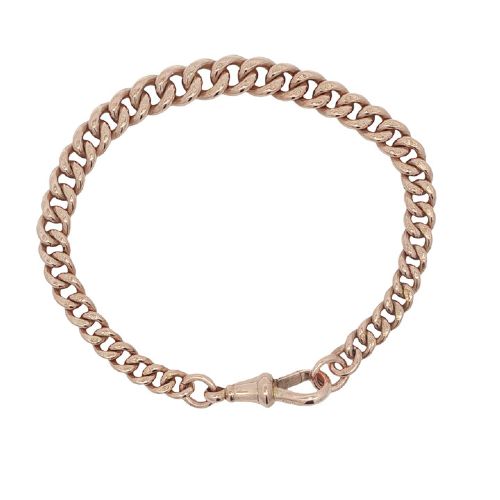
Listings feature nine carat rose gold, yellow gold, and rolled gold configurations alongside nineteenth-century hallmarks.
Factors of distinction
The distinction between ordinary utility pieces and exceptional examples rests upon overall mass, link complexity, and the survival of original components. Heavier chains containing denser concentrations of gold command greater attention from those seeking substantial wear.
The presence of matching hallmarks, intact sliding T-bars, and fully functioning swivel dog clips preserves the integrity of the piece. Elaborate link geometries, such as multi-part fancy constructions and integrated fob attachments, separate standard production items from master-level bench work.
W H Wilmot
The Victorian Gold Albert Chain Glossary
- Albert chain
- A pocket watch chain named after Prince Albert, designed to secure a timepiece through a waistcoat buttonhole using a T-bar.
- Dog clip
- A spring-loaded swivel clasp attached to the end of a watch chain for fastening to a pocket watch or fob.
- T-bar
- A short transverse metal bar attached to the centre of an albert chain that slotted through a waistcoat buttonhole.
- Trombone link
- A watch chain link pattern featuring alternating long rectangular links and shorter circular or oval connecting links.
- Rolled gold
- A manufacturing technique where a thin layer of gold is mechanically bonded to a base metal core for durability and affordability.
Victorian Gold Albert Chain: Frequently Asked Questions
How do I wear a pocket watch chain as a necklace?
Many collectors remove the T-bar from the buttonhole function and fasten the dog clip directly to a jump ring or the opposite end of the chain. This creates a versatile choker or necklace length that showcases the patterned links.
Heavier specimens sit flat against the collarbone, while longer iterations wrap multiple times around the neck or wrist to form layered bracelets.
What does rolled gold mean on these chains?
Rolled gold indicates a thick mechanical fusion of gold over a base metal core, differing from modern electroplating by offering a much deeper layer of precious metal. This technique provided the visual richness of solid gold at a more accessible cost during the nineteenth and early twentieth centuries.
Items constructed this way retain their warm hue across decades of handling.
How do I identify the gold purity on an antique chain?
Goldsmiths and assay offices stamped specific numerical marks such as nine carat, fifteen carat, or eighteen carat onto individual links, dog clips, or T-bars. These tiny hallmarks often appear alongside maker stamps and assay symbols indicating the town of testing.
Unmarked pieces frequently test as rolled gold or require professional acid testing to determine the precise alloy ratio.