
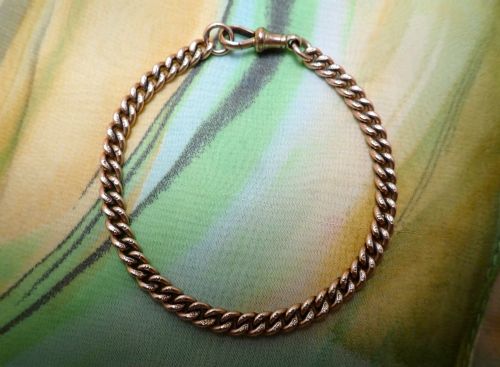
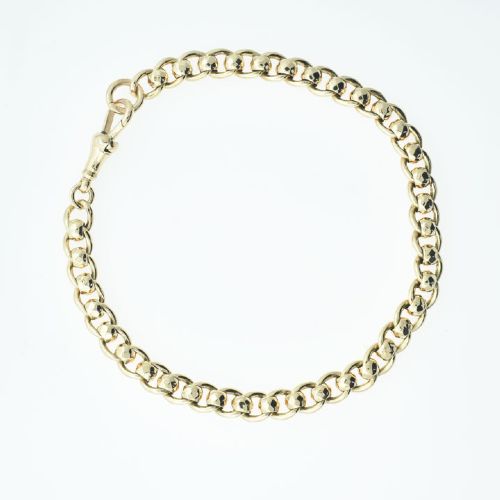
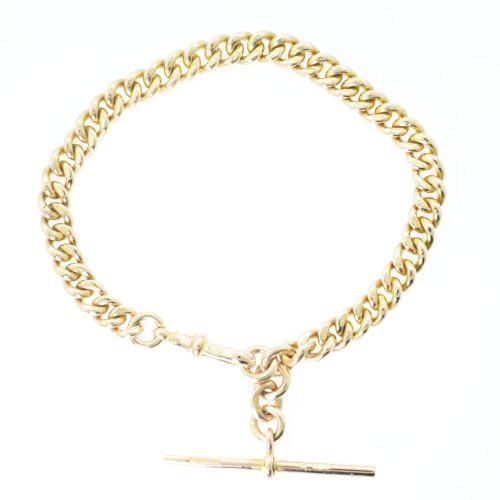
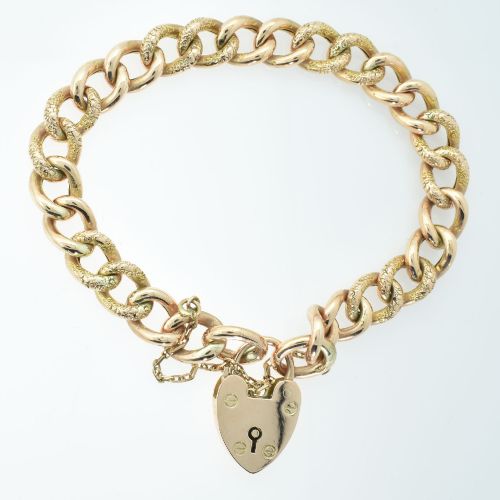




Solid Rose Gold Chain
A solid rose gold chain brings a warm, coppery lustre to the wrist or neck, prized for its durability and historic weight.
Solid Rose Gold Chain
A solid rose gold chain appears primarily in nineteenth-century and early twentieth-century forms, encompassing Victorian and Edwardian periods. Buyers searching for a solid rose gold chain frequently encounter pocket watch chains, Albert chains, and bracelets adapted from horological origins.
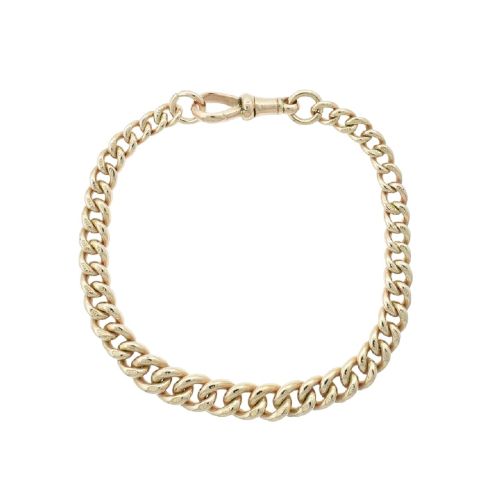
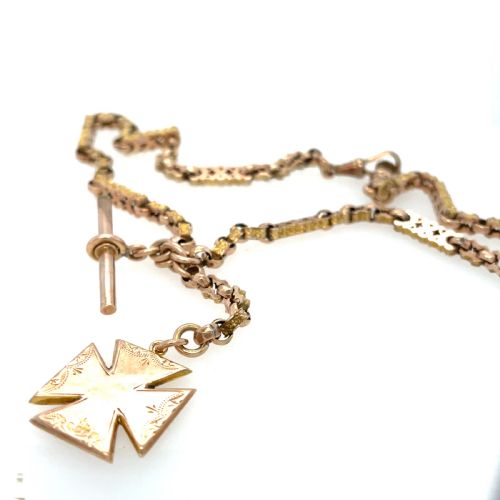
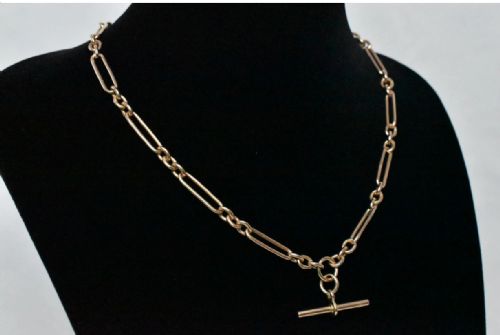
The objects on this page span several specific configurations, notably curb link bracelets, rollerball bracelets, and longguard chains. Many retain original components such as T-bars, dog clips, fobs, and padlocks, preserving their complete historical function.
Originating largely from the nineteenth century through to around 1910, these pieces reflect the jewellery and watch accessory traditions of the era. They bridge the gap between functional timekeeping hardware and decorative personal ornaments.
How they were made
These chains utilise 9ct rose gold and standard gold alloys shaped into robust links such as curb, rollerball, and trombone patterns. Metalsmiths constructed each link securely to bear the daily weight of pocket watches and fobs.
Surface ornamentation involved hand engraving on links and components, alongside fitted clasps like barrel clasps, dog clips, and padlocks. Makers applied traditional stamping and soldering methods to form integrated elements like T-bars and tags.
Some chains carry Birmingham assay marks, proving that a nineteenth-century pocket watch chain could easily moonlight as a very assertive modern bracelet.
What varies in quality
Quality in a solid rose gold chain rests upon the substance of the links and the crispness of any hand engraving. Heavier grams and well-preserved geometric patterns distinguish superior examples from lighter, worn alternatives.
The survival of original hardware, including matching T-bars, dog clips, and fobs, elevates a piece. Integrity of construction across every single link ensures the chain maintains its historical utility and structural soundness.
The Solid Rose Gold Chain Glossary
- T-Bar
- A small horizontal metal bar attached to a chain by a short drop, originally used to secure a pocket watch through a buttonhole. It remains a hallmark of antique watch chains.
- Dog clip
- A spring-loaded swivel fastening used on watch chains and bracelets to attach fobs or secure the chain ends. This mechanism allows the attached item to rotate freely without twisting the links.
- Curb link
- A chain design composed of interlocking links that have been twisted to lie flat. This pattern offers a smooth drape against the skin and considerable strength.
- Longguard
- A long nineteenth-century chain worn around the neck, often supporting a watch or lorgnette tucked into a waistband. These pieces provide substantial length and decorative link variation.
Solid Rose Gold Chain: Frequently Asked Questions
How do I wear an antique Albert chain as a bracelet?
Many watch chains and Albert chains arrive sized appropriately to wrap multiple times around the wrist. The integrated dog clips and padlocks fasten directly onto the links for a secure fit.
Securing the T-bar through a neighbouring link creates an additional decorative element while keeping the bracelet firmly in place.
What is the difference between a curb link and a trombone link?
A curb link consists of uniform, slightly twisted links that lie flat and close together. This creates a dense, fluid band favoured for heavy bracelets.
A trombone link alternates small round connectors with elongated rectangular bars, borrowing its shape from the musical instrument. This pattern offers an open, architectural appearance.
How can I tell a Victorian chain from an Edwardian one?
Victorian pieces often display heavier proportions, robust padlock clasps, and deeper, more ornate hand engraving. They date from the nineteenth century up to nineteen hundred.
Edwardian examples tend toward lighter, airier constructions typical of the decade up to nineteen ten. Rollerball links and refined proportions frequently characterise this later period.
What are T-bars and fobs used for today?
Original T-bars and fobs serve purely decorative functions on contemporary bracelets and necklaces. They dangle from the links as historical focal points that signal the piece's ancestry.
Leaving these components attached preserves the complete integrity of the antique hardware without requiring a pocket watch.