




Victorian Glazed Display Table
A victorian glazed display table brings the quiet theatre of a private museum directly into your sitting room.
Victorian Glazed Display Table
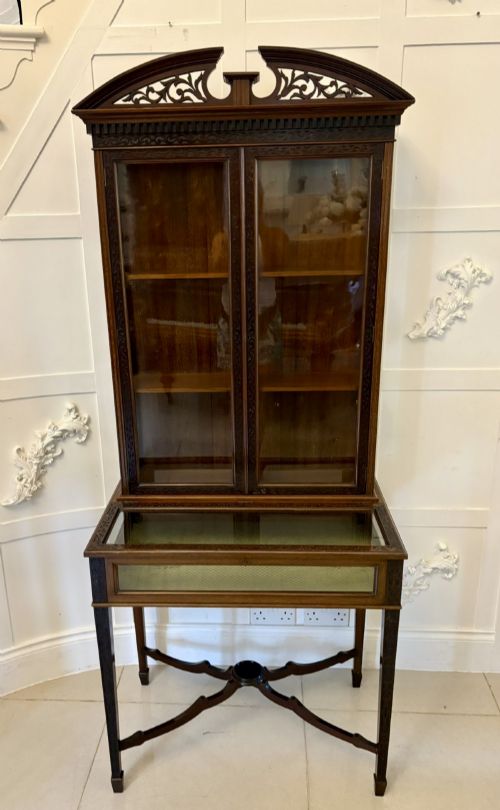
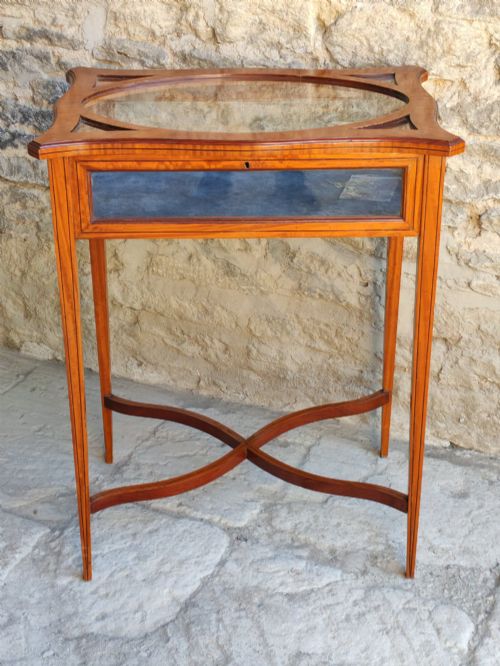
A victorian glazed display table acts as a shallow vitrine on legs, designed to hold and exhibit pocket watches, medals, and small curiosities beneath a glass lid.
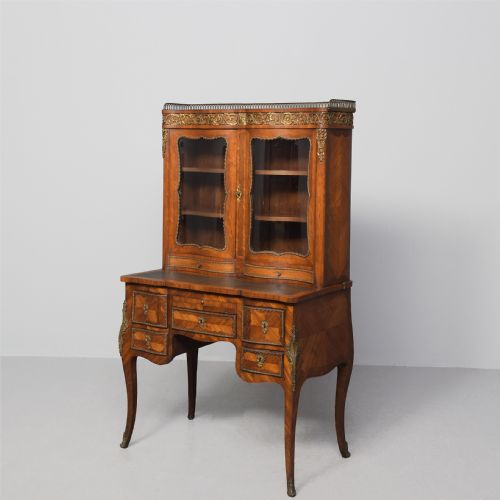
Most examples encountered here take the form of bijouterie tables or glazed cabinets in mahogany, walnut, and satinwood, dating predominantly from the nineteenth century.
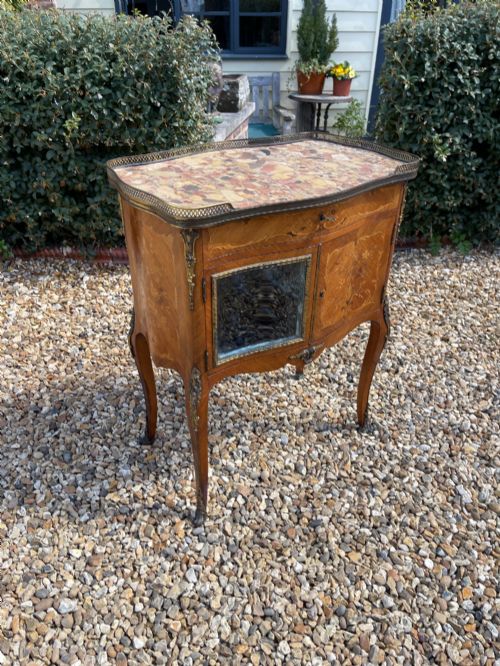
Makers of the period often drew on French revival styles, incorporating curved ormolu mounts and marquetry inlay to frame the items placed inside.
What varies in quality
The refinement of the timber selection and the crispness of any inlaid marquetry set the finer pieces apart from standard workshop production.
Quality shows in the weight and detail of the cast brass or ormolu mounts, alongside the precision with which the glazed lid fits its rebate.
Internal elements, such as custom fabric linings and well-fitted hinged tops, distinguish standard utility furniture from exceptional cabinet work.
Victorian Glazed Display Table Retail Price Guide 2026
Typical asking prices for victorian glazed display table among the pieces listed under this phrase on Sellingantiques today, from the lower quarter to the upper quarter. They describe what is for sale here now, not the wider market.
Listings feature woods including mahogany, walnut, satinwood, and kingwood, combined with glass, brass, and velvet.
The Victorian Glazed Display Table Glossary
- Bijouterie table
- A small glazed table designed specifically for displaying jewellery, medals, and small collectors' items. These pieces typically feature a hinged glass top and a lined interior.
- Vitrine
- A glass-panelled cabinet or table used for exhibiting objects of curiosity. The term derives from the French word for glass.
- Ormolu
- Gilded bronze mounts applied to furniture for decoration. This technique was frequently utilised in French revival pieces of the nineteenth century.
- Marquetry
- Decorative veneer work arranged in pictorial or geometric patterns on the surface of furniture. Cabinet makers used contrasting timbers to achieve this effect.
- Satinwood
- A pale, hard timber with a natural sheen, often used for banding and inlay work on dark woods like mahogany.
Victorian Glazed Display Table: Frequently Asked Questions
What did people keep in a bijouterie table?
These tables were designed to hold collections of small personal treasures, including pocket watches, portrait miniatures, fans, and medals.
Owners curated these miniature exhibitions to spark conversation among guests in drawing rooms and parlours.
How do I clean the fabric lining?
Original velvet or satin linings require gentle surface dusting with a soft brush rather than liquid cleaners.
Many period pieces retain their faded textile interiors, which collectors prefer to preserve in an authentic state.
Are these tables sturdy enough for daily use?
While structurally sound, the slender legs and glazed tops mean they suit static display better than heavy practical service.
Placing them away from main household thoroughfares protects the delicate veneer and glass panels from accidental knocks.
How do I tell an 1880 table from a later copy?
Examine the timber shrinkage, the hand-cut joints in the interior framing, and the composition of the brass hardware.
Period pieces display subtle irregularities in construction that distinguish them from twentieth-century reproductions.