


Glazed Collector Display Table
A glazed collector display table turns the simple act of storing small treasures into a daily pleasure.
Glazed Collector Display Table
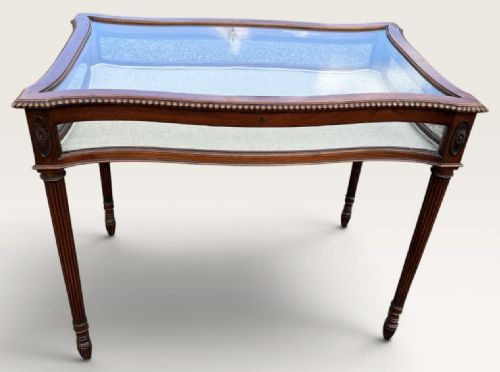
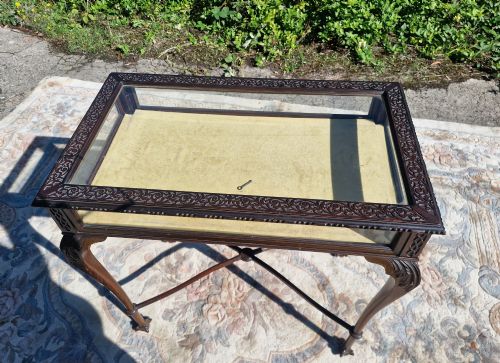
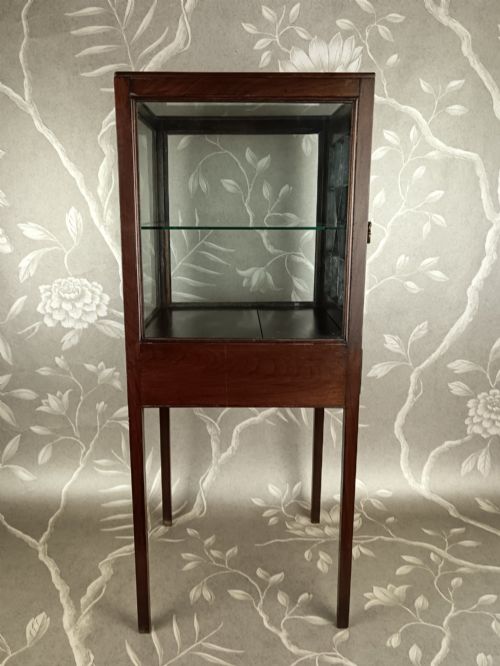
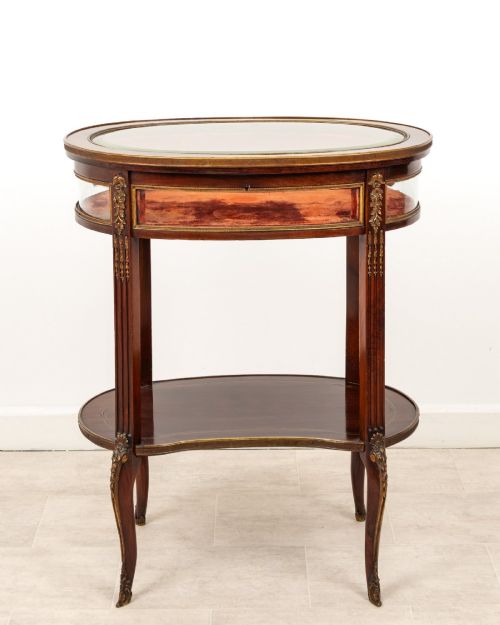
A glazed collector display table provides a glass-topped surface designed specifically to show off small items, jewellery and curiosities while keeping them protected from dust. When searching for a glazed collector display table, buyers encounter a variety of forms ranging from Edwardian inlaid mahogany pieces to French revival bijouterie tables with curved glass.
The selection on this page draws heavily from the Edwardian and Victorian eras, alongside Georgian pieces and examples from the nineteenth century. These tables frequently appear as bijouterie tables or vitrines, often standing on slender legs with glazed lids that lift or slide to reveal lined interiors.
How they were made
Cabinet makers constructed these tables using timbers such as mahogany, satinwood, kingwood, burr walnut and yew wood, often applying delicate marquetry or contrasting veneers to the surfaces. Interiors were typically lined with fabric such as velvet to provide a soft resting place for delicate artefacts and jewellery.
Structural refinement relied on cast brass fittings, ormolu mounts and glazed tops fitted securely into wooden frames. Joinery methods varied from straightforward rectangular boxes to serpentine and heart-shaped frames requiring precise woodworking skills.
Materials seen in these listings include glass, mahogany, brass, fabric, velvet, ormolu, satinwood and kingwood.
What varies in quality
The standard of a glazed collector display table depends on the choice of timber veneer and the crispness of any inlaid marquetry work. Finer examples display meticulous attention to detail in their brass or ormolu mounts and feature well-balanced proportions across the legs and frame.
Interior finish also marks the difference between basic utilitarian cabinets and superior pieces built for wealthy homes. Original fabric linings, smooth hinge mechanisms and carefully curved glass indicate a higher grade of craftsmanship.
The Glazed Collector Display Table Glossary
- Bijouterie table
- A small display table with a glass top and sides, originally intended for holding small trinkets, jewellery and curiosities. These pieces often feature hinged lids.
- Ormolu
- Gilded bronze ornamentation applied to furniture, popular in French revival styles. It adds decorative contrast to timber frames.
- Marquetry
- Decorative woodwork where pieces of veneer are fitted into a design on the surface of the furniture. It appears frequently on Edwardian and Victorian tables.
- Vitrine
- A glass-fronted or glass-topped cabinet used for displaying fine objects. The term covers both table cabinets and larger standing display furniture.
- Veneer
- A thin layer of finer wood applied over a base timber to provide an attractive exterior finish. Common examples include mahogany, satinwood and kingwood.
Glazed Collector Display Table: Frequently Asked Questions
What fits inside a display table?
These tables suit small, flat or low-profile items that benefit from being viewed from above. Common contents include pocket watches, medals, coins, rings and small trinkets.
The fabric-lined interior keeps these delicate objects from sliding around when the room is busy. Deeper cabinets can accommodate slightly taller ornaments, while shallow tables remain best for jewellery and paper collections.
How do I clean the glass top?
Cleaning requires mild glass cleaner applied to a soft cloth rather than directly onto the surface. Spraying liquid directly risks seeping into the wooden frame or fabric lining.
Wiping gently around brass or ormolu mounts prevents moisture from sitting in the crevices of the metalwork. A dry microfiber cloth finishes the surface without leaving streaks.
Where should I place a display table?
Placing the table away from direct sunlight protects both the timber finish and the objects displayed inside from fading. Living rooms, hallways and studies provide ideal environments where the glass top can catch ambient light.
Keeping the table in a stable indoor climate also prevents the timber from warping and protects vulnerable fabric linings. Clearance around the legs ensures the piece remains a stable focal point in the room.
How do I identify an Edwardian piece?
Edwardian display tables frequently feature light mahogany framing with subtle satinwood inlay or Sheraton style motifs. The legs tend to be slender and straight, often tapering gently toward the floor.
Construction from this period commonly reflects mass manufacturing improvements alongside traditional hand finishing. Subtle differences in the stringing and interior velvet point toward workshops active in the early twentieth century.