




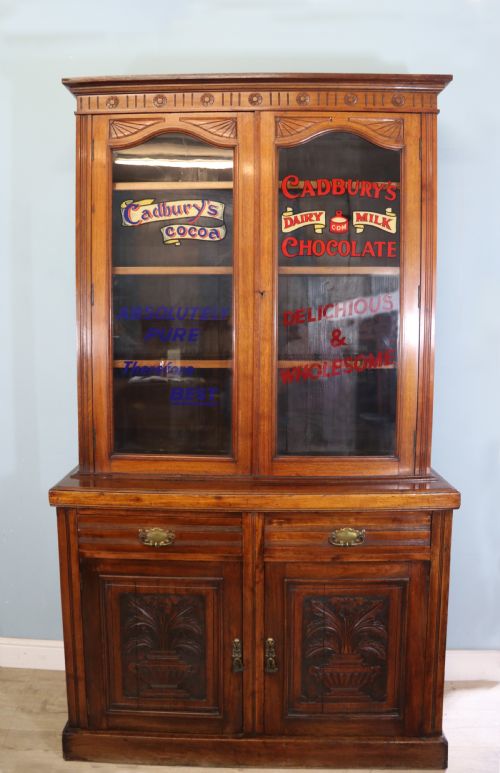


Victorian Glazed Counter Cabinet
A victorian glazed counter cabinet stands ready to elevate any retail space or home interior with period charm.
Victorian Glazed Counter Cabinet
A victorian glazed counter cabinet is primarily a shop fitting designed to showcase small wares upon a retail counter, though examples extend into Edwardian and later commercial epochs. These pieces range from simple mahogany and oak counter-top boxes to substantial glazed vitrines intended for tea, chocolate, or pharmaceutical goods.
The form frequently incorporates glass panels for visibility alongside timber frames made of mahogany, oak, walnut, or cedar. Many pieces carry period advertising or shop names relating to famous confectioners and chemists, reflecting their original commercial purpose.
Materials and construction
Makers utilised dense hardwoods such as mahogany and oak to construct sturdy frames capable of supporting heavy glass panels and frequent daily interaction. Brass hardware, including hinges and handles, provides structural reinforcement and functional closure.
Internal surfaces occasionally feature mirrored backs to reflect light through the display area, while specialised touches like gold leaf, velvet linings, or sign-written decoration enhanced the commercial appeal of the goods within.
Victorian Glazed Counter Cabinet Retail Price Guide 2026
Typical asking prices for victorian glazed counter cabinet among the pieces listed under this phrase on Sellingantiques today, from the lower quarter to the upper quarter. They describe what is for sale here now, not the wider market.
Some cabinets still whisper of cocoa and cubes long after the last sweet was sold from the counter.
Judging the standard
The grade of a piece rests upon the crispness of its timber joinery and the integrity of its original glazing, with finer examples displaying superior timber selection and refined moulding details. Original advertising lettering and intact mirrored interiors command greater regard than altered or plain configurations.
Commercial provenance significantly influences the character of a cabinet, as documented association with established confectioners or chemists elevates the historical interest of the item far above generic shop fittings.
Kemps Pharmacy
The Victorian Glazed Counter Cabinet Glossary
- Bow front
- A convex curved cabinet front that projects outward in a smooth arc. This shape provides wider internal angles for viewing displayed merchandise.
- Gold leaf
- Thinly beaten gold applied to wooden surfaces for decorative ornamentation. It appears on select commercial fittings to highlight lettering or mouldings.
- Collector's cabinet
- A specialised storage piece fitted with multiple internal drawers or shelves for organising small specimens. These items often originate from the nineteenth century.
Victorian Glazed Counter Cabinet: Frequently Asked Questions
What were counter cabinets used for?
These cabinets sat upon shop counters to display small, valuable items such as tea, chocolate, and pharmaceutical goods directly to customers.
The glass enclosure protected merchandise from dust and handling while keeping stock visible within arms reach of the shopkeeper.
How do I date a glass counter cabinet?
Dating relies on timber types, construction methods, and period characteristics seen across Victorian and Edwardian commercial joinery.
Original sign-written advertising or branded glass panels also offer reliable clues to the exact decade of manufacture.
Can I use these cabinets in a modern home?
These pieces integrate well into contemporary domestic interiors as display surfaces for collections, jewellery, or kitchenware.
Their compact proportions allow them to sit comfortably on existing sideboards or tables without dominating a room.
What woods are typical for these cabinets?
Makers predominantly utilised durable hardwoods like mahogany and oak to withstand the demands of bustling Victorian retail environments.
Occasional examples feature walnut, cedar, or mixed hardwoods alongside brass hardware and mirrored interior backs.