








Victorian Advertising Cabinet
These victorian advertising cabinet pieces are commercial shopfittings from the nineteenth and early twentieth centuries designed to showcase goods.
Victorian Advertising Cabinet
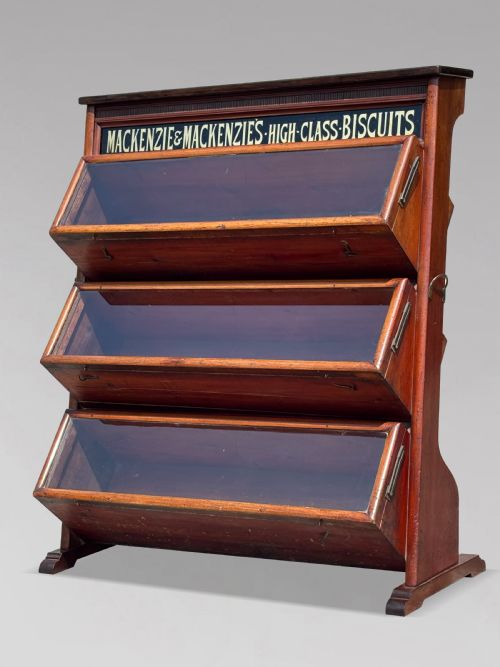
When you search for a victorian advertising cabinet, you are looking at retail display pieces that once sat on shop counters or hung in tea rooms and merchants. These units served to promote specific products such as tea, biscuits, sewing cottons, chocolate, and cocoa.
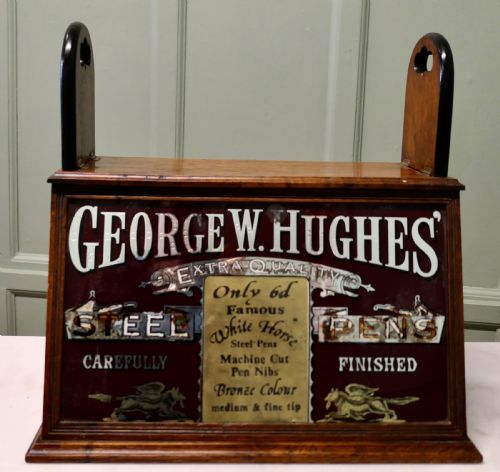
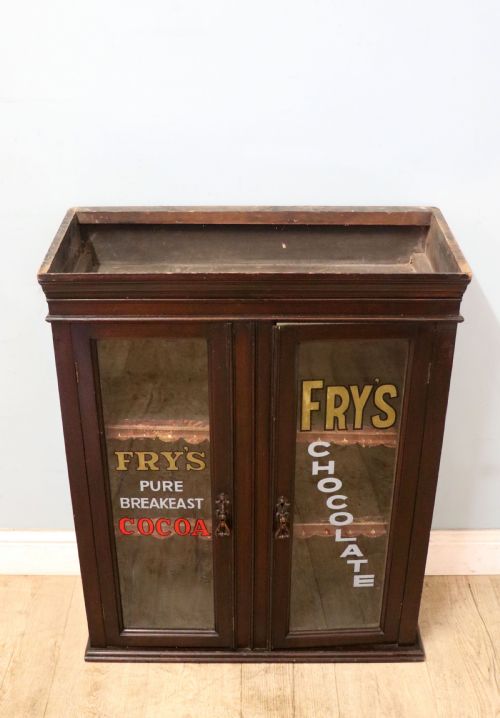
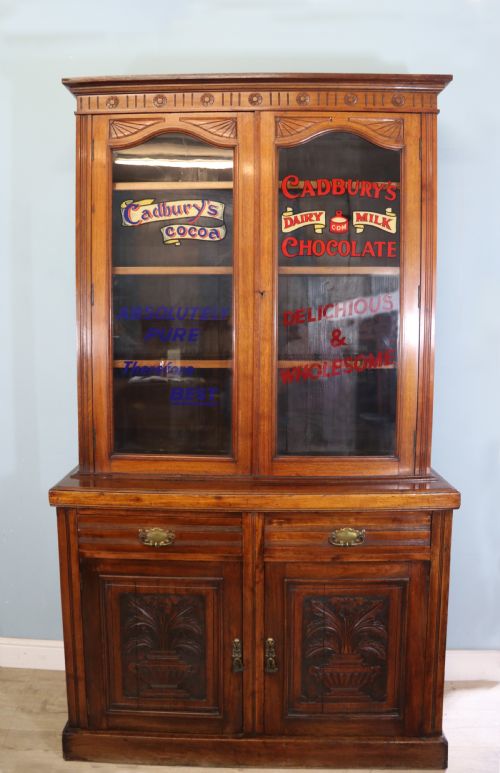
The versions you are most likely to meet on this page include mahogany, American walnut, and hardwood glazed shopfitting cabinets. Many of these pieces feature later hand sign written decoration for well known brands like Fry's, Rowntree's, and Cadbury's.
The forms range from dedicated stationers cupboards and pen cabinets to tea cabinets and apothecary boxes. They provide practical desktop or countertop display through glazed panels while keeping stock secure.
How They Were Made
Makers utilised solid timbers such as mahogany, American walnut, pine, and hardwood to construct the structural frames of these commercial cases. These woods were chosen for their durability in busy retail environments and polished to a smooth finish.
Glazing forms the primary viewing area of the cabinets, allowing customers to inspect the contents while protecting the merchandise from dust. Brass hardware, gold leaf detailing, and hand sign written panels complete the construction of these retail fixtures.
Victorian Advertising Cabinet Retail Price Guide 2026
Typical asking prices for victorian advertising cabinet among the pieces listed under this phrase on Sellingantiques today, from the lower quarter to the upper quarter. They describe what is for sale here now, not the wider market.
Listings span the nineteenth and twentieth centuries, incorporating Victorian, Edwardian, and later commercial eras.
What Varies in Quality
The standard of timber selection and the weight of the solid mahogany or American walnut distinguish finer examples from simpler pine or hardwood constructions. Heavier framing and superior cabinetmaking joints indicate a higher grade of shopfitting manufacture.
The execution and preservation of the hand sign written lettering significantly influence the character of the piece. Crisp, detailed lettering applied to the glass or timber elevates the visual appeal of the display.
Mackenzie's Biscuits·Ermen & Roby·Fry's Chocolate·Cadbury's Cocoa
The Victorian Advertising Cabinet Glossary
- Shopfitting
- The trade and craft of manufacturing fixtures, fittings, and display units for retail stores and commercial premises. These pieces were built to withstand heavy daily use in public spaces.
- Sign written
- The traditional craft of applying lettering by hand using signwriter's paint and brushes. Many cabinets display this decoration naming confectioners, tea merchants, or gunsmiths.
- Glazed
- Fitted with glass panels to protect merchandise while maintaining visibility for customers. This technique defines the display function of shop counters and wall cabinets.
- Chiffonier
- A low sideboard or cabinet featuring storage cupboards enclosed by doors beneath a flat top surface. In commercial contexts, these served both display and storage duties.
- Apothecary box
- A specialised container designed to hold medical ingredients, remedies, or precision items securely. These boxes often feature internal partitioning and compact proportions.
Victorian Advertising Cabinet: Frequently Asked Questions
What were advertising cabinets used for?
Merchants utilised these glazed units on shop counters and shelves to display goods safely while enticing customers with prominent branding. They held items like sewing cottons, biscuits, and chocolate.
Over time, shopkeepers relied on them to keep high value or delicate stock visible yet secure from handling until purchase.
How do I identify the wood type?
Inspect the grain patterns, colour tones, and weight of the timber frame. The listings include mahogany, American walnut, pine, and hardwood.
Mahogany exhibits a reddish brown hue with a straight grain, while American walnut offers a darker, richer figure.
Are the advertising signs original?
Many examples feature later hand sign written decoration applied to the glass or wood surfaces. This signage names historical brands such as Fry's chocolate and Rowntree's cocoa.
Evaluating the style and wear of the lettering helps determine how the piece was adapted or branded during its commercial life.
How do I clean a glazed cabinet?
Use a soft, dry cloth to remove dust from the timber frame without disturbing the polished surface or sign written panels. Avoid harsh chemical cleaners on painted or gilded areas.
Clean the glass panels gently with a mild glass cleaner applied to a cloth rather than sprayed directly onto the cabinet.